
Key Points:
- Early autism therapy in NJ involves separate decisions about developmental services, diagnosis, and ABA treatment.
- NJEIS evaluates children under three without requiring an autism diagnosis, while private ABA follows its own clinical and coverage rules.
- Starting young does not guarantee a particular result, and older children can still receive support.
Early autism therapy in NJ begins with understanding what your child needs help with today. A toddler who struggles to communicate may need support while an autism evaluation is still pending.
New Jersey families can request developmental help before receiving a diagnosis. Private ABA therapy has separate clinical and insurance requirements, so knowing which service to contact can prevent confusion.
 Can Support Begin Before an Autism Diagnosis?
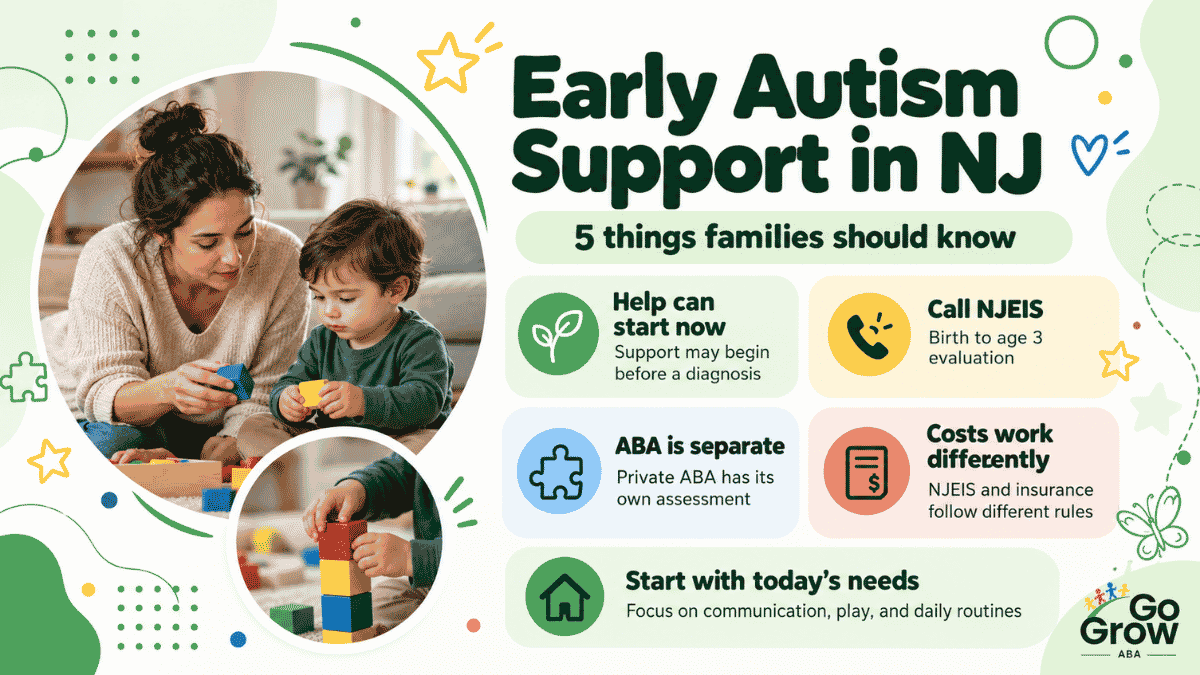
Yes. Families can request a public early intervention evaluation without an autism diagnosis or a doctor’s referral. Services for a developmental delay, such as speech therapy, may also begin before an autism evaluation is complete. Eligibility depends on the program and the child’s needs.
Your child’s pediatrician can assess concerns and recommend further evaluation. Meanwhile, a separate request to New Jersey’s early intervention program can start the process of checking eligibility for developmental services.
For example, a child with few ways to communicate might receive an evaluation for language support while the family pursues autism testing. That request does not automatically enroll the child in ABA.
How to Request Early Intervention in New Jersey
The New Jersey Early Intervention System (NJEIS) serves eligible children from birth until their third birthday. Families can contact the program directly when they have concerns about development.
The starting steps are:
- A call to NJEIS: Families can call 888-653-4463 to request an evaluation.
- An evaluation of developmental needs: The team assesses the child’s skills and determines eligibility.
- A family service plan: For eligible children, an Individualized Family Service Plan, or IFSP, describes the services and support the child and family will receive.
The state’s early intervention information for families explains this process. Services can take place in everyday settings, including the home or child care.
A request for evaluation does not commit your family to a particular treatment. The findings help you understand the available options.
 Where Private ABA Fits Into Early Support
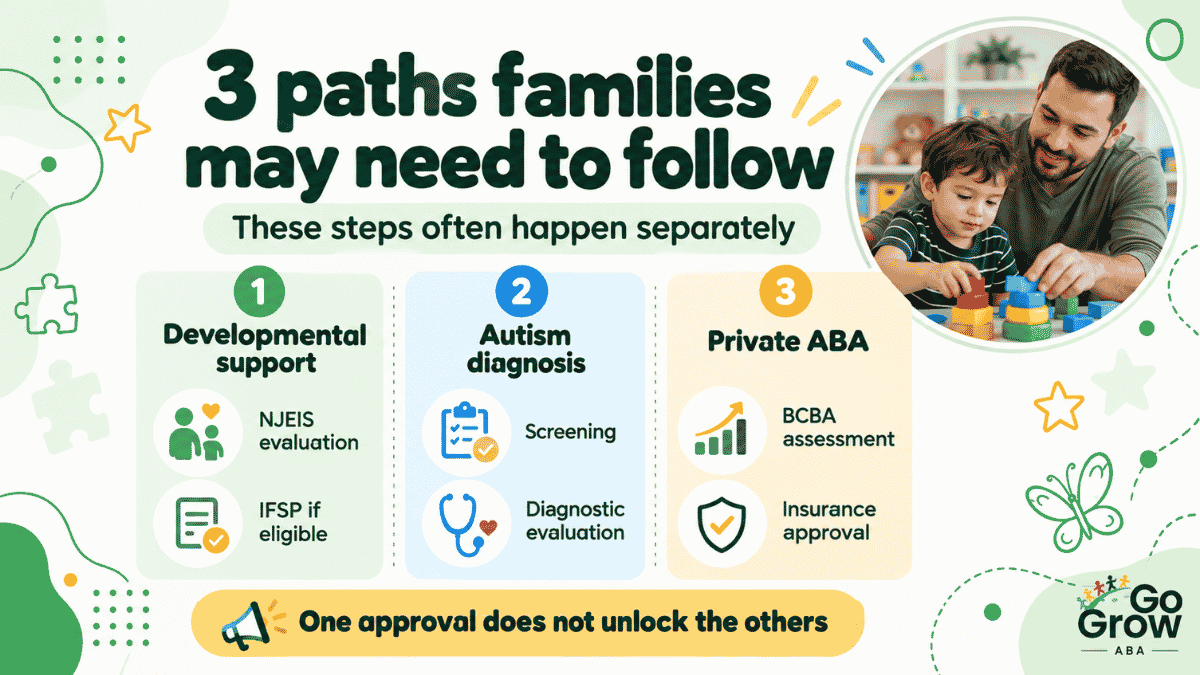
Private Applied Behavior Analysis, or ABA, is one option to consider after reviewing a child’s needs. An NJEIS evaluation, an autism diagnostic evaluation, and an ABA assessment serve different purposes. Approval in one system does not automatically establish eligibility in another.
At Go Grow ABA, we provide early childhood ABA therapy with one-to-one teaching, play-based learning, and caregiver involvement. Our services focus on communication, engagement, and daily skills.
Our ABA assessments help identify strengths, support needs, and treatment goals. A Board Certified Behavior Analyst, or BCBA, uses the assessment to develop an individual plan.
A possible goal might involve helping a child indicate which toy they want. The teaching approach would depend on the child’s communication skills and assessment findings. That example describes a possible target, not an expected result.
Caregivers also need explanations they can use at home. Through ABA parent training, we teach strategies for everyday routines and adjust them as the child’s needs change. Families pursuing private treatment can read the steps for starting ABA after diagnosis for more detail about enrollment.
NJEIS Costs and ABA Coverage Follow Different Rules
A free developmental evaluation does not mean every ongoing service is free. Public early intervention and insurance-funded ABA use separate payment arrangements.
NJEIS Evaluation and Service Costs
NJEIS provides evaluation, assessment, service coordination, and IFSP development and review at no cost to families. Some ongoing services carry a family fee based on household income and size.
The state’s family cost participation information explains how those charges work. Families should review their written cost information before services begin.
Insurance-Funded ABA
Private insurance and NJ FamilyCare can cover ABA, but a covered benefit does not automatically approve treatment with a particular provider. The child’s plan must confirm the relevant eligibility, documentation, and authorization requirements.
Assessment and treatment may also involve separate approvals. For example, UnitedHealthcare Community Plan’s New Jersey Medicaid ABA process includes distinct authorization requests for ABA assessment and treatment. Families should check their own plan’s process before scheduling services.
An NJEIS eligibility decision does not replace an insurer’s ABA review. Keeping those decisions separate helps families understand which services have approval and which still need action.
Early Support Without Outcome Promises
Early support gives a child opportunities to work on current developmental needs. A result from one research study cannot predict whether an individual child will develop spoken language, attend a particular classroom, or live independently.
A practical starting point is one daily concern: communicating discomfort, joining play, or taking part in a routine. The care team can explain what it plans to teach and how it will check whether the approach helps.
A child’s age should not become a source of blame. Support can help beyond the toddler years, and a later diagnosis does not mean the opportunity for care has ended.
 FAQs About Early Autism Therapy in NJ
What if my child is already three or older?
Families can contact their local public school district to request an evaluation for educational support. A child does not need to attend public school already or have an autism diagnosis to request that evaluation. School eligibility follows its own rules. The options after NJEIS ends explain the next stage in more detail.
Does an autism screening result confirm a diagnosis?
An autism screening result does not establish a diagnosis. Screening identifies concerns that may need a closer look. A diagnostic evaluation examines developmental history and behavior to determine whether the child meets autism criteria. The difference between screening and diagnosis explains why both steps have separate roles.
What if an ABA provider has a waitlist?
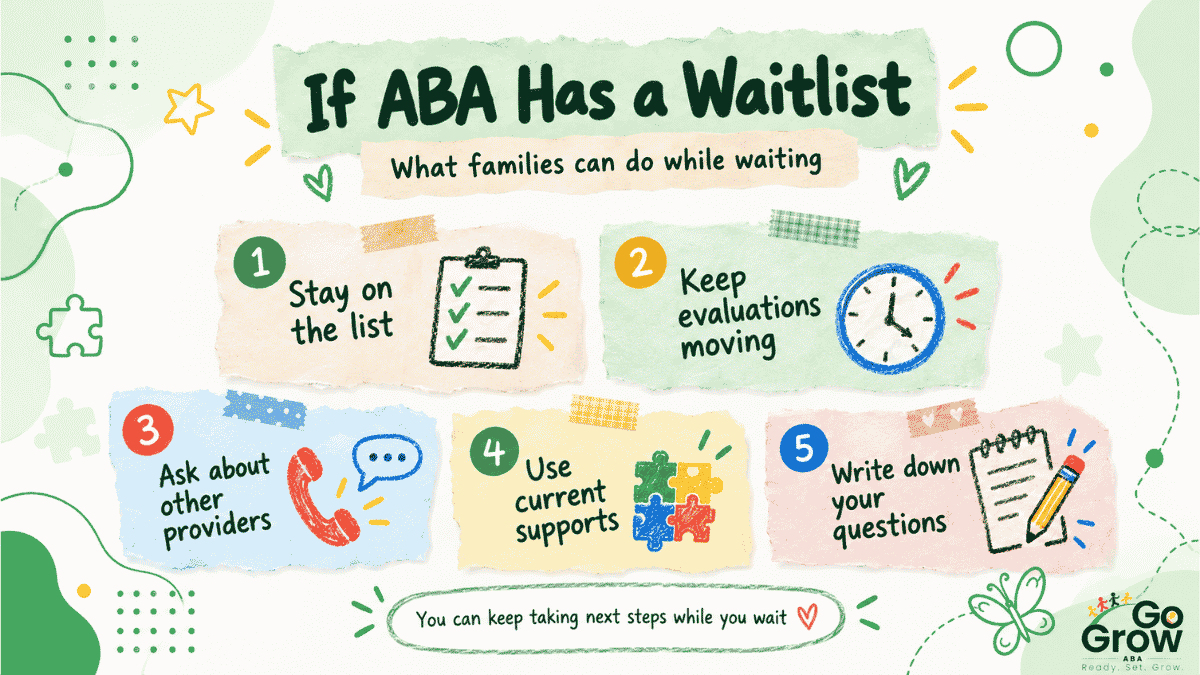
Families can continue pursuing other recommended evaluations and eligible developmental services while waiting. The provider can explain its availability, while the insurer can identify other participating providers. The ABA waitlist suggestions for NJ families offer additional ways to prepare without trying to run a therapy program at home.
Connect With Our Team About Early ABA Support
Early support starts with a child’s current needs and the services available to address them. Public developmental services, diagnostic care, and private ABA each have a role, with separate decisions about eligibility and payment.
Our team at Go Grow ABA offers a free consultation to hear your concerns and explain our ABA services. A conversation can help you understand the next intake step without a promise about treatment results or a start date.