

Key Points:
- Parent coaching in ABA teaches caregivers to use agreed strategies through explanation, demonstration, practice, and feedback.
- Caregiver accuracy and a child’s use of skills in new situations need separate checks.
- A realistic practice plan should account for family routines, the child’s comfort, and ongoing review.
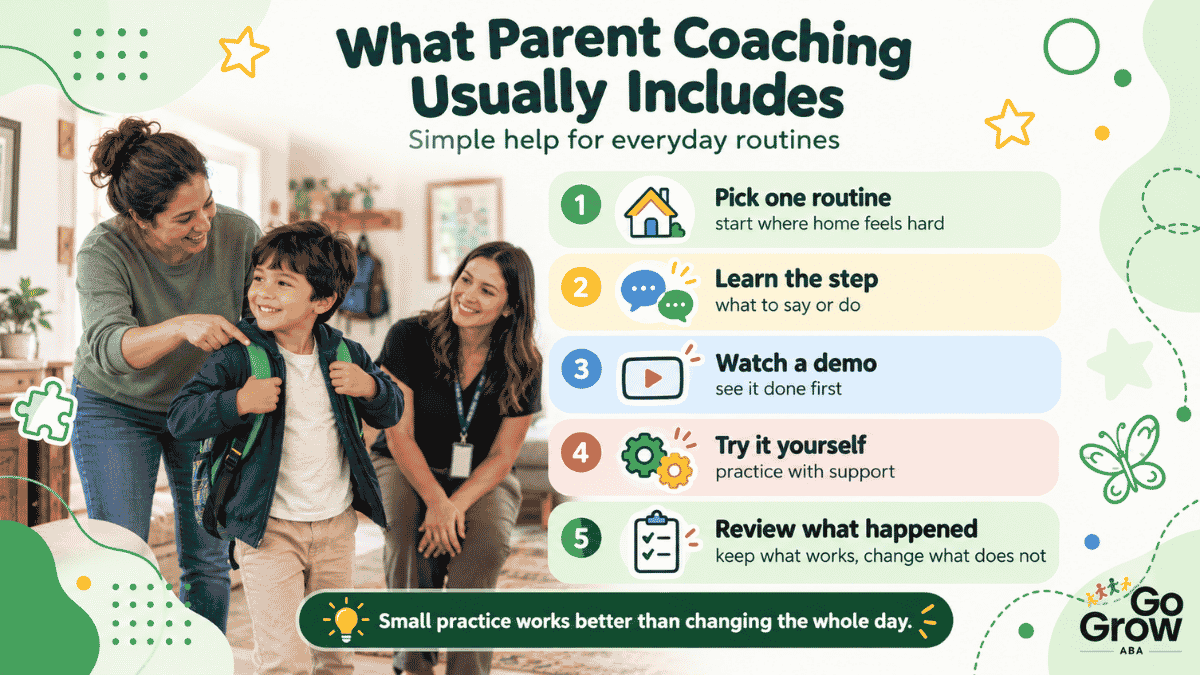
Parent coaching in ABA focuses on how you support your child during everyday moments, such as getting dressed or ending playtime. A clinician works with you to choose a goal, try a strategy, and review what happens.
A strategy can sound simple during a conversation and feel harder during a busy morning. Coaching gives you space to rehearse, ask questions, and explain when a plan asks too much of your family’s day.
 What Does Parent Coaching in ABA Involve?
Parent coaching, also called ABA parent training or caregiver training, teaches adults how to apply strategies from a child’s treatment plan. The focus includes your actions, your child’s responses, and whether the approach works within daily life.
A Board Certified Behavior Analyst, or BCBA, can help identify the skill to practice and explain the teaching steps. For more about clinical responsibilities, our ABA therapy team guide explains who develops treatment plans and who carries them out.
At Go Grow ABA, our ABA parent training includes one-on-one coaching, explanations of strategies, and support for applying them during home routines. We also offer ongoing collaboration with your child’s therapy team.
What Happens During a Parent Coaching Session?
A coaching session can include an explanation, a demonstration, caregiver practice, and feedback. This approach is called behavioral skills training. The clinician may repeat a demonstration or offer more practice when a step needs attention.
The following hypothetical example shows how coaching could address one part of getting ready to leave home. The focus is a caregiver learning how to give a child an opportunity to complete a familiar step.
- Explanation: The BCBA and caregiver agree on a short cue for getting shoes. They review how much help the child needs and what to do if the child becomes uncomfortable.
- Demonstration: The clinician shows how to give the cue and allow time for the child to respond.
- Practice: The caregiver rehearses the sequence with the clinician before trying it during the routine.
- Feedback: The BCBA identifies a specific action to keep or change. For example: “You gave one instruction. Next time, allow the response time we practiced before repeating it.”
Practice and feedback can improve how caregivers carry out teaching steps. A small study involving three parents of children with developmental disabilities found improved teaching accuracy after training. That finding supports coached practice, but it does not establish a guaranteed accuracy level or learning timeline for every caregiver.
 Preparing for Your First Coaching Conversation
Your first conversation can begin with one routine you want help with. A specific description gives the clinician more information than a broad label such as “difficult mornings.”
For example, “My child gets their shoes but needs help putting them on” identifies a different need from “My child becomes upset when we mention leaving.”
A short list can help you explain:
- What happens before, during, and after the difficult moment.
- What your child already does independently.
- How your child communicates discomfort or requests help.
- What you have tried and how your child responded.
- Which parts of your schedule limit practice opportunities.
Your family’s language, values, and priorities also belong in the conversation. The BACB’s requirements for involving clients and caregivers address participation in goal selection, treatment planning, and progress monitoring.
Practice Between Visits Should Suit Daily Life
Between-session practice should follow the agreed treatment plan and remain manageable for your household. One familiar routine can provide a starting point without adding a separate teaching activity to every part of the day.
Before trying a strategy independently, you and the clinician can agree on:
- The opportunity: When the routine normally happens.
- Your action: The instruction, support, or response to practice.
- Your child’s support: How to respond to requests for help, breaks, or stopping.
- The update: What information to bring to the next coaching conversation.
A brief note might say, “I remembered the cue, but repeated it before the planned pause ended.” That observation tells the clinician which part needs more rehearsal.
Our examples of daily skills children can practice at home can help you identify a routine to bring into the conversation. The clinician should help select the teaching steps for your child.
Caregiver Accuracy and Skill Transfer Need Separate Checks
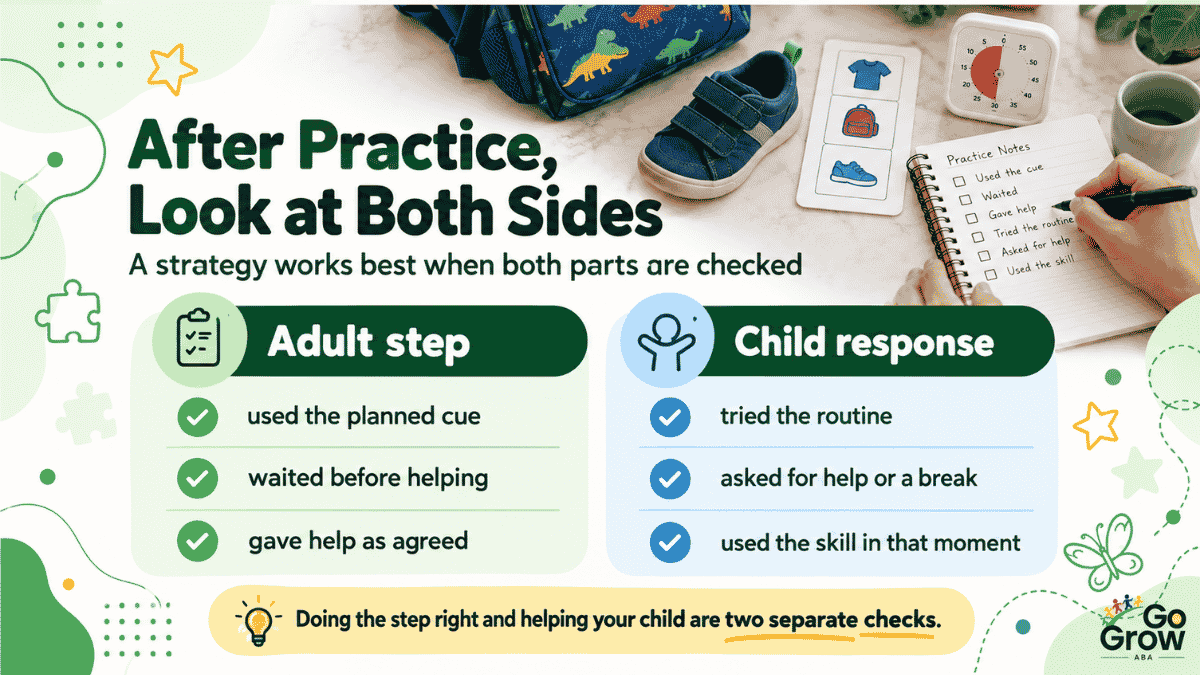
Caregiver accuracy means carrying out the agreed steps as intended. A caregiver may perform those steps during coaching and still need support during a rushed morning or an unfamiliar situation. Follow-up should check how the strategy works beyond the practice session.
A child’s skill transfer is a separate outcome. Generalization means using a learned skill with different people, materials, or settings. A review of early social communication interventions found evidence of some transfer, but results varied across skills and studies. Home practice does not establish that a child will use the same skill everywhere.
The team should check both sides: whether the caregiver can use the strategy and whether it helps the child in the intended situation. Accurate implementation alone does not prove that a plan is helping. A strategy that remains difficult or produces little benefit needs review.
When a Coaching Plan Feels Hard to Follow
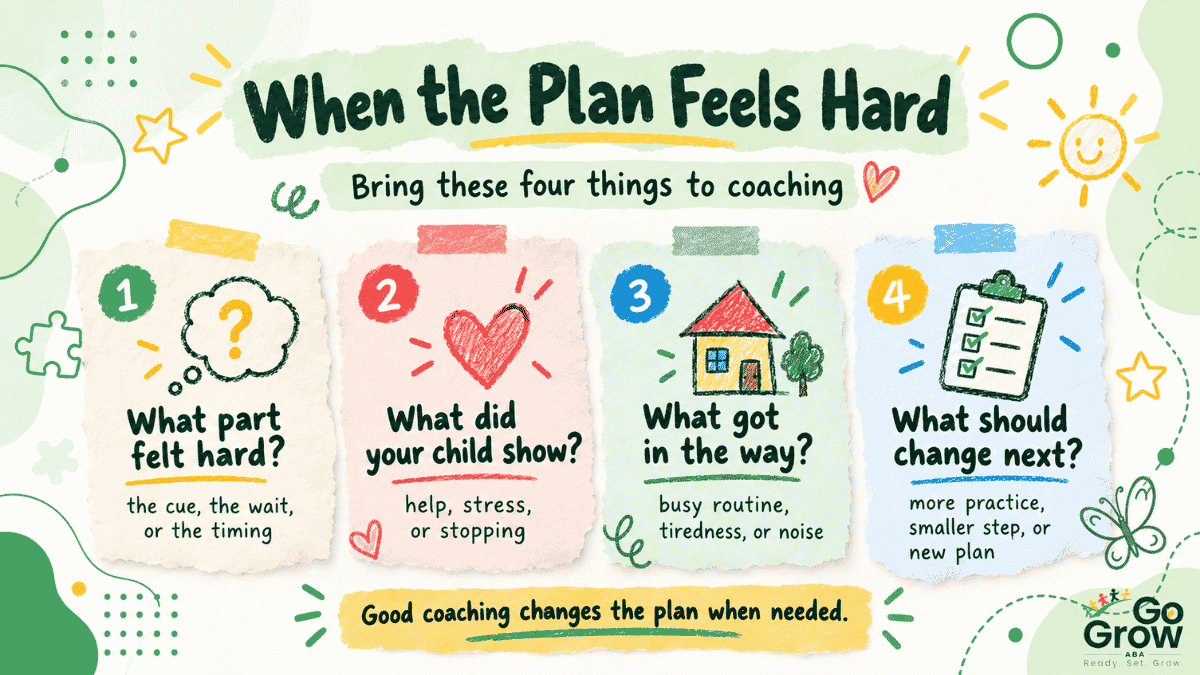
Difficulty following a plan gives the clinician information about what needs adjustment. The steps may need a simpler explanation, more demonstration, or changes to account for competing demands at home.
Your child’s discomfort also deserves attention. A statement such as “The routine takes longer, and my child becomes upset before we begin” gives the team something specific to review. The goal is a workable plan that supports your child’s needs and respects your family’s limits.
 FAQs About Parent Coaching in ABA
Do I need ABA experience before starting parent coaching?
Prior ABA knowledge is not necessary to begin learning. The clinician should explain unfamiliar terms, demonstrate the strategy, and check your understanding. Questions and requests for another demonstration belong in coaching.
How often should parent coaching sessions happen?
Coaching frequency should reflect the treatment plan, caregiver learning needs, and opportunities to practice. Your provider should explain the proposed schedule and how the team will review it. A fixed weekly schedule does not suit every family.
Does insurance cover ABA parent coaching in New Jersey?
Coverage and costs depend on your insurance plan and authorization. Your insurer and provider can confirm whether caregiver training is included, any attendance requirements, and what you may owe. Inclusion in a treatment plan does not establish that coaching has no additional cost.
Practice One Routine With Parent Coaching
Parent coaching connects treatment goals with the moments your family experiences between visits. A manageable routine, specific feedback, and follow-up can give caregivers a practical way to learn while keeping the child’s needs central.
We provide in-home ABA therapy and caregiver support for New Jersey families. Our team can talk with you about parent coaching and the routine you want help with.