Key Points:
- ABA communication strategies for autism teach children clearer ways to request, label, and respond.
- Common methods include Functional Communication Training, manding, tacting, picture exchange, and natural teaching during daily routines.
- Progress may begin with gestures, pictures, signs, sounds, or short words before longer speech develops.
A child may cry, pull your hand, repeat the same words, or stay silent when they don’t yet have a clear way to communicate. ABA communication strategies for autism give the child another way to be understood.
These strategies are structured techniques that teach children with autism to express needs, label objects, and engage in back-and-forth interaction using positive reinforcement. In-home ABA therapy helps your child connect with people.
 How ABA Communication Strategies for Autism Work in NJ Homes
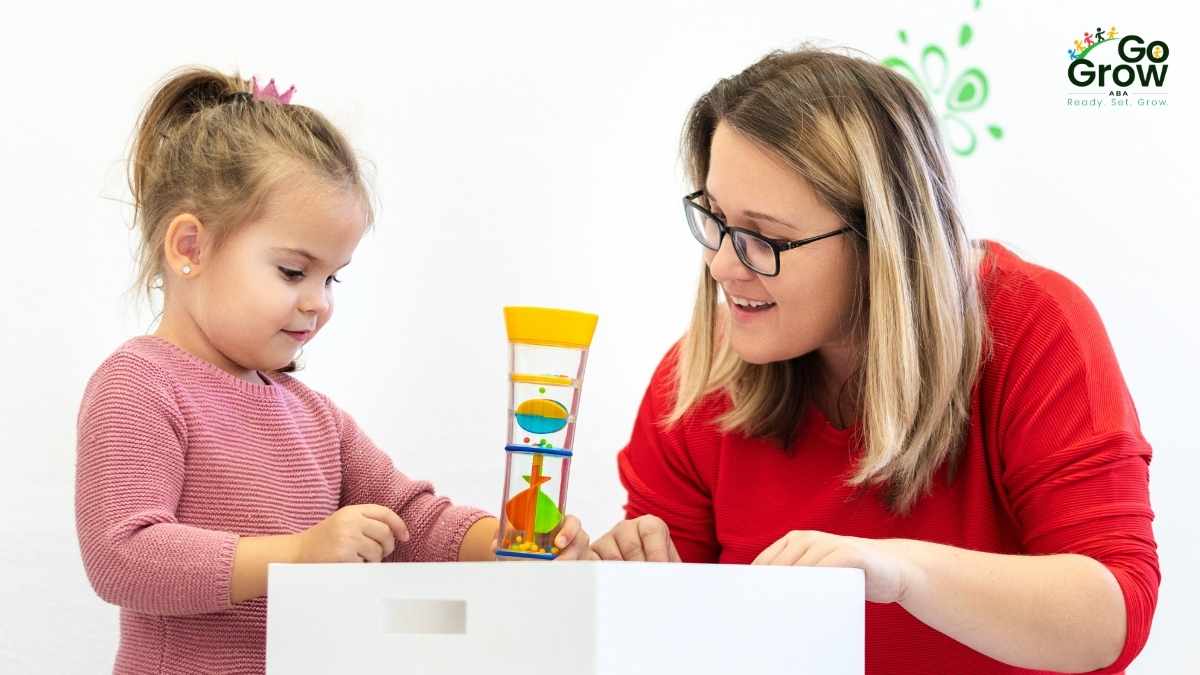
ABA therapy focuses on skills you use every single day. A therapist watches how your child interacts at home. They look at what your child points toward. They notice what your child avoids. This helps the therapist find the true reason behind the behavior. Next, they teach a clearer communication response.
Real home routines make a big difference. New Jersey families usually need help during meals, play, or school prep. Learning should not just happen at a small table. CDC estimates 1 in 31 children aged 8 has been identified with autism. Local support helps handle these daily moments.
Key ABA Interventions for Communication Parents May See
Communication goals look different for each child. Early intervention ABA may start with gestures, pictures, signs, sounds, or words.
| Strategy | What It Means | What Parents May Notice |
|---|---|---|
| Functional Communication Training | Teaching a safer way to ask for a need | A child asks for a break instead of dropping to the floor |
| Manding | Teaching a child to request things | A child points for juice |
| Tacting | Teaching a child to label items | A child says “dog” during a walk |
| Picture Exchange Communication System | Using pictures to communicate | A child hands over a picture to get an item |
| Natural Environment Teaching | Teaching skills during play | A therapist practices words during snack time |
What Communication Progress Can Look Like During Everyday Routines
Progress does not always begin with full sentences. Autism speech improvement in ABA may first look like a small sign that your child has found a clearer way to be understood.
Parents may notice:
- A child points instead of crying
- A child accepts a prompt to request help
- A child labels a favorite toy
- A child answers during a known routine
- A child waits longer before frustration builds
Speech may be one goal, but communication is broader than spoken words. Children with autism may use speech, gestures, sign language, symbols, picture boards, or electronic devices.
How Functional Communication Training Reduces Frustration
Functional Communication Training (FCT) starts by identifying what the behavior is trying to access or avoid. The therapist then teaches a replacement response that serves the same purpose.
A child who screams when a toy is closed may learn to hand over a “help” card or say “open.” The new response must be easy enough to use in that moment. These ABA interventions for communication can lower frustration.
At Go Grow ABA, we help families practice communication during the routines already happening at home across New Jersey. If your child struggles to express needs, ask our team about a communication-focused ABA plan.
How Therapists Practice Requesting, Labeling, and Turn-Taking
Therapists often build communication in small steps. The first goal may be one sound, sign, picture, or clear reach.
Common practice areas include:
- Manding: asking for wanted items or help
- Tacting: naming objects, people, actions, or feelings
- Echoics: copying sounds or words when appropriate
- Intraverbals: answering or filling in language
- Turn-taking: responding during simple exchanges
ABA Communication Strategies for Autism: Manding Vs. Tacting
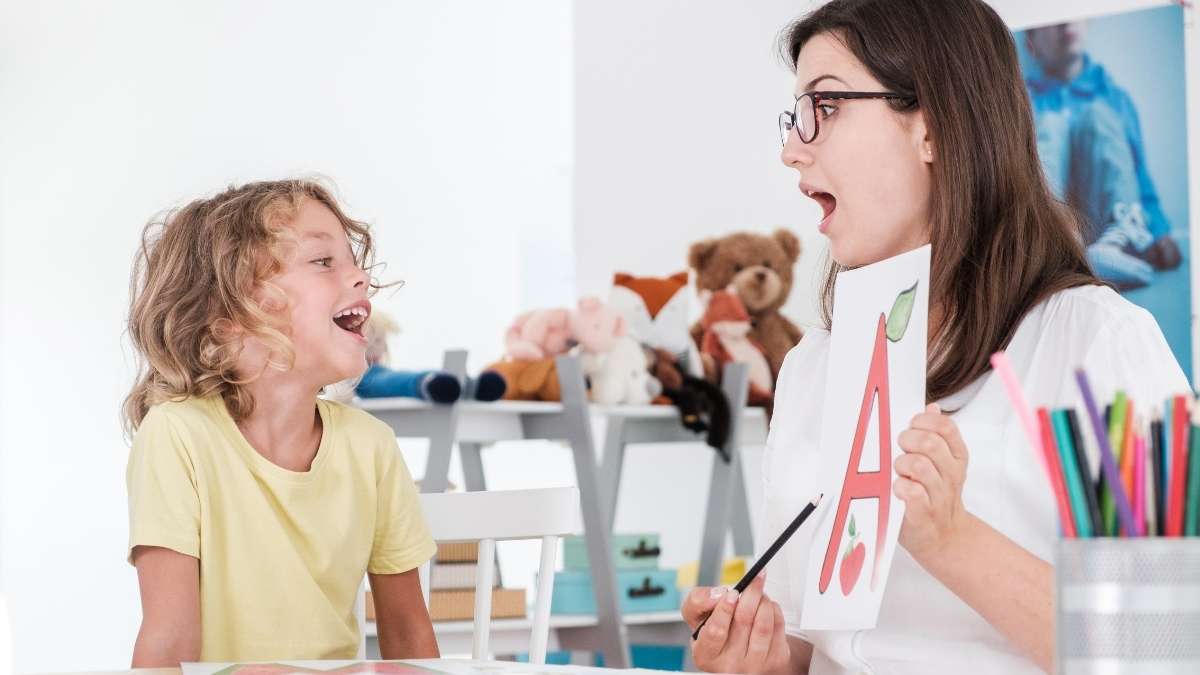
Parents frequently ask about the best ABA exercises for speech. The truth is that the best practice happens during play. It happens during meals or dressing. Let us look at how manding and tacting differ.
Manding is strictly about requesting something the child wants right now. Tacting is simply labeling things they see around them. Both concepts support social communication. They should always connect to your child’s favorite things.
 How ABA and Speech Therapy Can Work Together
ABA therapy never replaces speech therapy, so you don’t have to choose which one is better. Instead, effective ABA for language delay helps a child use their skills more often during the day.
A speech-language pathologist works on speech sounds, voice, and fluency. A good plan respects both roles. A therapist should not promise spoken language for every single child.
What Parents Can Reinforce Between Sessions
ABA parent training can make communication goals easier to use after the therapist leaves. The goal is to use the same simple cues during real routines.
Parents can:
- Pause before giving the item
- Accept the child’s current communication form
- Model one clear word or sign
- Keep the request easy at first
- Practice during meals, play, dressing, or homework
- Share what works with the therapy team
For New Jersey families receiving in-home ABA, parent practice helps the skill show up outside the therapy session. Strong communication goals in ABA autism plans should feel useful during daily routines.
 FAQs About ABA Communication Strategies for Autism
Can ABA communication strategies help children who use echolalia?
ABA communication strategies for autism can help children who repeat phrases learn to use language functionally. A therapist shapes repeated words into useful requests or comments. The main goal is functional communication, not removing every repeated phrase.
How can parents tell if a communication goal is too hard?
A communication goal within ABA communication strategies for autism may be too hard if a child needs constant prompts. Intense frustration is another sign. Parents can ask to break the skill down. Realistic ABA goals are good targets during normal daily routines.
Can ABA communication strategies support school readiness?
ABA communication strategies for autism support school readiness by teaching children to ask for help or follow simple directions. They also learn to answer questions. School readiness must include communication for safety, daily transitions, and simple classroom participation.
Start a Communication-Focused ABA Plan at Home
Communication growth often begins with small, useful changes parents can see during normal routines. A child may request help, label a favorite item, or use a picture before longer speech develops.
At Go Grow ABA, we provide in-home ABA therapy across New Jersey for children, teens, and young adults with communication, social skills, and daily living needs. If your child struggles to express needs or respond to language, contact us for a free consultation at office@gogrowaba.com or (732) 554-8383.