
Key Points:
- The first month of ABA therapy brings together relationship building, practice on individual goals, and ongoing observation.
- Caregiver feedback helps the team understand how treatment affects daily life.
- The pace depends on the child’s needs, and early session records help the clinician decide what to continue or adjust.
Your child’s first month of Applied Behavior Analysis (ABA) treatment begins when treatment sessions start. The first call to a provider, initial assessment, and insurance review belong to preparation, which has its own timeline.
Once sessions begin, the experience may include familiar play, short learning activities, breaks, and conversations about your child’s responses. A fixed week-by-week schedule cannot describe every child’s care.
 Before Treatment: Preparation Has Its Own Timeline
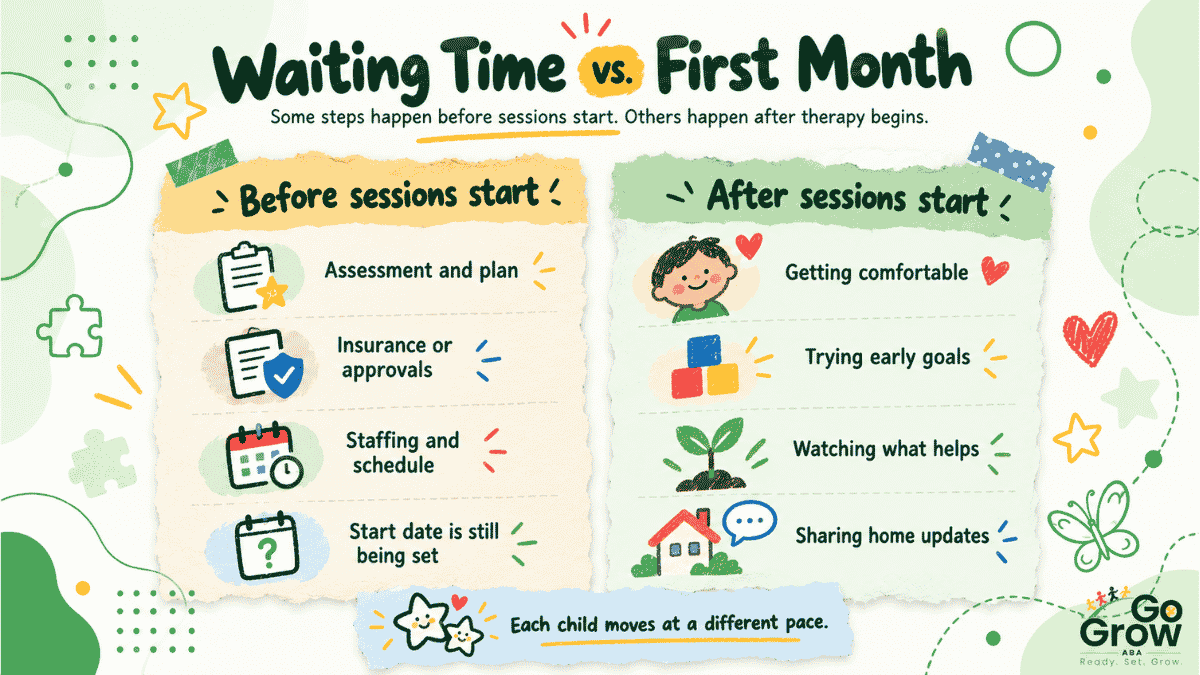
Before regular sessions begin, the provider needs to complete treatment planning and confirm any required approvals, staffing, and scheduling. Assessment availability and insurance review can affect the start date. An approved assessment does not automatically mean ongoing treatment can begin.
At Go Grow ABA, our BCBA-led ABA assessment combines observation, caregiver input, and assessment tools to develop treatment recommendations. Families still completing these steps can follow our guide to starting ABA therapy in New Jersey.
The distinction helps set expectations: time spent waiting for records, approval, or an available therapist is preparation time. The sections below focus on what happens after treatment starts.
What Happens During the First ABA Therapy Sessions?
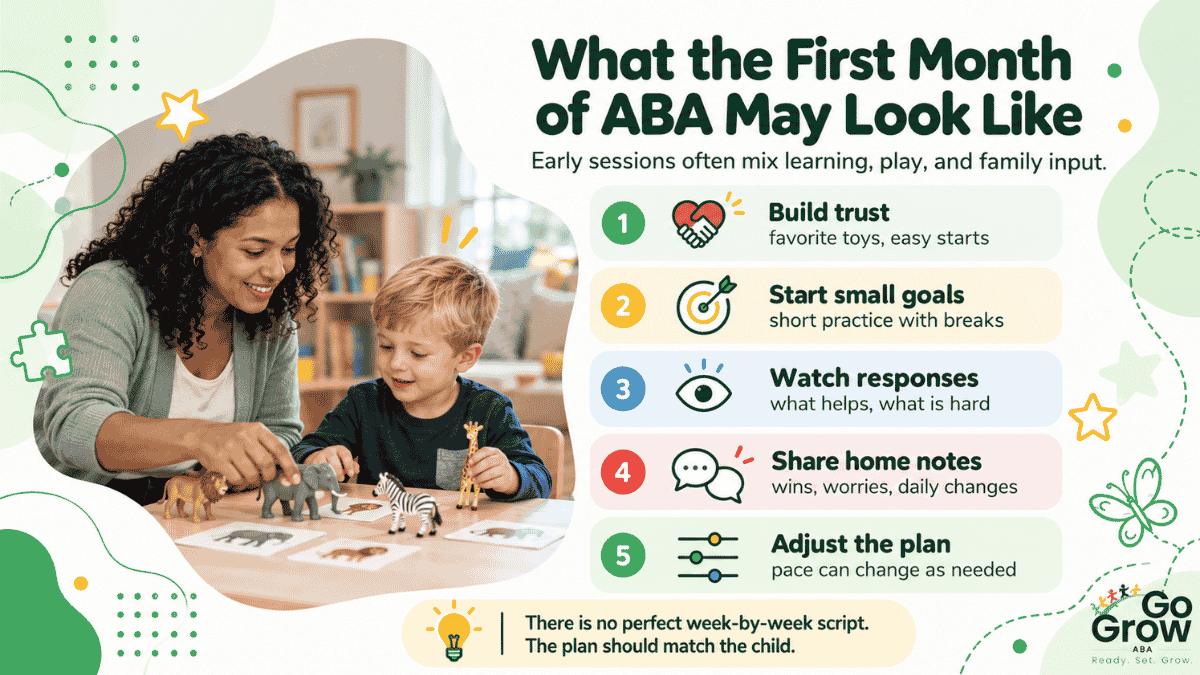
Early ABA sessions may combine relationship building, observation, and activities from the child’s treatment plan. The balance depends on the child and the clinician’s recommendations.
A therapist may begin with activities your child enjoys. In ABA, pairing means connecting the therapist and therapy activities with pleasant experiences. Research describes pairing as a way to build rapport between the child and therapist.
For example, a child who enjoys toy animals might spend time making animal sounds with the therapist. The activity gives them a way to interact while the therapist learns about the child’s interests. This is an example, not a required first-session activity.
Families can share details that an assessment may not capture:
- Activities the child enjoys and activities they avoid.
- Ways the child communicates “help,” “no,” or “finished.”
- Signs that the child needs rest or less noise.
- Recent changes in sleep, health, or daily routines.
Relationship building does not need to end after a particular number of visits. Your child’s responses should help shape how sessions develop.
Early Teaching and Observation Happen Together
Observation and data collection continue as treatment begins. The therapist may record how your child responds, what support they need, and whether teaching activities help. The CDC identifies tracking and measuring progress as part of ABA.
A baseline describes the child’s starting skills before teaching a particular goal. Early treatment observations can add context to information gathered during assessment.
For example, a child might request help after an adult points to a picture. The session record should distinguish that response from a request the child makes without a reminder. Both tell the team something, but they represent different levels of support.
Your child’s therapist can explain what an activity targets and why it belongs in the plan. A quiet activity or shared game may involve communication practice even when it does not resemble a classroom lesson.
Our in-home ABA therapy includes individual sessions and goals connected to daily routines. The home setting provides places to practice, while the treatment plan determines which activities the team uses.
 Comfort and Participation Need Attention From the Start
Your child’s comfort belongs in treatment conversations from the beginning. The clinician should explain proposed procedures, obtain required informed consent, and seek the child’s assent when applicable. Assent means the child indicates willingness to participate through words or other communication. These responsibilities appear in the BACB Ethics Code.
Persistent distress deserves prompt attention. A caregiver can describe what happened and request a review of the activity, demands, breaks, or environment. The calendar should never become a reason to dismiss a concern until the month ends.
Caregiver Feedback Connects Sessions With Home Life
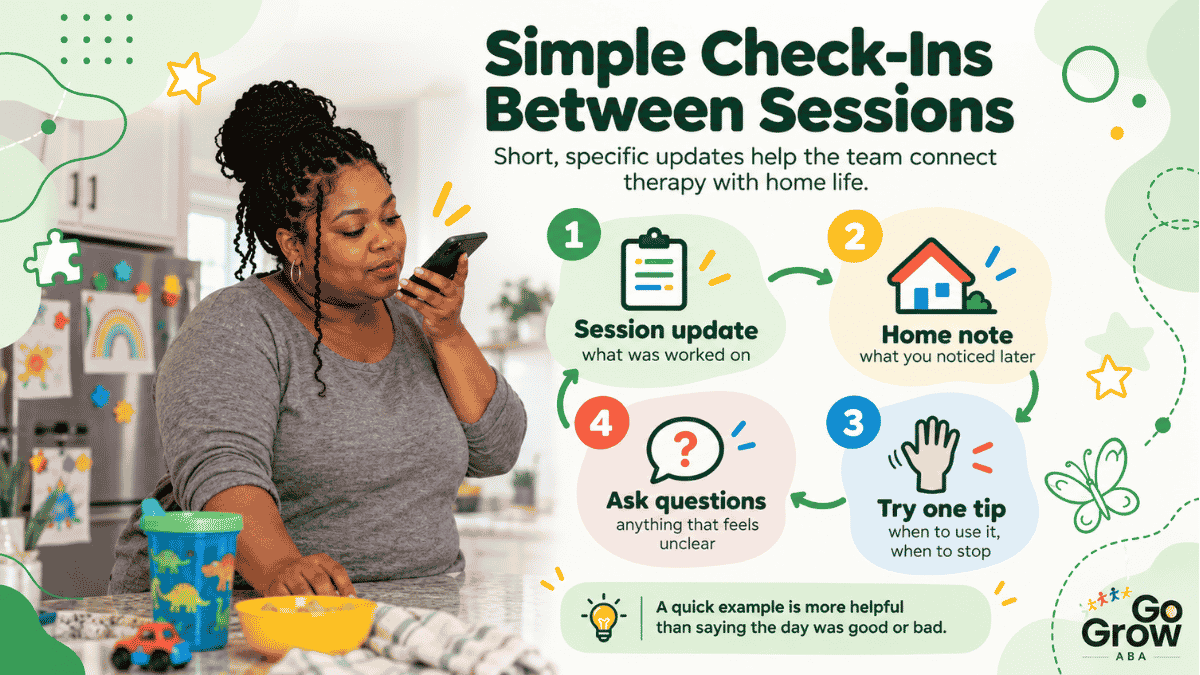
Caregiver observations help the team understand what happens outside scheduled treatment. A short, specific example often communicates more than a general statement that the day went well or badly.
A parent might say, “She requested help during the game, but getting dressed was still difficult.” That description identifies where the child used a skill and where support remains necessary.
A manageable first-month communication routine can cover:
- Session updates: What the therapist worked on and how the child responded.
- Home observations: Anything the caregiver noticed between visits.
- Practice instructions: What to try, when to try it, and when to stop.
- Questions: Anything the family does not understand about the plan.
Through our ABA parent training, we explain strategies and coach caregivers on applying them during activities such as play and meals. Families can use coaching time to work through a step they find difficult.
Home practice should come with an explanation. Your family does not need to turn every interaction into a lesson.
What Should You Review After About a Month?
A conversation after roughly a month can help the family and clinician review how treatment is developing. This is a suggested check-in, not a required deadline or a promise of completed goals.
The discussion can address several parts of early care:
| Area | Questions for the Review |
|---|---|
| Child’s experience | Which activities does the child enjoy? What causes discomfort? |
| Teaching | What has the team learned about the support the child needs? |
| Family participation | Are practice instructions understandable and manageable? |
| Schedule | Does the arrangement leave enough room for meals, rest, school, and family life? |
| Communication | Does the family know whom to contact and how concerns receive attention? |
Clinical review should continue throughout treatment. BACB standards require behavior analysts to monitor interventions and take corrective action when the data show that intended outcomes are not occurring.
A first-month conversation can identify changes without treating day 30 as a test your child must pass.
 FAQs About the First Month of ABA Therapy
Will my child keep the same therapist and BCBA?
Staffing can change, including the supervising clinician. Families can request information about who will provide care, how replacement staff will learn the plan, and how the provider will address interruptions. Continuity standards require planning and communication; they do not guarantee that one professional stays indefinitely.
What happens if my child misses an early session?
The provider can explain its cancellation policy and whether another appointment is available. A missed visit does not automatically create a replacement session. The family and provider should confirm any scheduling or coverage limits before arranging additional time.
Should I buy therapy materials before the first visit?
Families can check with the provider before purchasing equipment or supplies. Familiar toys and household items may already support planned activities. Any purchase should have a stated purpose connected to the child’s plan.
Prepare for Your Child’s First Month With Support
The first month brings a new working relationship into family life. Time to become familiar with the therapist, explanations of treatment activities, and attention to your child’s responses help everyone understand how care is developing.
At Go Grow ABA, we offer a free consultation for New Jersey families considering care. Our team can hear about your child’s needs and explain the next step toward assessment or in-home treatment. Families can reach us at (732) 554-8383.