
Key Points:
- To start ABA therapy in NJ, parents should prepare an intake folder before the first provider call.
- Key items include diagnosis records, insurance details, evaluations, home behavior notes, daily routines, and parent goals.
- Organized records help providers understand needs, safety concerns, and next steps faster.
The first phone call with an autism provider often moves fast. You may know your child’s story, but forget dates or insurance details when questions come up. If you’re getting ready to start ABA therapy in NJ, gathering records before you pick up the phone helps you stay calm
New Jersey families face high demand for services, so having a complete folder can reduce wait times and prevent constant back-and-forth emails.
 Start ABA Therapy in NJ Checklist
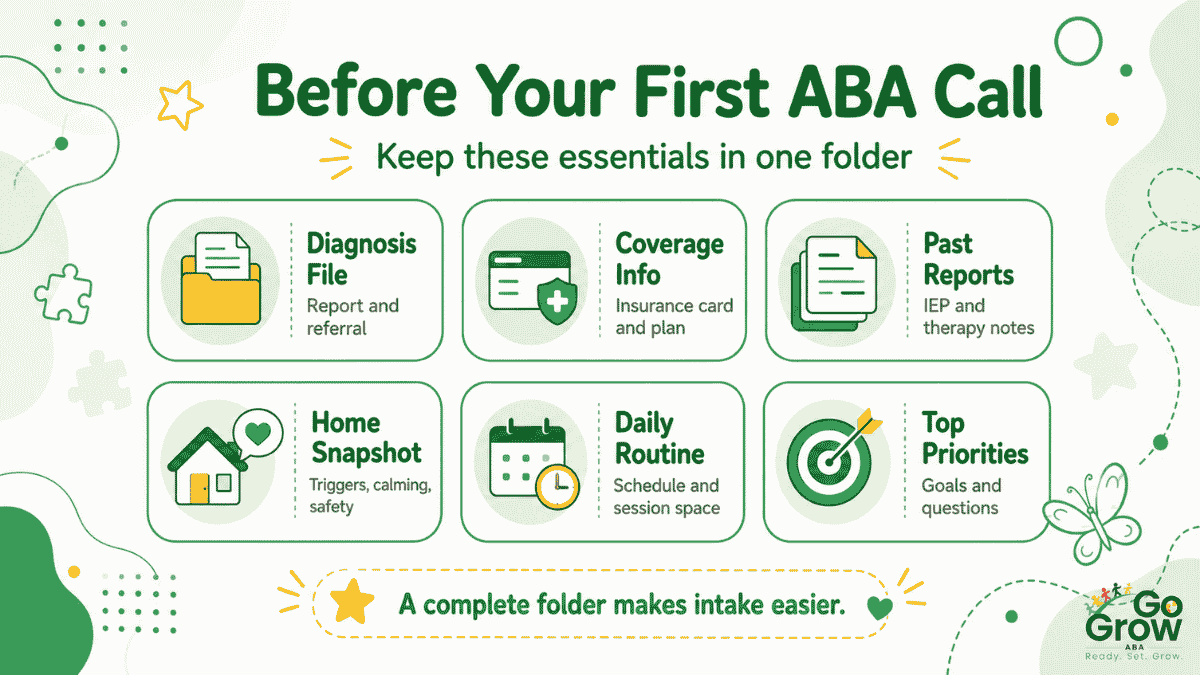
ABA intake works best when the provider can see diagnosis, insurance, routines, safety needs, and goals in one place. This checklist is not the full treatment process. Instead, this functions as a parent-ready folder that organizes your records for the very first phone call and the initial clinical evaluation. To help you start ABA therapy, here are the six items to collect today.
1. Your Child’s Autism Diagnosis and Referral Notes
Your child’s diagnosis report usually comes first. Keep the official autism diagnosis report where you can send it quickly. Add referral notes from a pediatrician, specialist, psychologist, or another provider.
The report should show the diagnosis date, the provider’s name, and the listed recommendations. New Jersey parents using NJ FamilyCare or private insurance should keep the report as a PDF.
A provider or payer may ask for updated details before authorizing care. These records help when initiating ABA therapy because the intake team can see why services were recommended.
2. Insurance Card, NJ FamilyCare Details, and Authorization Contacts
Insurance paperwork often causes delays, but you can prevent those issues early. You need clear copies of the front and back of your insurance card. Write down the member ID, group number, policyholder name, and birth date. If you use public benefits, check your specific NJ FamilyCare managed care plan name.
For children with autism under age 21, NJ FamilyCare provides coverage that applies to services in the home, community, or office. This benefit became part of Medicaid Managed Care back in 2020. These details help with ABA therapy cost planning and your autism therapy enrollment steps.
Use these quick tips to organize your coverage details:
- Take clear photos of both sides of the card.
- Save the online insurance plan portal login.
- Write down the date of your last insurance call.
 3. Recent Evaluations, IEPs, and Therapy Reports
A Board Certified Behavior Analyst (BCBA) uses school and medical records to understand your child’s strengths. If your child has an Individualized Education Program (IEP) through a New Jersey public school district, add it to the folder. You should also include records from speech, occupational, physical, or feeding therapies.
Toddler records from the state Early Intervention system are helpful. These papers give crucial context to pediatric ABA programs so clinicians do not have to start from scratch.
Parents in New Jersey frequently balance paperwork from school child study teams, private evaluators, and state systems. Sharing past evaluations makes the upcoming ABA assessment in NJ more accurate. Look at this as an autism early intervention guide made specifically from your child’s history.
Make the First Review Easier
At Go Grow ABA, we can review your records with you before the assessment, so the first conversation feels focused. Our team will tell you which documents to send first, which details can wait, and how the intake folder connects to your child’s in-home ABA plan. Reach out to our team today.
4. A Short Behavior and Communication Snapshot From Home
Parents often worry that sharing difficult moments will make them sound like they are doing something wrong. Intake is not about blame. The team needs the real version of home life.
Write down what your child does when upset. Add what usually happens right before and right after. That pattern helps the team see whether the behavior connects to escape, attention, pain, hunger, a denied item, or too much noise.
Include how your child asks for help, refuses tasks, requests food, or shows pain. Add safety concerns such as running, climbing, biting, self-injury, or choking risks. Good ABA parent training starts with details parents may see as ordinary.
Try prompts like:
- My child melts down when…
- The safest way to help is…
- My child calms down when…
- Words, signs, gestures, or devices my child uses…
 5. Your Daily Routine, Schedule Limits, and Home ABA Setup
Home sessions work best when the schedule reflects real family life. Write out wake-up time, school or daycare, naps, meals, homework, bath, and bedtime. Add parent work schedules, caregiver availability, and other therapies.
New Jersey families often plan around school pickups, daycare, traffic, and appointment runs in Montclair, Newark, Edison, Trenton, or Cherry Hill.
Your in-home ABA therapy setup doesn’t need a perfect therapy room. A safe, normal space can work. List rooms where sessions could happen. Add notes about siblings, pets, stairs, gates, favorite toys, snacks, and safety items. These details help the team picture the first ABA session.
6. Parent Goals, Questions, and a Single Folder for ABA Therapy Planning
Parents often arrive with many worries. Put the first three in writing. The intake team can sort through details faster when your top goals are clear.
Common priorities include communication, transitions, mealtime, toileting, sleep, safety, and school readiness. For ABA therapy planning, keep goals practical:
- Safer ways to ask for breaks.
- Help with morning transitions.
- Fewer unsafe climbs at home.
- Support during meals.
- School routine practice.
Add your top three questions for the BCBA. Ask about session length, parent involvement, safety plans, caregiver training, or goal setting. ABA program guidance starts with your questions, not just forms.
 FAQs About ABA Intake Readiness
Who should join the ABA intake call?
A parent or legal guardian should join the ABA intake call. Another caregiver can join if they know the child’s daily routine, safety concerns, or schedule. The best intake details often come from the person who handles meals, transitions, bedtime, and hard moments.
Can my child start ABA if they are not talking yet?
Yes. ABA can support children who use words, signs, gestures, pictures, devices, or behavior to communicate. The intake team needs to know how your child asks for help, refuses, requests items, and shows distress.
Will the intake call feel like a test of my parenting?
No. The intake call should gather facts, not judge your home. Share what is hard, what works, and what you have already tried. Those details help the BCBA choose goals that match your child’s real life.
Bring Your Intake Folder to Your First Call
Starting with the right records helps the first call focus on your child rather than on missing paperwork. A clear folder also gives the BCBA a faster way to understand routines, safety needs, and early goals.
At Go Grow ABA, we provide in-home ABA therapy, early intervention ABA, parent training, and ABA assessment across New Jersey, including Montclair, Newark, Edison, Trenton, Cherry Hill, and nearby towns. Call (732) 554-8383 or email office@gogrowaba.com to request a free consultation; our team will review your needs, explain the intake steps, and tell you which records to send first.