Key Points:
- Coping skills autism children use during transitions include visual timers, first-then boards, transition objects, practice runs, break cards, and specific praise.
- These tools help children understand what ends, what comes next, and how to ask for support.
- Practice works best before stress peaks.
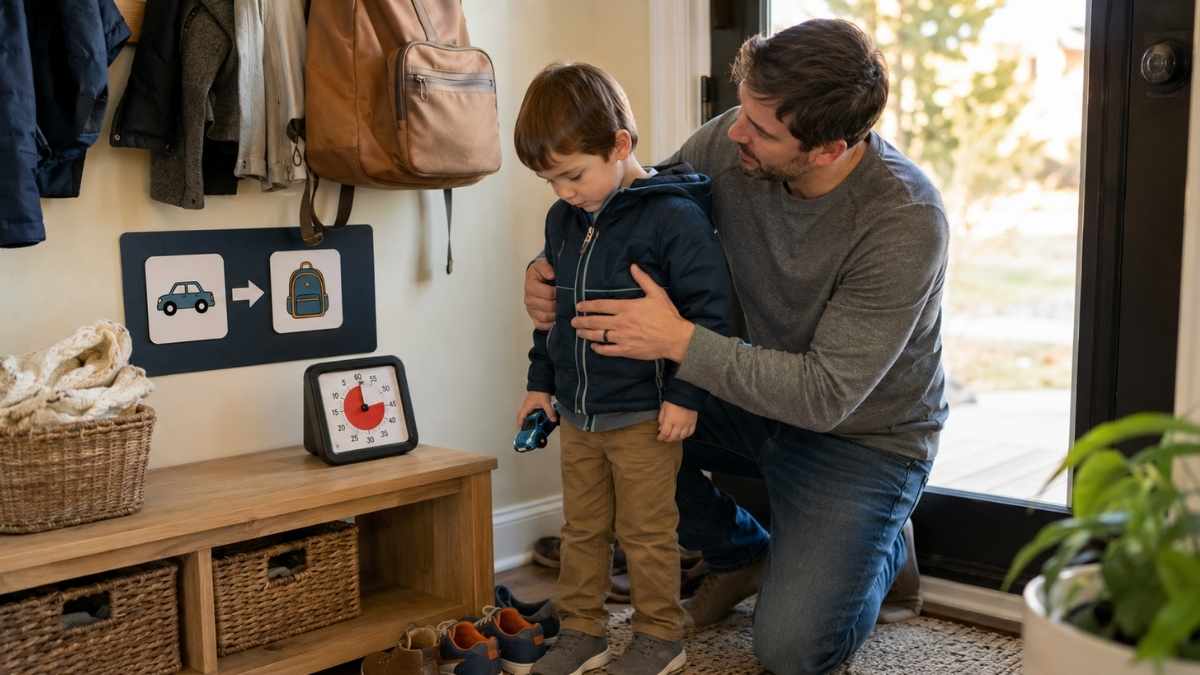
You are at the park, and it is time to leave, but your child grips the swing. Or maybe the tablet needs to turn off for dinner, and a meltdown feels seconds away. These daily changes are tough when a child does not know what is ending, what comes next, or how long the switch will take.
Coping skills for children with autism work best when they are small, clear, and practiced before the hard moment starts. With ABA parent training, you can learn how to set expectations early and help your child move through the day with less anxiety.
Here are seven practical strategies to make daily switches easier for the whole family.
 1. Coping Skills for Children With Autism Work Best Before the Switch Starts
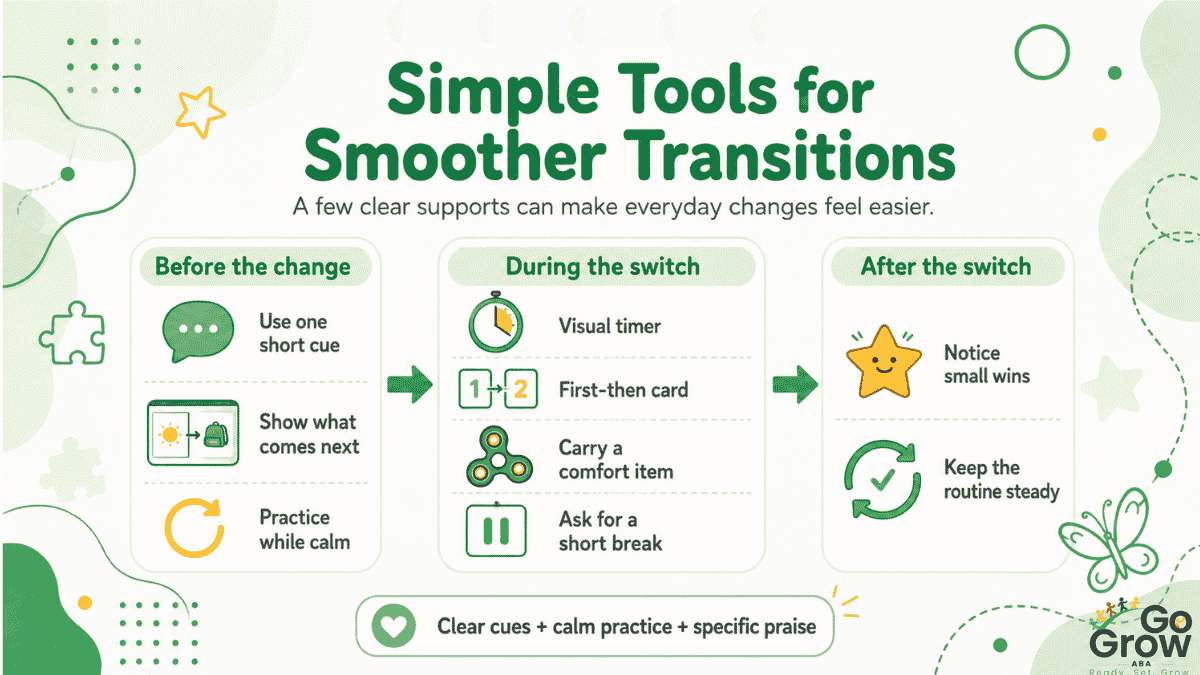
Transition support starts before distress. Once a child is crying or running, learning is harder. Many children may miss cues, such as keys or a backpack by the door. Research shows that unclear cues can raise anxiety during transitions, while visual or physical cues can help children prepare.
Use simple autism therapy techniques before the switch:
- Say the same short phrase each time
- Show what comes next
- Give time to move attention
- Practice when your child is calm
2. A Visual Timer Shows Your Child How Much Time Is Left
“Five more minutes” sounds clear to adults. For a child, it may feel unclear. Is that one more video? One more round of blocks?
A visual timer turns time into something your child can see. Use it before screens end, bath time, the playground, or bed. Parents often like timers because the timer becomes the signal.
Use these autism learning strategies:
- Start with 3 to 5 minutes for short switches
- Point to the timer instead of giving long reminders
- Say, “Timer done, shoes on”
- Praise the first small move after the timer ends
 3. A First-Then Board Turns the Next Step Into One Clear Picture
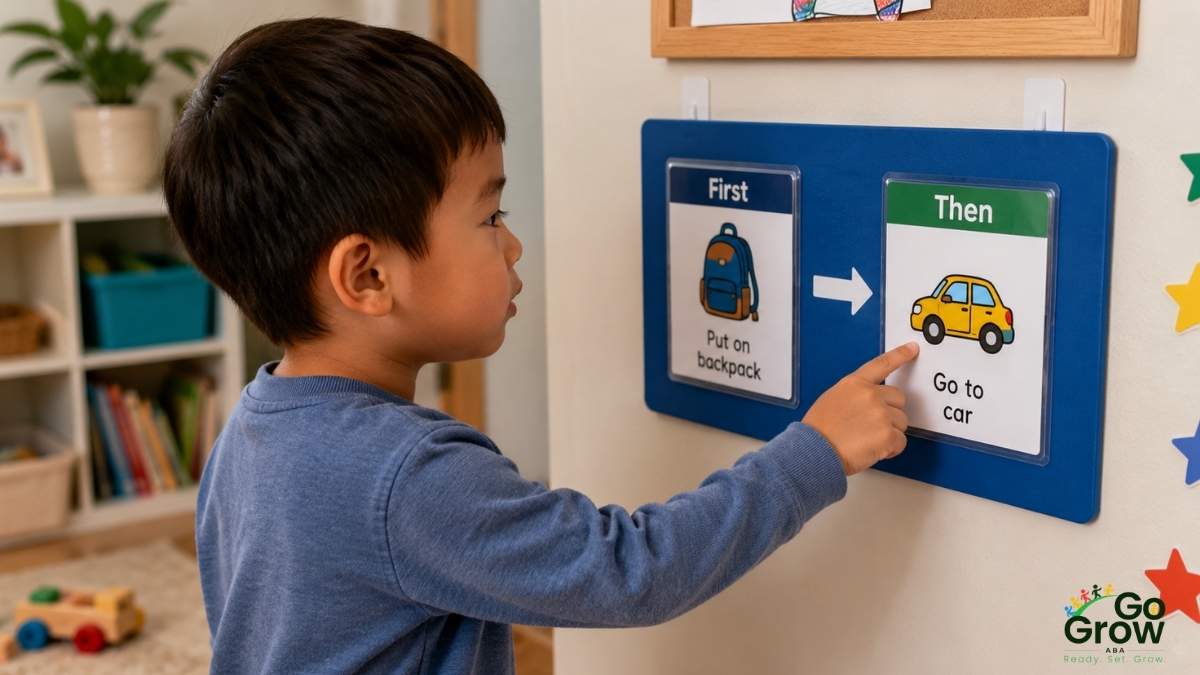
A first-then board lowers the language your child has to process. The message is clear: “First shoes, then car.” “First homework, then tablet.” “First bath, then book.”
Visual supports can help children understand expectations, routines, transitions, feelings, and what comes next. These coping skills for children with autism reduce extra talking during in-home ABA therapy. Many child therapy tips start with pictures, and not more talking.
Make the board simple:
- Use real photos from home
- Keep the board to two steps at first
- Point while saying the phrase
- Use the same board across routines
Do not promise the park if dinner has to happen first.
4. A Transition Object Gives Your Child Something Safe to Carry
Some children leave a place more easily when their hands are busy. A transition object can be a small toy, photo card, fidget, or item tied to the next routine. It connects one place to the next.
This can help during car rides, school pickup, doctor visits, and leaving a preferred activity. A child leaving a playground in Edison may carry a small car to the real car.
Use autism support activities like this with clear limits:
- Choose one small item
- Use it only for transitions
- Keep it predictable
- Avoid using it as a bribe
Connect Home Practice to ABA Support
How do you bring these strategies into your daily schedule? At Go Grow ABA, we help families turn home routines into teachable moments through in-home ABA therapy, parent training, and assessment.
If transitions are affecting mornings, outings, or bedtime, our team can look at the pattern and build a plan your family can use at home. Contact us today to learn how we support families across New Jersey.
 5. Short Practice Runs Make Hard Switches Feel Less Sudden
Practice the switch when nothing urgent is happening. Rehearse walking to the door with no appointment. Practice turning off a pretend video before anyone is tired.
Keep it fast. Practice for one minute. End with praise. These pediatric ABA exercises teach the body what to do before the real moment. They can support social skills for autism when the next activity includes waiting, turns, or sibling play.
How Coping Skills for Children With Autism Sound During Practice
Use simple scripts during these sessions:
- “First blocks, then snack.”
- “Timer done, walk to the door.”
- “Break card, then try again.”
- “Nice walking to the car.”
6. A Break Card Teaches Your Child to Ask Before Stress Peaks
A break card gives your child a way to ask for space before yelling or running starts. The card should not cancel every transition. It gives a short pause, then brings the child back to the next step.
This supports emotional regulation in autism because the child gets a clear action when stress rises. Here, coping skills for children with autism help clarify the next step. Teach the card during calm moments, not during hard school pickup or bedtime.
Keep it simple:
- Teach the card during calm moments
- Honor the card for a short break
- Keep the next step visible
- Praise the request
7. Praise the Exact Transition Skill You Want to See Again
Praise should name the action. “Good job” feels warm, but it may not name what to repeat. Say the exact transition skill instead.
These ABA behavior strategies reinforce tiny wins. A child may stand up, hand over the tablet, walk to the door, breathe, or check the picture schedule. Each small action is part of ABA skill development because it teaches a repeatable response. Parents can use the same home ABA practices during mornings in Montclair, after-school routines in Newark, or bedtime in Cherry Hill.
Try phrases like:
- “You put the tablet down when the timer rang.”
- “You walked to the door after one reminder.”
- “You used your break card.”
- “You checked the picture schedule.”
 FAQs About Coping Skills for Children With Autism
What should I do if the transition has to happen fast?
Use the shortest clear cue, show the next step visually, and reduce your talking to focus entirely on safety first. You can always practice the faster version of the switch later when your child is calm.
Should I reward my child every time they switch activities?
Yes, start with frequent praise or small reinforcement while the skill is completely new. You can fade these rewards slowly as the transition becomes familiar. Always keep your praise specific to the action.
Can transition skills work at school if therapy happens at home?
Yes, transition skills carry over when ABA assessment goals use the same cues with teachers and school staff. Send simple visuals and exact phrases to school so your child hears a consistent message across daily routines.
Build Easier Transitions With ABA Support at Home
Daily routines become much more peaceful when your child knows exactly what to expect during a change. Visual timers, first-then boards, short practice runs, break cards, and specific praise give you a usable starting point at home.
At Go Grow ABA, we provide in-home ABA therapy, parent training, and ABA assessment for families across New Jersey, including Montclair, Newark, Edison, Trenton, Cherry Hill, and nearby communities. Call (732) 554-8383 or email office@gogrowaba.com to request a consultation. After you reach out, our team can talk through your concerns, review your child’s routines, and explain the next steps for starting care.