

Key Points:
- Starting ABA therapy usually involves intake, coverage checks, an ABA assessment, and a treatment plan.
- Health plans may require approval before assessment, treatment, or both.
- The provider must also confirm staffing and a schedule before regular sessions can begin.
Starting ABA therapy in New Jersey often begins with a provider call after an autism diagnosis. That first conversation helps families understand what their health plan requires before an assessment or treatment can begin.
Applied Behavior Analysis (ABA) involves a treatment plan based on the child’s needs. Parents do not need to arrive with goals or weekly hours already chosen. The assessment helps the clinical team develop those recommendations.
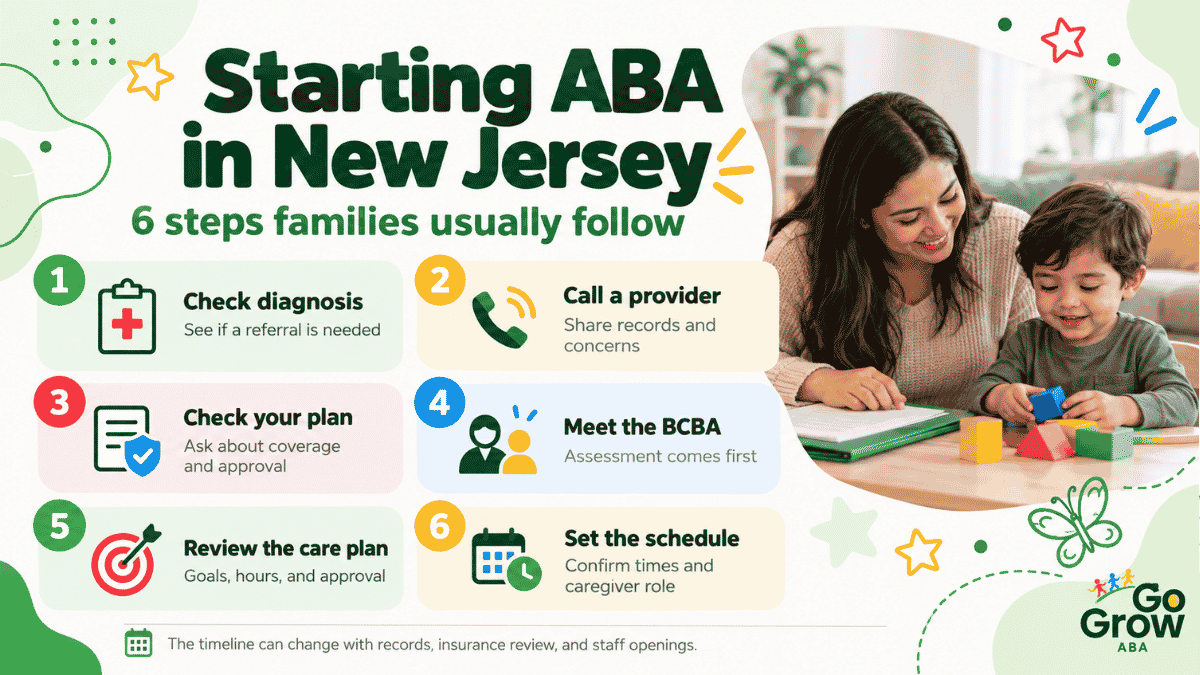 Step 1: Check Diagnosis and Referral Requirements
NJ FamilyCare’s autism benefit requires an autism diagnosis from a qualified healthcare professional. Medically necessary ABA services are available to eligible members under age 21, subject to assessment and approval requirements. The Family Guide to Autism Services explains access through the program.
For private insurance, the health plan can confirm which diagnostic documents it accepts and whether it requires a referral or prescription. A diagnosis, a referral, and an ABA assessment serve different purposes. The diagnosis identifies autism; the assessment helps determine treatment needs.
Step 2: Contact an ABA Provider and Share Records
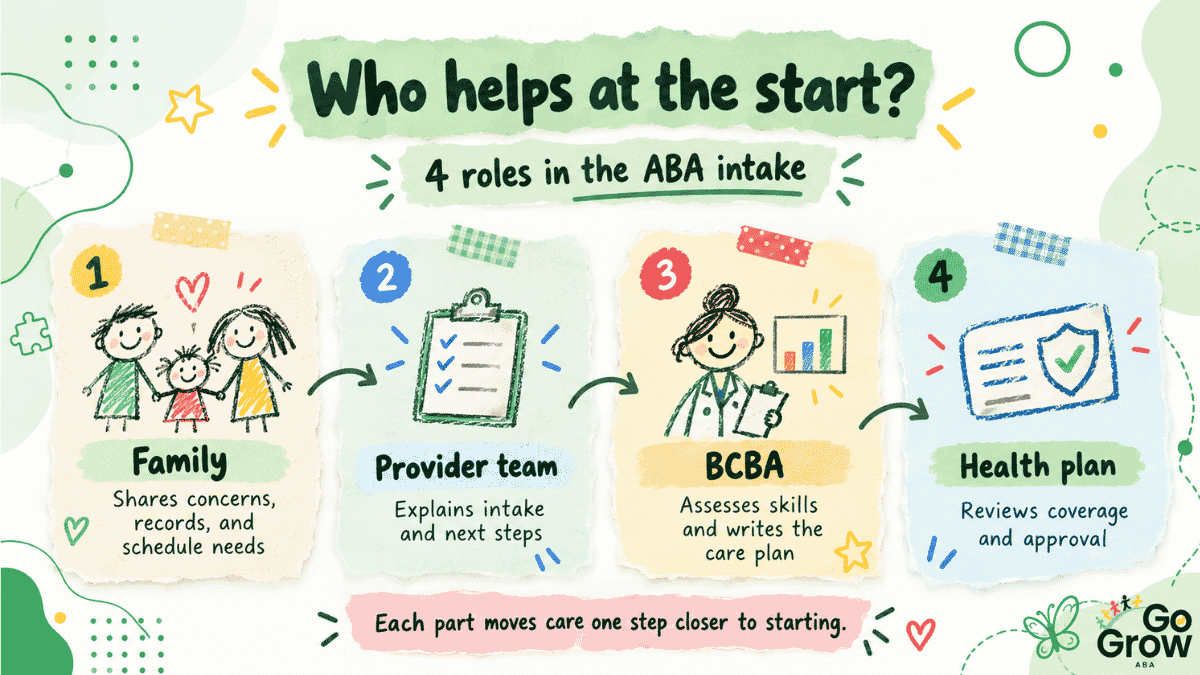
The intake call helps the provider understand the child’s needs, service location, insurance, and family availability.
At Go Grow ABA, we offer a free consultation to hear about your goals and daily concerns. Our team can explain the next step, which may involve an insurance check or assessment scheduling.
A short example can help explain a concern: “My child pulls me toward the kitchen when they need something, and I want to help them communicate.” Everyday descriptions give the team a starting point without clinical terms.
The provider can explain which records to send and how to submit them. Our six-item ABA intake checklist covers document preparation in detail.
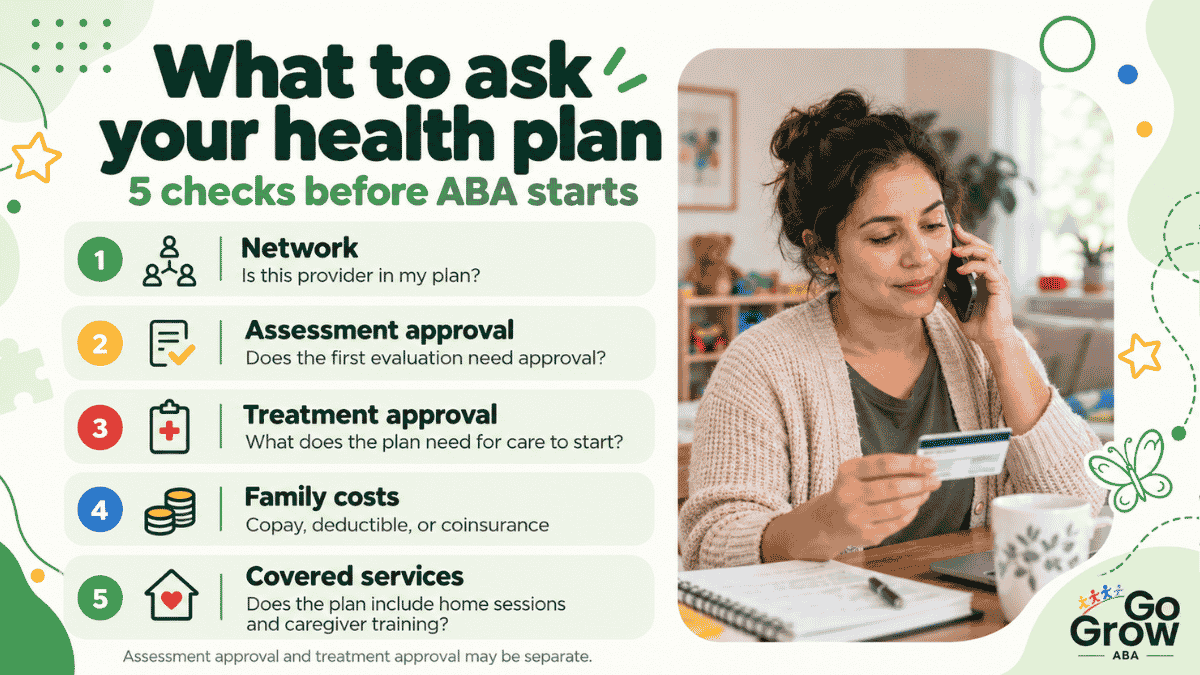
Step 3: What Does Your Health Plan Require?
Your health plan determines the coverage and approval requirements for your child’s services. An insurance check should address these points before appointments create unexpected expenses:
- Provider network: Whether the agency and treating professionals participate in the exact plan.
- Assessment approval: Whether the initial ABA assessment needs prior authorization.
- Treatment approval: Which records and clinical recommendations the plan requires.
- Family expenses: Any deductible, copayment, or coinsurance that applies.
- Covered services: Whether benefits include the proposed setting and caregiver training.
Prior authorization means the plan reviews a service before approving it. Assessment approval and treatment approval may involve separate requests.
NJ FamilyCare members enrolled in a managed care organization should contact the plan using the number on their member card. Families seeking coverage can find application options through the current NJ FamilyCare enrollment page. Enrollment in the program and approval for ABA treatment are separate decisions.
Step 4: Complete the BCBA Assessment
The ABA assessment helps a Board Certified Behavior Analyst (BCBA) understand the child’s strengths, current skills, and support needs before recommending treatment.
Our BCBA-led ABA assessments combine observation, caregiver input, and assessment tools. We use that information to develop a written report and treatment recommendations.
A parent’s description of daily life adds context that one appointment cannot capture. For example, a child might request help during play but struggle to communicate during dressing.
The first ABA assessment guide explains the visit itself. At this stage, families should know who will conduct the assessment, where it will happen, and whether insurance has approved it when required.
 Step 5: Review the Treatment Plan and Authorization
The treatment plan connects the assessment findings to specific goals and recommended services. Parents should have an opportunity to understand those recommendations before agreeing to treatment.
The review should address:
- Goals: Which daily needs each goal addresses.
- Recommended hours: Why the clinician recommends that amount of care.
- Teaching approach: How the team plans to help the child learn.
- Progress checks: How the clinician will measure learning and review the plan.
- Caregiver involvement: What participation and coaching will involve.
For NJ FamilyCare managed-care services, the provider and health plan work together on authorization. The plan reviews medical necessity, meaning whether the requested care meets its clinical coverage requirements.
An insurance benefits check does not establish that the plan has approved the proposed treatment. Before sessions begin, families should confirm any required authorization, approved services, and coverage dates with the provider.
Step 6: Confirm the Session Schedule and Caregiver Role
Regular sessions can begin once the necessary approvals, staffing, and scheduling arrangements are in place. Insurance approval alone does not establish a start date.
Before the first appointment, the family and provider should confirm:
- The therapist’s name and supervising clinician.
- The session location, days, and times.
- Caregiver presence and participation requirements.
- Contact details for questions, cancellations, or concerns.
We provide in-home ABA therapy through individual sessions built around the child’s needs and family routines. Our ABA parent training offers coaching on strategies caregivers can practice during daily activities.
A workable schedule needs room for school, other appointments, meals, rest, and family time. Any scheduling limits belong in the conversation before the family commits to recurring sessions.
How Long Does It Take to Start ABA Therapy?
The time needed to start ABA varies with records, assessment appointments, insurance review, and therapist availability. A general enrollment estimate cannot establish a start date for an individual child.
Families can request a status update that names the current stage: missing records, assessment scheduling, authorization review, or staffing. That detail helps identify who needs to act next.
An assessment opening may come before an ongoing therapy opening. The provider should explain both. Our New Jersey ABA waitlist article covers options families can explore while waiting.
 FAQs About Starting ABA Therapy
Can my child receive help while waiting for an autism diagnosis?
Yes. Families with developmental concerns about a child under 3 can contact the New Jersey Early Intervention System for an evaluation. Access begins with developmental concerns, so families can make that call while pursuing an autism evaluation. Public early intervention follows a separate process from insurance-funded ABA.
Can my child keep school services while starting ABA?
Yes. School services do not automatically prevent a child from receiving medically necessary ABA through NJ FamilyCare. Insurance-funded treatment requires its own approval and remains separate from the child’s Individualized Education Program (IEP).
Can NJ FamilyCare help with an interpreter during enrollment calls?
Yes. NJ FamilyCare managed care plans offer language assistance for calls about services. A parent can request an interpreter through member services using the number on the child’s plan card.
Begin Your Child’s ABA Intake
Starting care brings several decisions together: the child’s treatment needs, the health plan’s requirements, and a schedule the family can manage. A conversation about the current stage helps families understand what needs attention next.
At Go Grow ABA, we offer a free consultation for families considering services in New Jersey. Our team can hear your concerns and explain the next step toward an assessment or in-home care. Families can call (732) 554-8383 or contact us online.