

Key Points:
- ABA therapy hours per week require an individual recommendation, and published ranges describe different treatment models.
- Weekly totals, appointment length, insurance authorization, and actual attendance measure different parts of care.
- Ongoing review helps the team decide whether to change treatment time, teaching methods, or the schedule.
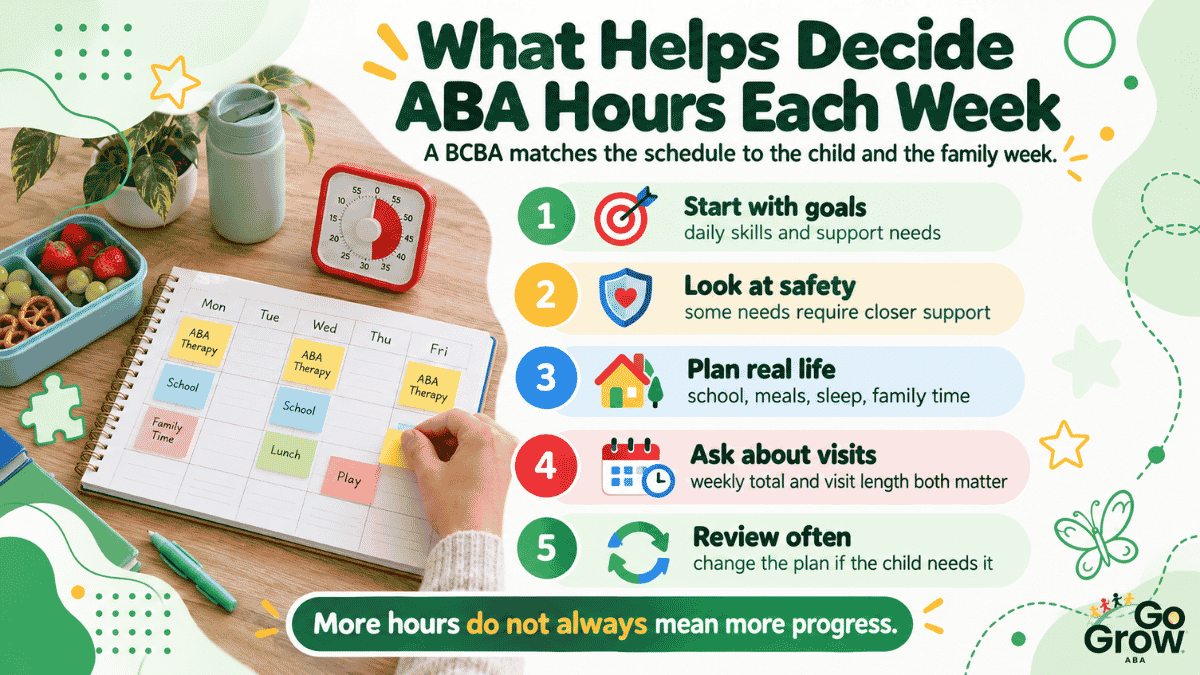
ABA therapy hours per week depend on a child’s treatment goals, support needs, and response to care. A Board Certified Behavior Analyst (BCBA) recommends hours after an assessment and considers the child’s school day, other services, and family routines.
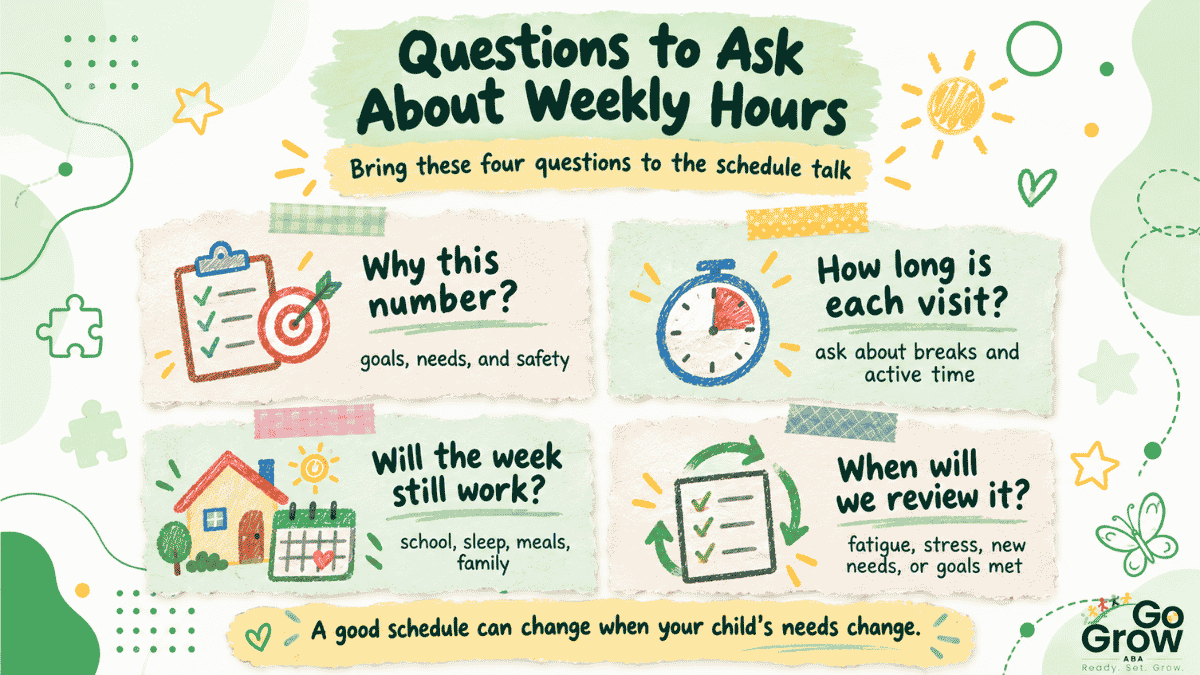
A recommendation should explain why those hours are appropriate and how the team will review them. Families deserve to understand what the proposed schedule means before adding it to their week.
 Focused and Comprehensive ABA Hours
ABA plans can address a limited set of goals or several areas of development. A National Academies review of ABA practice standards summarizes these professional reference ranges from the Council of Autism Service Providers:
| Treatment approach | Scope of treatment | Weekly direct-treatment reference range |
|---|---|---|
| Focused ABA | A limited number of skills or behaviors | 10–25 hours |
| Comprehensive ABA | Several areas, such as communication, daily living, and social skills | 30–40 hours |
These ranges describe treatment models. They do not establish a minimum for every child or guarantee insurance approval. A child’s recommendation still needs an individual explanation.
Insurance limits are a separate issue. An insurer-specific range applies under that insurer’s policy; families need to check their own benefits and authorization.
How Long Are ABA Sessions?
ABA sessions have no single standard length. The clinician plans the length and frequency of visits around the child’s needs, participation, and treatment goals.
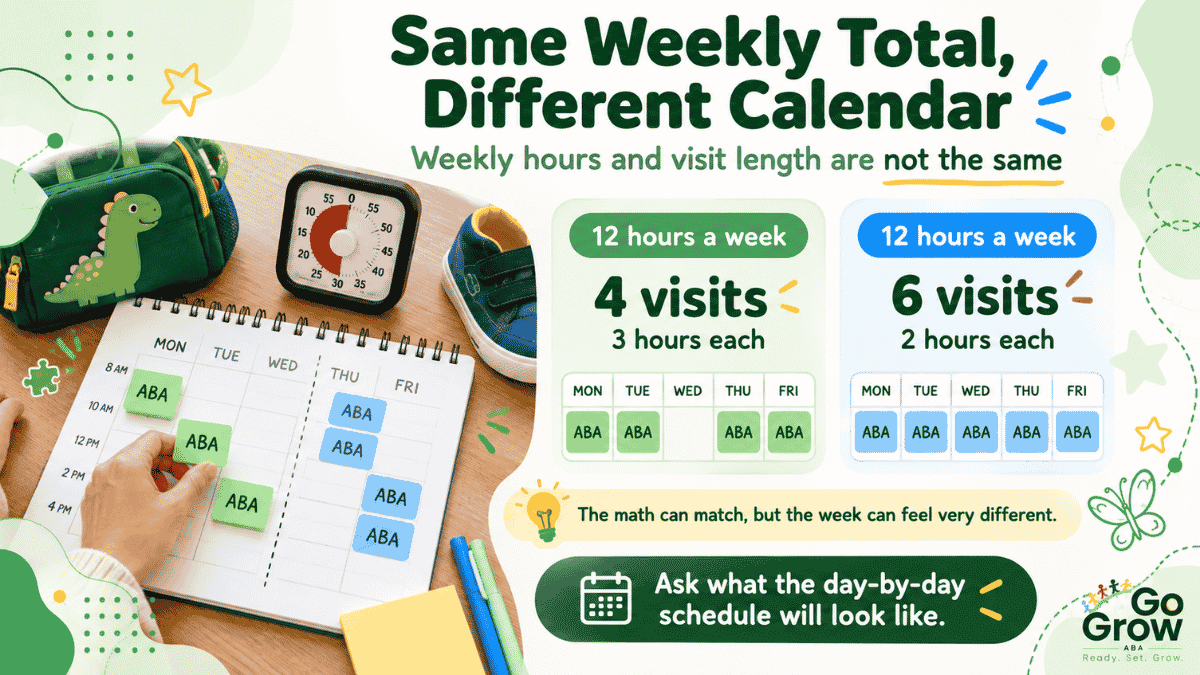
Weekly hours measure the total treatment time across the week. Session length measures one visit. For example, a hypothetical 12-hour weekly schedule could include:
- Four visits lasting three hours each.
- Six visits lasting two hours each.
The arithmetic is the same, but the calendars are different. These examples explain scheduling; they are not treatment recommendations or promised appointment options.
Families should also confirm whether the appointment’s start-to-finish length includes breaks and how much time involves active treatment. For details about activities during a visit, our home-session walkthrough covers that separate question.
How the BCBA Recommends Weekly Hours
The recommendation should connect treatment time to specific needs. An individualized ABA program considers the learner’s skills, interests, preferences, and family situation.
A scheduling discussion can cover:
- Priority goals: What the child needs help doing in daily life.
- Current skills: What the child does independently and where support is needed.
- Safety needs: Whether particular behaviors require assessment and targeted treatment.
- Participation: How the child responds to activities and the proposed visit length.
- Daily commitments: School, other therapies, sleep, meals, and family time.
At Go Grow ABA, our ABA assessments combine observation, caregiver input, and assessment tools. We provide a written report and treatment recommendations, giving families something concrete to review. Our assessment visit article explains that process in more detail.
 What Research Says About More ABA Hours
More therapy time does not guarantee more progress. A 2024 meta-analysis of intervention amount combined 144 studies involving 9,038 children. It examined several early autism intervention approaches, including behavioral interventions.
The analysis found no significant positive association between intervention amount and developmental outcomes within the intervention types studied. Each included study had a sample in which more than half the participants were autistic children age eight or younger.
The findings do not establish an ideal weekly number, prove that lower and higher hours produce equal results, or determine what one child needs. Missing information about treatment amounts also limited the analysis. Families can use the findings as a reason to request an explanation for the proposed hours and ongoing review of the child’s response.
Recommended, Approved, and Received Hours
Three different numbers can appear in a child’s care:
| Type of hours | What the number means |
|---|---|
| Recommended | The clinician’s proposed treatment amount |
| Approved | The services the health plan authorizes under its rules |
| Received | The treatment the child actually attends |
For example, a clinician might recommend 20 hours, an insurer might approve 16, and scheduling gaps might leave the child receiving 12. This hypothetical example shows a service gap. It does not establish that 12 hours meet the child’s needs.
Families can request a comparison of the recommendation, authorization, and actual attendance. A coverage decision and a staffing problem need different responses. Blue Cross Blue Shield of Michigan’s clinical criteria, for example, require clinical justification for requested hours and documentation of barriers to receiving care. Those requirements belong to that policy.
A Weekly Schedule Needs Room for Daily Life
A workable calendar accounts for the whole day. A child finishing school, speech therapy, and a long journey home may have different scheduling needs from a child who spends mornings at home.
Before accepting appointment times, families can review:
- School hours and travel time.
- Meals, naps, and bedtime.
- Other healthcare appointments.
- Time with friends, siblings, and family.
- Caregiver availability for planned participation.
Our in-home ABA therapy includes individual home visits and caregiver involvement. Goals can involve routines already happening at home, while the agreed schedule sets the boundaries around treatment time.
When Should ABA Hours Be Reviewed?
ABA hours need review when the child’s needs, participation, or response to treatment changes. A review may lead to a different weekly total, shorter visits, changes in teaching, or another service recommendation.
Reasons to request a review include persistent distress, fatigue, stalled progress, newly identified needs, or goals the child now meets. The BCBA should examine the reasons behind these changes before deciding what to adjust. Ongoing treatment review should continue between formal insurance reviews.
A parent’s observation can help: “By the last hour, my child keeps falling asleep.” That detail gives the team something specific to investigate.
 FAQs About ABA Therapy Hours Per Week
Does parent training count as direct therapy time for my child?
Parent training is a separate service from direct child treatment. Some weekly totals combine several service types, so families can request a breakdown of child treatment, caregiver training, and BCBA involvement. We provide parent training through individual coaching and strategies connected to home routines.
Can remote ABA replace an in-person appointment?
A remote replacement requires clinical and coverage checks. We offer remote ABA sessions among our additional supports. Whether a particular appointment can happen remotely depends on the treatment goals, available support, applicable rules, and payer policy.
Can missed ABA hours be made up later?
Replacement appointments depend on the provider’s schedule, clinical recommendations, and applicable coverage limits. Families can request the cancellation and makeup policies before treatment begins, including whether an authorization limits when approved hours can be delivered.
Review Your Child’s ABA Schedule With Our Team
An ABA schedule should connect the recommended hours to your child’s goals and daily life. The weekly total, visit length, and review plan each deserve attention before treatment begins.
At Go Grow ABA, we provide assessments, in-home treatment, and caregiver support. Our team welcomes questions about your child’s needs and the steps involved in starting care.