Key Points:
- The ABA intake process prepares the BCBA to understand a child’s strengths, routines, safety needs, communication, and family goals.
- Parents usually share records before the visit and answer questions about daily challenges.
- The assessment uses play, observation, and interviews to shape practical therapy goals.
The first ABA assessment can feel strange. A new person comes into your home, asks questions, and watches your child play. Many parents worry their child will be judged.
That visit is not a pass-or-fail test.
The ABA intake process helps the Board Certified Behavior Analyst understand your child’s strengths, daily routines, communication, safety needs, and family goals before therapy begins. The BCBA may ask about your day, watch your child play, and note what helps your child feel calm.
 The ABA Intake Process Starts Before the BCBA Meets Your Child
The ABA intake process starts with records and parent details. Your child does not need a formal test right away. The BCBA needs background because NJ families often balance diagnosis paperwork, school services, insurance, NJ FamilyCare, and provider calls.
Plus, high demand can affect pediatric therapy availability. This is why early intervention ABA therapy enrollment and ABA program registration often begin with documents.
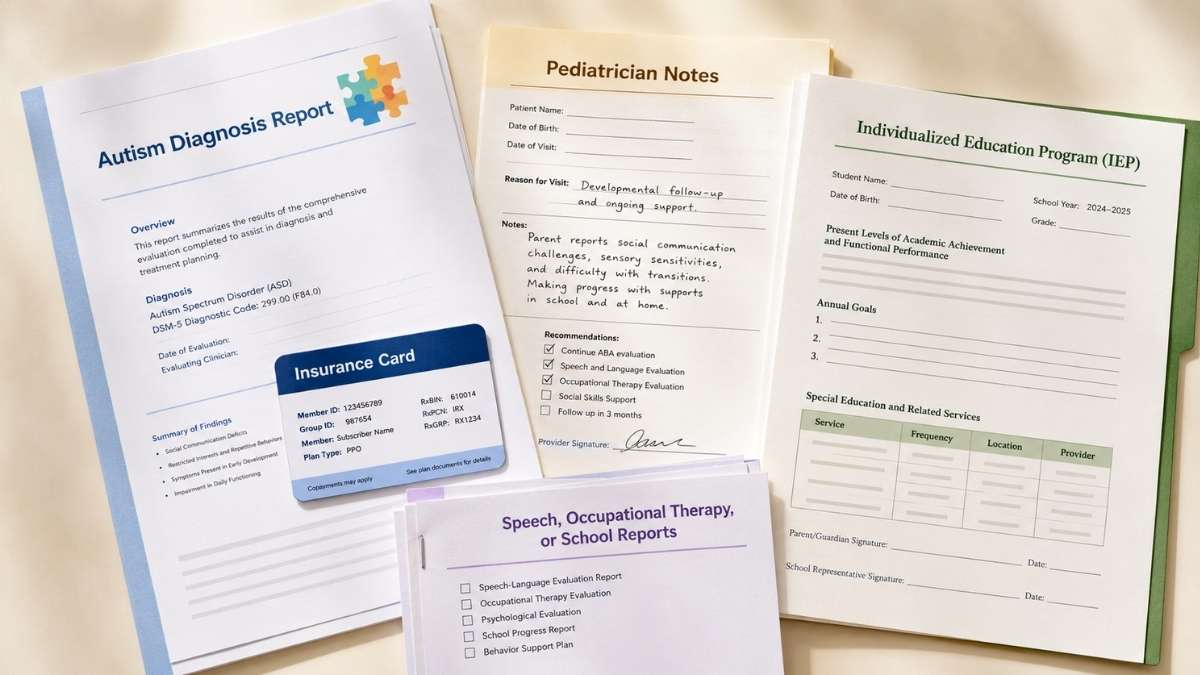
What to send before the assessment:
- Autism diagnosis report
- Insurance card
- Pediatrician notes
- Individualized Education Program, if your child has one
- Speech, occupational therapy, or school reports
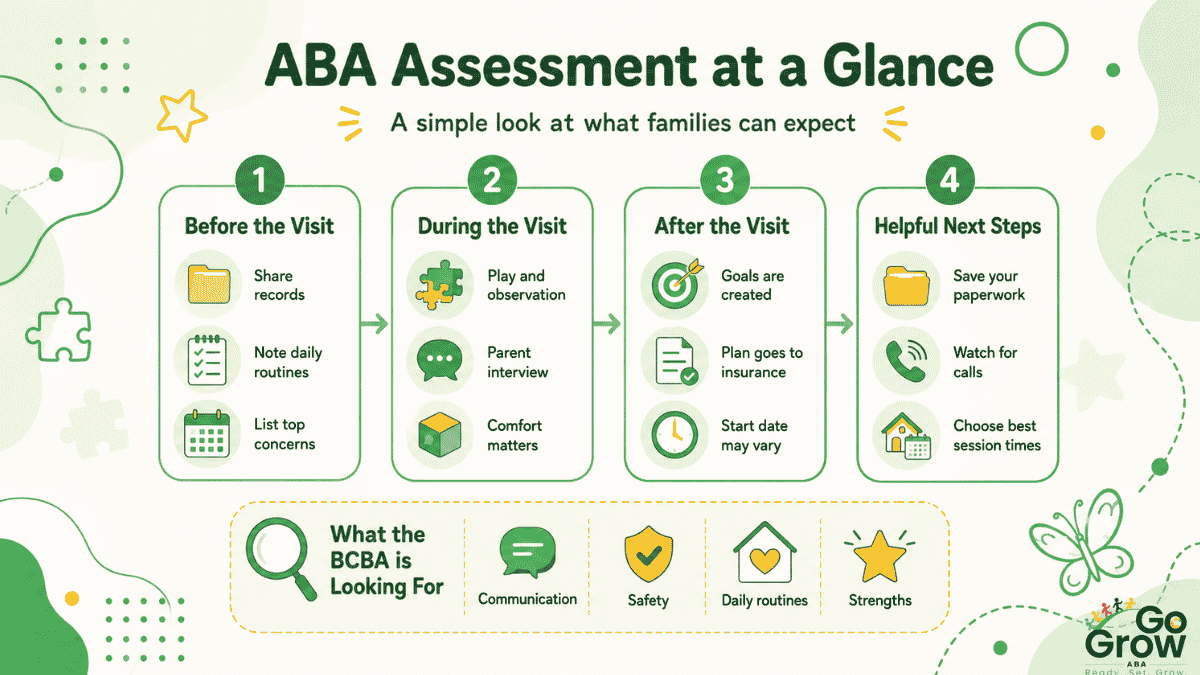
What to write down before the visit:
- Sleep, meals, toileting, and safety concerns
- Communication strengths and hard parts of the day
- Favorite toys, snacks, games, and people
 The First Visit Usually Feels More Like Structured Play Than a Test
Will your child have to sit at a table and answer hard questions? Not at all. The BCBA will likely bring along a bag of toys, games, or simple activities to see what catches your child’s interest.
The visit focuses on natural interactions, which also shape in-home ABA therapy sessions. Your child may be invited to play, request favorite items, or take breaks whenever they want. Throughout this time, the practitioner observes communication choices, play skills, and reactions to small frustrations. You can stay right in the room the entire time.
ABA planning uses observation, interviews, records, and assessment tools to identify strengths and needs. This ABA appointment guidance helps build an accurate picture. The analyst looks for patterns, not perfect behavior.
The Parent Interview Helps the BCBA See the Full Day, Not One Moment
A child can look different at 10 a.m. than they do at 6 p.m. That is why the parent interview carries weight. NJ parents may also be juggling preschool, public school evaluations, Early Intervention history, and private therapy reports.
Questions parents may hear:
- What does your child do when they want help?
- What routines are hardest at home?
- What situations feel unsafe?
- What helps your child calm down?
- What goals would change daily life first?
Hard answers are allowed. If your child screams during dressing or bolts to the door, say it. The goal is always useful support instead of a polished story.
Why the ABA intake process Includes Family Routines
An in-home assessment lets the BCBA see where mornings, meals, homework, and bedtime happen.
A child who struggles with mealtime, dressing, or bedtime may need goals built around those exact times. That can affect home ABA therapy scheduling and ABA parent training, since the best session time may depend on the routine your child needs most.
Ask for Help Before the First Visit Feels Bigger Than It Is
At Go Grow ABA, we can walk you through what to send, what to expect, and how an in-home assessment works before your first visit. Our team supports families across New Jersey, including Montclair and nearby communities, so you are not trying to sort through forms alone. Contact our team today to ask about our current autism support in NJ and the next step for your family.
 The BCBA Turns the Assessment Into Goals Parents Can Recognize
After the visit, the practitioner analyzes the data to build a treatment plan. These goals focus on building useful skills rather than forcing compliance. ABA treatment plans document initial and ongoing assessments, goals, objectives, the clinical approach, and caregiver support. Plans focus on meaningful changes. It doesn’t intend to erase a child’s natural personality.
Practical goal examples may include:
- Requesting a break during a difficult task.
- Waiting safely near a door before going outside.
- Following a predictable bedtime routine.
- Asking for help instead of screaming.
- Tolerating small changes in a daily routine.
New Jersey Timelines Can Depend on Insurance, Staff Openings, and Service Area
Completing the visit does not mean ABA therapy in New Jersey starts the next day. Insurance providers must review the clinical report before authorizing hours. Local demand also influences how fast care begins.
Recent reports say that 1 in 29 eight-year-old children in NJ is identified with autism, compared to 1 in 31 nationally. This high rate explains why families frequently check with NJ ABA centers about their current openings. Asking about the ABA therapy waitlist in NJ early helps you plan around a potential therapy session waitlist.
Questions to ask before the assessment ends:
- Who submits the treatment plan to insurance?
- What happens if insurance asks for more records?
- How soon can sessions start if authorization is approved?
- Can the schedule match home routines?
What Parents Should Do After the Assessment
Once the analyst leaves, you can take specific steps to keep the process on track. Staying proactive keeps communication lines open with your insurance provider and the clinical team. Use this time to gather your thoughts and finalize your household preferences for ABA appointment guidance.
After the BCBA leaves:
- Save copies of submitted documents.
- Track calls from insurance or the provider.
- Think about the best session times.
- List the top three home goals.
- Ask what the first therapy session may look like.
 FAQs About the ABA intake process
Will the BCBA judge my parenting during the assessment?
No. The professional is there to understand your child’s routines, needs, strengths, and safety concerns. Honest answers help the treatment plan fit real home life. Difficult moments during the visit provide useful information for providing actual support.
Does my child need to sit still for the whole assessment?
No. Many children move, play, take breaks, avoid tasks, or need comfort during the visit. The practitioner learns from those natural moments. Movement, play, and frustration all help shape better goals.
Can ABA start if my child already has school services?
Yes. Many children receive ABA outside school hours when it is medically necessary and approved by insurance. School programs and home-based services address different needs, such as communication, safety, and after-school self-care routines.
Connect With Support Before the First Assessment Feels Confusing
The first ABA assessment makes more sense when you know what the practitioner is watching, what questions may come up, and what happens after the visit. A clear intake can turn a stressful appointment into a practical plan for communication, safety, and daily skill goals.
At Go Grow ABA, we provide in-home ABA assessments and therapy support for families across New Jersey, including Montclair and surrounding communities. Call (732) 554-8383 or email office@gogrowaba.com to request a consultation, share your child’s basic information, and learn the next step for assessment scheduling.