
Key Points:
- Home-based ABA therapy in NJ can address goals tied to the people, activities, and spaces a child uses each day.
- Treatment planning should account for caregiver availability, household distractions, and practice beyond home.
- A BCBA assessment helps determine whether the setting supports the child’s needs.
Home-based ABA therapy in NJ may suit a child whose treatment goals involve daily routines and interactions at home. Applied behavior analysis, or ABA, uses teaching strategies to help children build skills such as communication and self-care. The choice of setting should reflect the child’s needs, comfort, and family schedule.
A familiar room can offer chances to practice, but the address alone cannot promise better results. Autism support can take place in home, education, health, or community settings, sometimes through a combination of settings. The decision starts with what your child needs help doing and where that help belongs.
 When Home Sessions May Suit Your Child
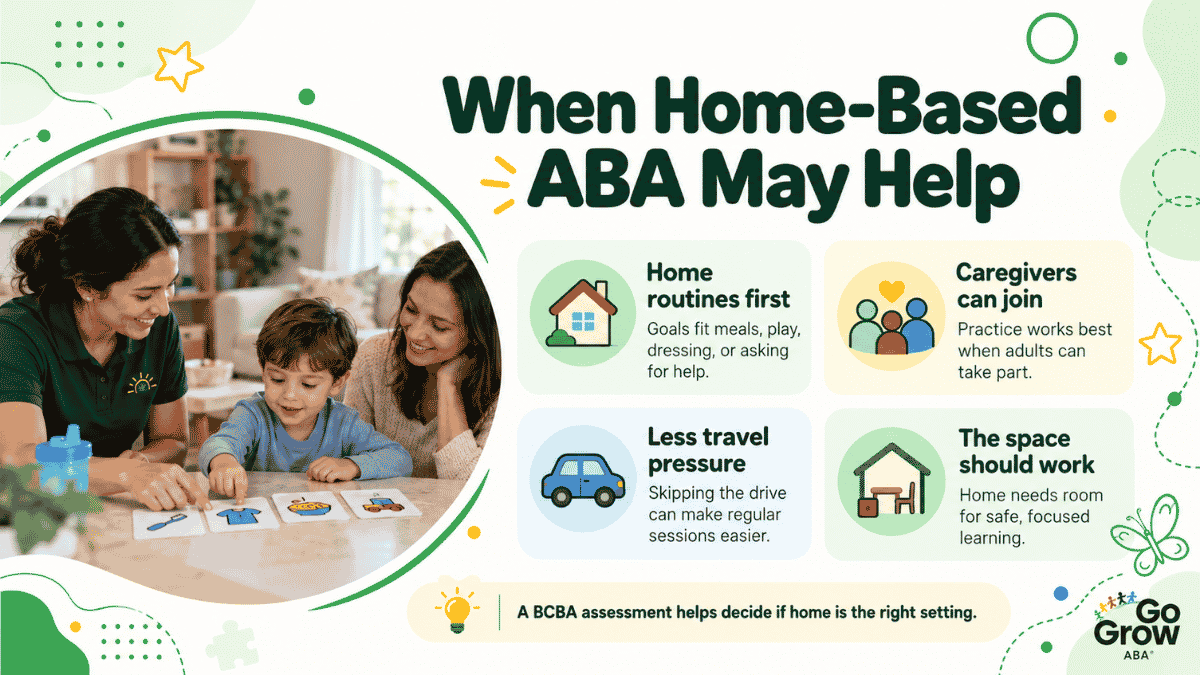
Home sessions may make sense when a clinician needs to observe and support activities that happen in your household. The connection between the goal and the setting should be specific.
For example, a child might request help during a planned activity but have trouble asking a caregiver for help with a toy. A home visit gives the clinician a chance to observe that situation and plan teaching around it. The example describes a possible goal, not an expected result.
Several factors can support the choice of home care:
- Goals connected to home life. The child needs support with communication, play, or daily activities in their own surroundings.
- Caregiver participation. A parent or another caregiver can take part in agreed portions of treatment.
- Practical access. Removing the trip to a clinic makes regular attendance more manageable.
- A workable home environment. The household can support safe visits, focused activities, and breaks.
At Go Grow ABA, we provide one-on-one in-home ABA therapy with teaching built into daily routines. Our plans use individual goals and progress tracking to guide care.
What to Weigh Before Choosing Home Care
Home care also needs to work for the people who share the space. A child’s comfort, caregiver responsibilities, and access to learning opportunities all deserve attention.
| Factor | What to Consider |
|---|---|
| Child’s comfort | The child’s response to a therapist joining their home activities, including their need for privacy and breaks. |
| Household activity | Noise, visitors, pets, and shared spaces that could interrupt teaching or affect safety. |
| Caregiver availability | Work, sibling care, and other responsibilities that may limit participation. |
| Access to other children | Whether goals require planned practice with peers that home visits alone cannot provide. |
A child may feel comfortable at home yet find it hard to take part after a long school day. Another child may need a setting with access to peers or different activities. Those needs belong in the setting discussion.
The treatment plan should reflect assessment results, family resources, and the child’s preferences. A family can also request an explanation of why the recommended setting supports each priority goal.
 Does Learning at Home Carry Over to Other Places?
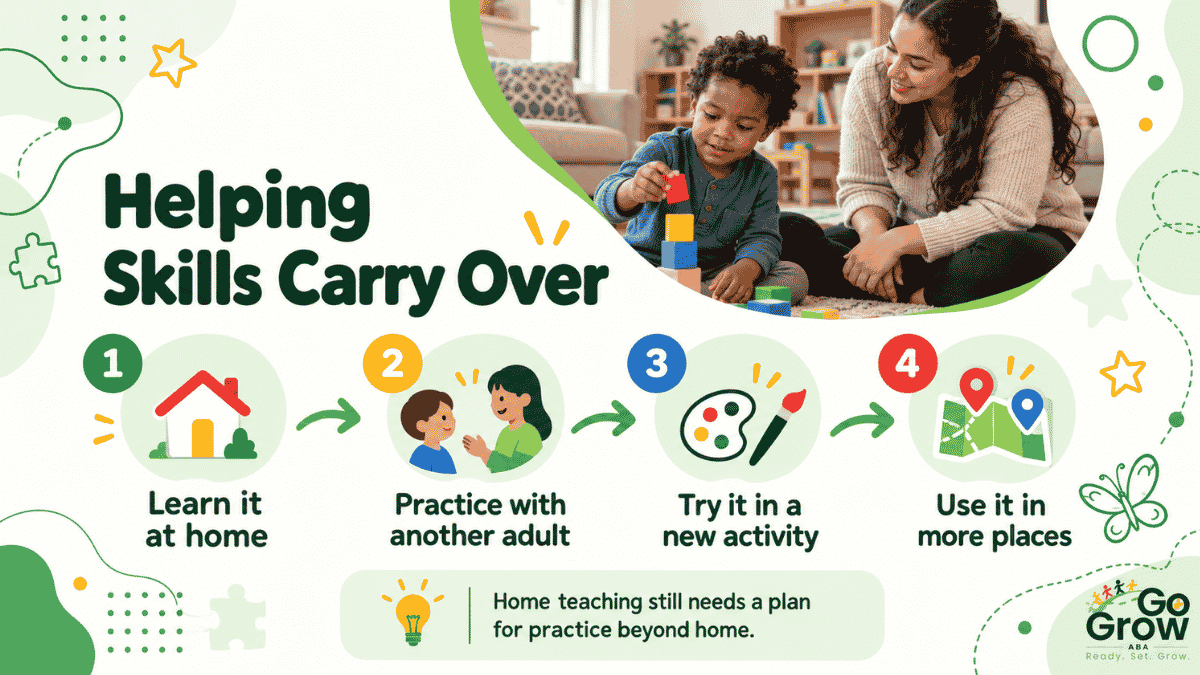
A skill learned at home may need planned practice before a child uses it with other people or elsewhere. Clinicians call that generalization.
For example, a child might ask one caregiver for help opening a container. The next step could involve asking another familiar adult during a different activity. Practice can change gradually as the child becomes more independent.
Teaching within everyday routines and activities offers opportunities to work on skills in context. The team still needs to check when, where, and with whom the child uses those skills. Home sessions do not remove that planning step.
Caregiver support can help connect the plan to family life. Through our ABA parent training, we provide one-on-one coaching and explain strategies caregivers can use during daily activities. Families can talk with the team about practice that their week allows.
How an Assessment Helps With the Setting Decision
A Board Certified Behavior Analyst, or BCBA, can use an assessment to connect a child’s needs with treatment recommendations. The discussion should address why home is a suitable place for the proposed work.
Three questions can help families understand the recommendation:
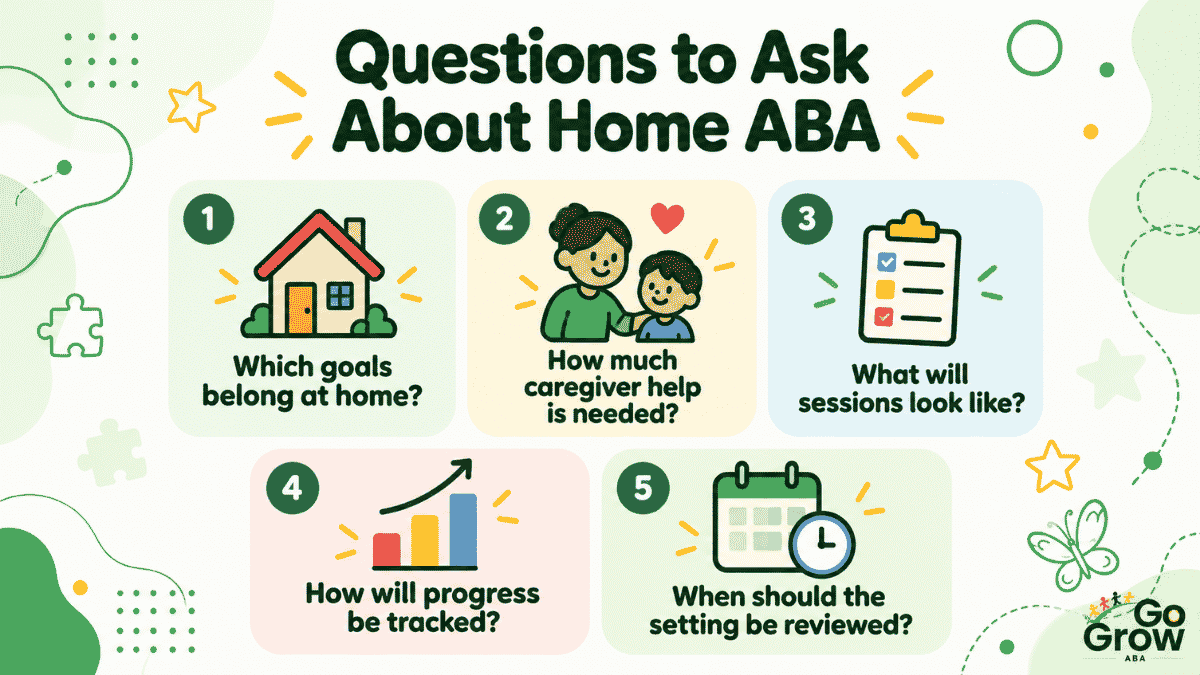
- Which goals need practice in our home?
- What participation will the plan require from caregivers?
- How will the team decide whether this setting continues to support our child?
During our BCBA-led ABA assessment, we use observation, caregiver input, and assessment tools to understand strengths and support needs. Our written recommendations help explain the proposed treatment plan.
The setting decision also includes knowing what visits involve. A separate walkthrough explains what happens during a home ABA session, including arrival, activities, caregiver participation, and the end of the visit.
 FAQs About Home-Based ABA Therapy in NJ
What should families check with insurance before home sessions begin?
Families should confirm coverage for the home setting, provider participation, required approvals, and any out-of-pocket costs. An insurer may handle assessment and treatment approvals separately, as shown in these New Jersey Medicaid ABA authorization resources. The member’s own plan should confirm the requirements that apply.
Do families need to buy therapy equipment?
Equipment needs depend on the treatment plan. Families can request a materials list before buying anything and confirm what the provider supplies. Existing toys and household items may support some activities, depending on the child’s goals.
Can home-based ABA replace speech therapy?
Home-based ABA does not automatically replace speech therapy. The services can address related needs through different approaches. A speech-language therapist assesses and treats speech and language concerns, while ABA addresses goals in the behavioral treatment plan. Each service needs its own purpose.
Explore Home ABA Options for Your Child
Home sessions may be a practical choice when the goals belong in daily home life and the household can support the plan. The decision should also account for the child’s comfort and opportunities to practice beyond home.
We provide BCBA-supervised ABA services in New Jersey. Our team can talk through your child’s needs, explain our home services, and confirm availability in your town.