
Key Points:
- In-home ABA therapy in Aurora, Colorado may address skills within morning, meal, play, transition, and bedtime routines.
- An assessment helps identify which skills belong in a child’s plan and whether other support is needed.
- Family observations help connect treatment priorities with the parts of daily life that need attention.
In-home ABA therapy in Aurora, Colorado can address specific steps within everyday activities. “Getting ready” might involve finding clothes, fastening buttons, or asking for help. Naming the step that causes difficulty gives a therapy team more information than saying the whole morning feels hard.
At Go Grow ABA, we provide ABA therapy in Aurora through home sessions with plans led by a Board Certified Behavior Analyst, or BCBA. Our ABA assessments combine observation, caregiver input, and a review of current skills. The five routines below offer starting points for that conversation.
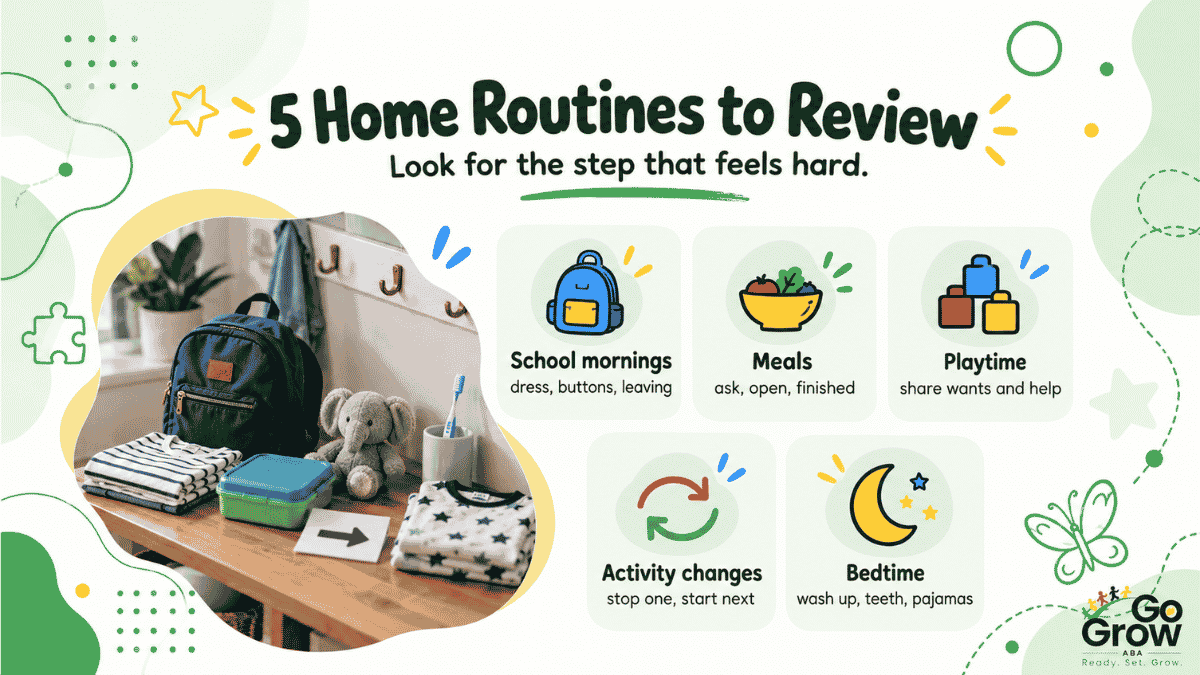 1. School Mornings: Dressing and Getting Ready
Morning routines contain several separate tasks. A child who needs help fastening clothing has a different concern from a child who gets dressed independently but becomes upset when it is time to leave.
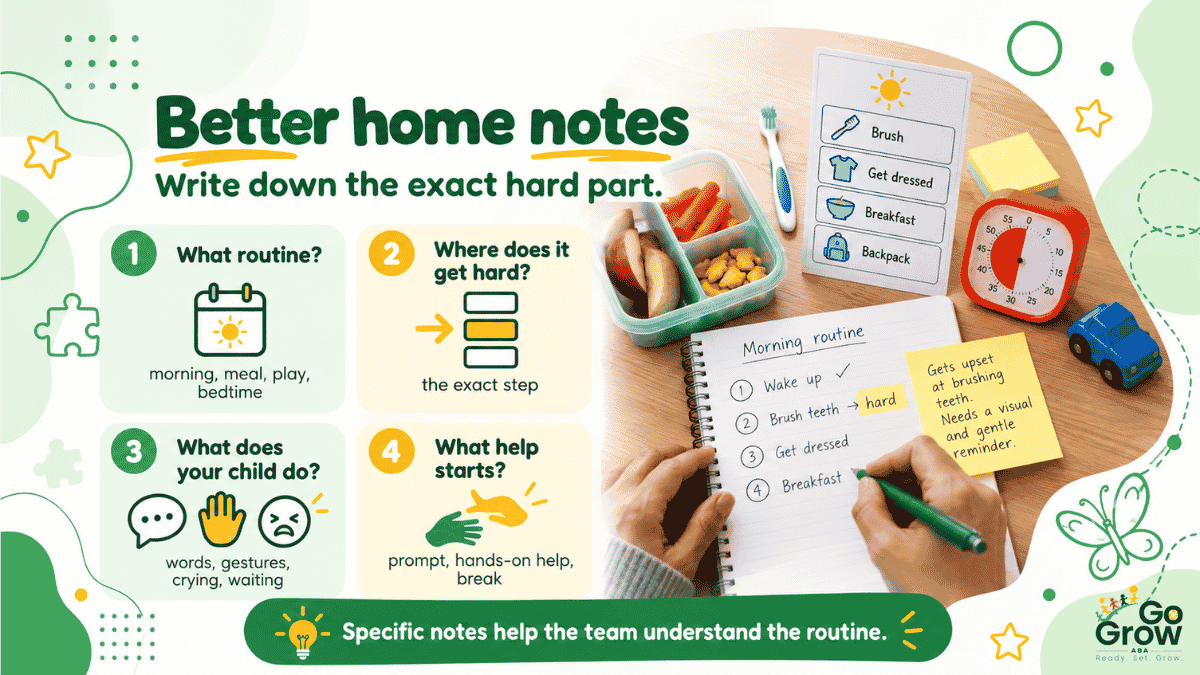
A few details can help explain the difficult part:
- The steps your child completes without help
- The point where reminders or hands-on help begin
- Any clothing, sounds, or other conditions that cause discomfort
For example, a parent might report, “He chooses his clothes and puts them on, but he brings every button to me.” That description identifies a specific task for assessment. It also recognizes what the child already does.
Possible ABA goals might involve following a short sequence or requesting assistance. Physical difficulty or discomfort may call for another professional’s input. Occupational therapy also addresses daily activities such as dressing and bathing.
2. Meals: Requests and Table Tasks
Mealtimes can reveal communication needs and tasks a child is learning. A child might need help opening a lunch container, choosing a drink, or communicating that the meal is finished.
The description should separate participation in the routine from eating concerns. “She needs help opening her yogurt” describes a different need from “She coughs when drinking.”
A possible routine goal could involve requesting help with packaging or carrying an empty cup to the counter. Coughing during meals, trouble chewing, or concerns about growth deserve attention from the child’s doctor and an appropriate feeding professional. These can be signs of feeding or swallowing difficulties.
 3. Playtime: Sharing Wants and Needs
Playtime provides opportunities to notice how a child communicates when something goes wrong, a toy needs help, or an activity ends.
For example, a child might bring an adult a toy that needs winding. A family could describe what happens next: Does the adult understand the request? Does the child point, make a sound, use words, or select a message on a device?
Communication can include speech, gestures, signs, pictures, and speech-generating devices. Augmentative and alternative communication, often called AAC, includes methods that support or replace speech. A speech-language pathologist can help assess those needs.
An ABA plan may include practicing a request during an activity the child enjoys. Our article on daily skills children can practice at home gives additional examples of individual tasks within larger routines.
4. Activity Changes: Ending One Task and Starting Another
Transitions are changes between activities, such as moving from a game to dinner. The difficult point may occur when the first activity ends, when the next activity begins, or somewhere in between.
Details about the sequence help explain what happened:
- What your child was doing before the change
- How your child learned that the activity was ending
- What the next activity required
- What your child communicated during the change
“Cleanup is difficult” leaves several possibilities open. A more specific example might be, “She puts the blocks away, then cries when homework comes out.” The concern begins after cleanup, which changes what the team needs to explore.
Depending on assessment findings, a plan might address understanding the next activity, requesting a pause, or starting one small step. A visual cue is one possible support; the team needs to consider the reason for difficulty before selecting a strategy.
5. Bedtime: Washing Up and Preparing for Sleep
Bedtime includes self-care tasks that can be reviewed separately from sleep itself. Putting on pajamas, brushing teeth, and placing clothes in a hamper each involve different actions.
A family’s description can identify where help becomes necessary. “He puts on pajamas but waits for me to tell him each next step” describes a sequence concern. “He cries when the toothbrush touches one side of his mouth” raises a different concern.
Pain and sudden behavior changes deserve medical or dental attention. A physical problem can sometimes explain a change that looks behavioral, so possible medical causes need attention before changes to treatment.
For an assessed routine goal, caregiver coaching can explain how to support the chosen task between visits. Through our ABA parent training, we teach strategies connected to daily routines and the child’s plan.
 FAQs About In-Home ABA Therapy in Aurora, Colorado
What if routines change on weekends?
Weekend examples can help explain how the routine varies. A later breakfast, a different activity, or the absence of a school deadline may change what the child needs to do. Notes can describe those differences without assuming why one day went better.
Can grandparents and other caregivers share observations?
Grandparents and other regular caregivers can contribute examples from the routines they handle. Their observations might cover meals, after-school activities, or evenings that a parent does not always see. Each person can describe the activity and the support they provided.
Should routine goals include the languages spoken at home?
Communication goals should account for the languages a child uses with family. Caregivers can share familiar words, phrases, signs, and device messages during assessment. The right to meaningful communication includes communication that respects a person’s language and culture.
Bring One Home Routine to the Conversation
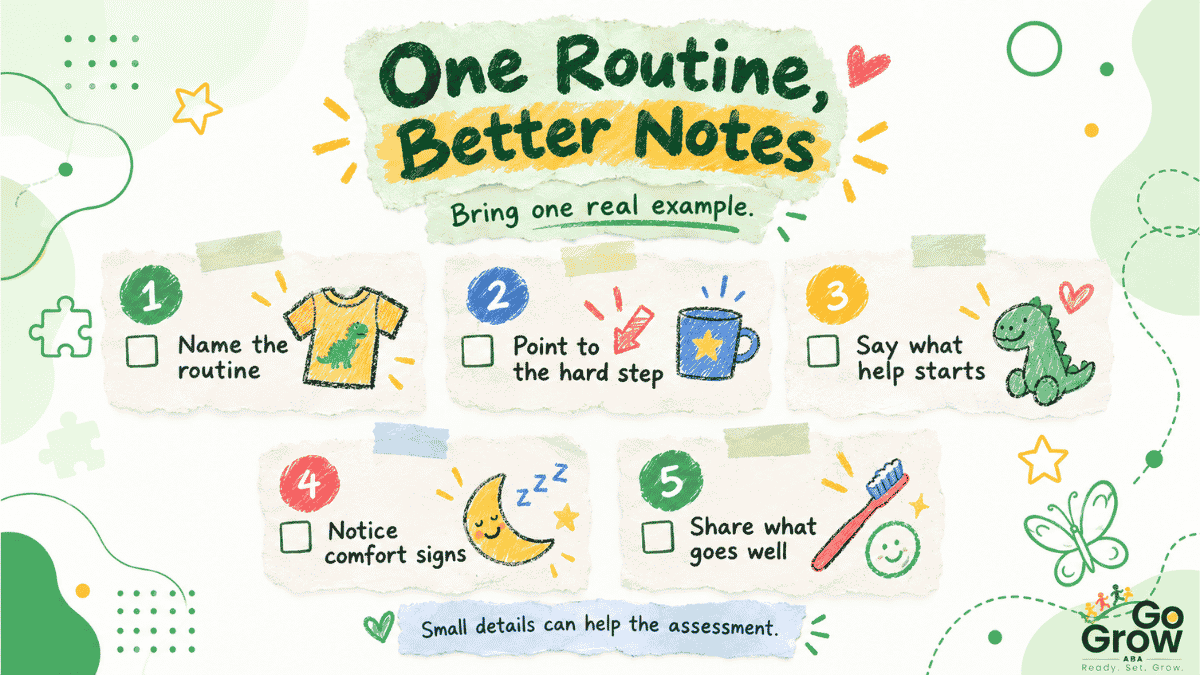
A specific example from home gives an assessment a practical starting point. The description can include the step your child finds difficult, the help they need, and how the experience affects their comfort or participation.
At Go Grow ABA, we provide in-home ABA therapy and caregiver support in Aurora. Families can call (732) 554-8383 or contact our team to talk about a routine and learn about consultation and assessment steps.