
Key Points:
- In-home ABA therapy in Colorado Springs lets clinicians observe the conditions surrounding a child’s difficulties during household activities.
- Observations can inform treatment, but one event cannot establish why a behavior happens.
- A recommendation should explain what home sessions would address and account for the child’s comfort and caregiver availability.
In-home ABA therapy in Colorado Springs, CO can help when a treatment team needs to understand why a child needs different support at home. A skill that works during an appointment may be harder with different people, objects, or instructions.
At Go Grow ABA, we provide ABA therapy in Colorado Springs, including home services for ages 2 to 21 and caregiver training. Home observations can help connect treatment recommendations to what your child experiences each day.
 Why a Skill Can Look Different at Home
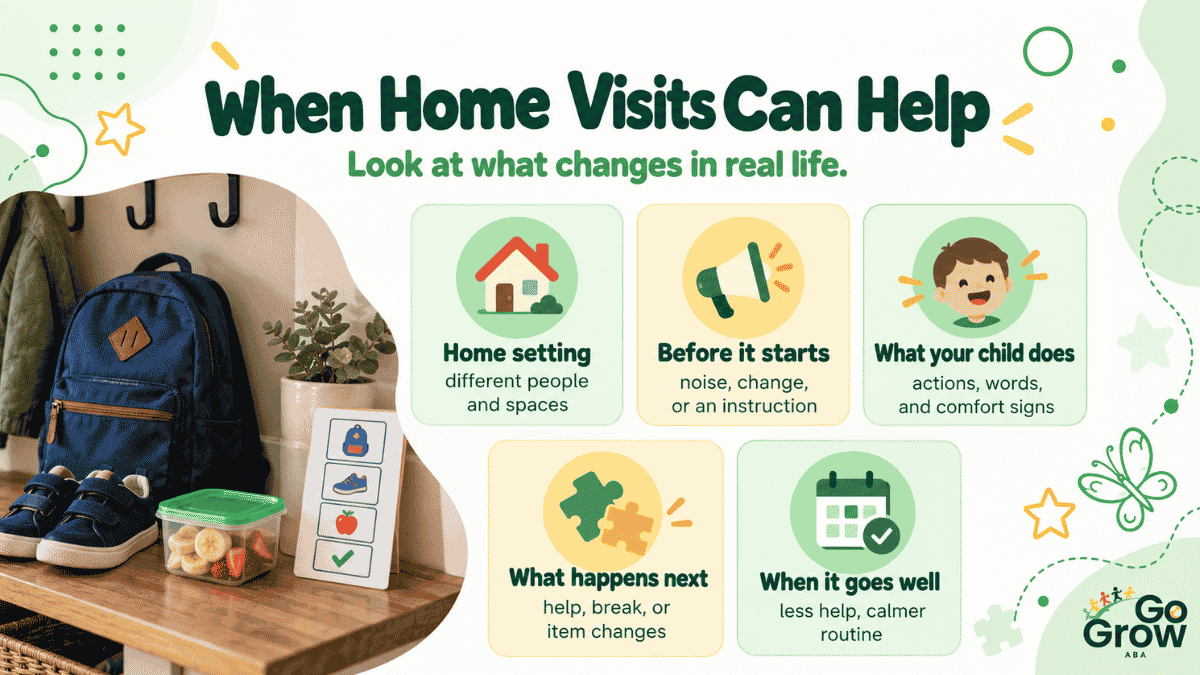
A child’s surroundings can affect when and how they use a skill. Different instructions, available help, and familiar objects can change what an activity requires.
For example, a child might request help when a therapist sits nearby but struggle to get a parent’s attention while dinner is cooking. The communication skill may need more practice under those conditions.
Applied behavior analysis, or ABA, examines how the environment relates to behavior. Differences between home and appointments give the team information to investigate. They do not establish that a child or caregiver has done something wrong.
What a Home Observation Can Show
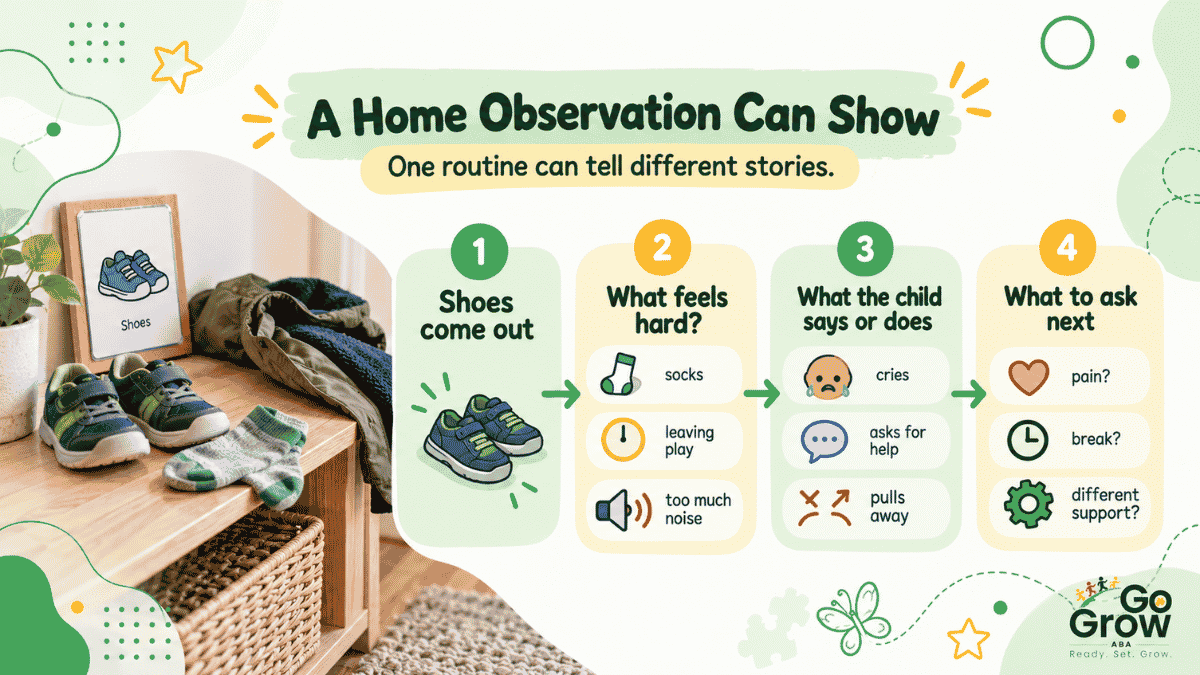
A home observation lets a clinician examine the circumstances around a specific difficulty. A Board Certified Behavior Analyst, or BCBA, may look at:
- What happens beforehand: An instruction, interruption, noise, or change in activity.
- What the child does: The child’s actions, communication, and signs of discomfort.
- What follows: Whether someone helps, an activity stops, or access to an item changes.
- When the routine goes well: The conditions under which the child participates with less help.
These details help the clinician consider possible explanations. One event does not establish why a behavior happens.
During our BCBA-led ABA assessments, we combine observation, caregiver input, and assessment tools. Our written report and treatment recommendations bring that information together.
A Shoe Routine Example
A child who cries when shoes appear may need support for several possible reasons. In a hypothetical home observation, a clinician might notice that the difficulty begins when socks touch the child’s toes. Another child might struggle when putting on shoes means leaving a favorite activity.
Those observations lead to different questions. Pain or discomfort needs attention, while difficulty ending an activity may call for changes to how adults prepare the child. A communication goal might help the child express “hurts,” “help,” or “break.”
A child’s distress should not automatically become a behavior-reduction goal. Assessment should consider communication, physical health, and environmental factors. Suspected pain belongs in a conversation with the child’s healthcare provider.
 When Home Observations Are Not Enough
Home visits cannot show everything that happens in a classroom, playground, or other setting. A child who needs help joining a group may face demands that one-to-one home activities cannot reproduce.
The treatment team needs information from the places connected to the concern. Families can request an explanation of what additional observations or records would help. Autism support can involve a combination of home, education, health, and community settings.
For school concerns, our article on ABA therapy and IEP coordination explains the separate roles of school staff and private therapy teams. A home treatment plan should not stand in for understanding what happens at school.
How Home Observations Connect to Caregiver Coaching
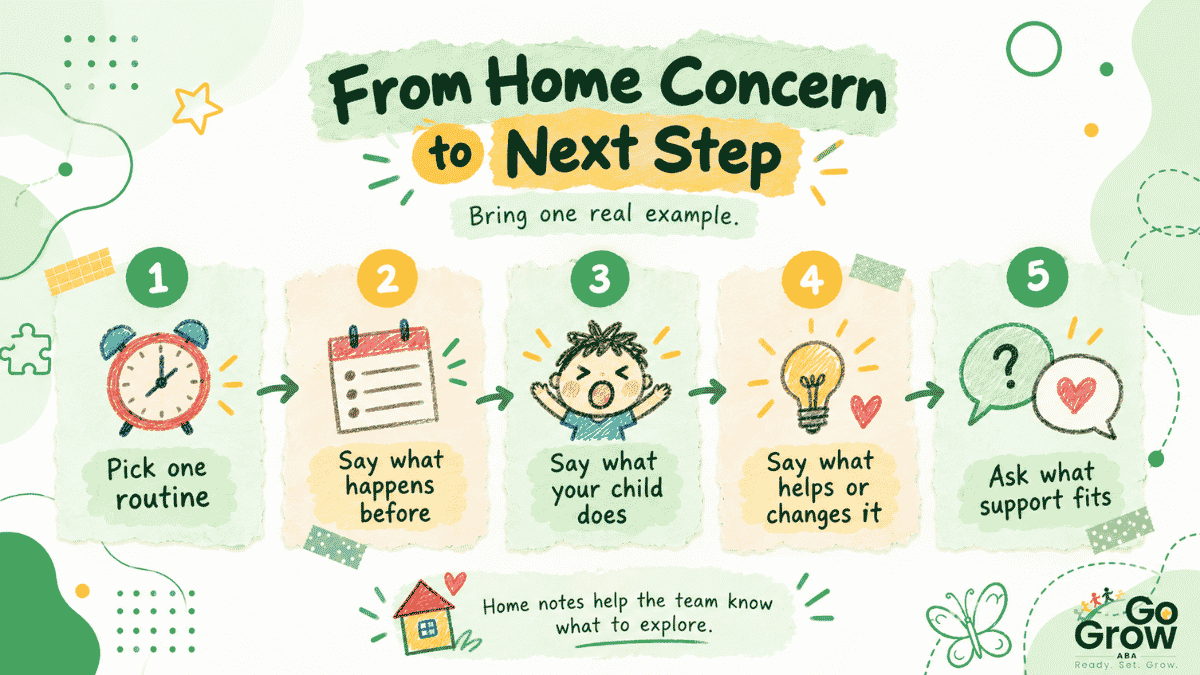
Caregiver coaching can connect an observation to something a parent can practice during an ordinary day. The explanation should identify what the adult can do, when to try it, and how to respond to the child’s communication.
For example, a plan might include keeping a familiar communication picture within reach during an activity. Coaching could help the caregiver recognize the child’s request and respond to it. The strategy depends on the assessment and the child’s existing communication methods.
Through our ABA parent training, we explain strategies and provide one-to-one coaching for daily routines. Caregivers can share which parts they can manage and which need another explanation or adjustment.
What the Household Needs to Support Home Visits
Home services also need to work within the household’s day. A recommendation should account for the child’s rest, privacy, and response to having a therapist in their space.
Before agreeing to a schedule, families can consider:
- Whether the proposed time leaves room for meals, sleep, school, and play.
- Which parts of a visit require caregiver participation.
- Whether shared rooms, pets, or sibling activities affect safety or privacy.
- How the team will respond when the child needs a break.
- Whether the relevant routine happens during available appointment times.
Weekly treatment time and the length of one visit are separate decisions. Our explanation of weekly ABA hours and session length covers that distinction.
Ongoing distress or difficulty participating deserves another conversation about the plan. A familiar address alone does not establish that home is the appropriate treatment setting.
 FAQs About In-Home ABA Therapy in Colorado Springs
What if the difficult routine happens outside appointment hours?
A routine outside appointment hours still belongs in the assessment discussion. Caregiver descriptions can help explain what happens and when. The clinician can determine what further information is needed; families do not need to recreate a distressing event for a visit.
Can my child continue speech or occupational therapy?
A child can receive different services when each addresses an identified need. Speech therapy supports communication, while occupational therapy can address daily activities such as dressing and eating. Families should share existing goals and schedules so providers can consider how the services work together.
Does living near the Colorado Springs office guarantee a home appointment?
A nearby address does not establish appointment availability. Families should confirm address coverage and available times directly with the provider before arranging their week around home visits.
Explore Home ABA Support in Colorado Springs
Home visits can add information about the people, surroundings, and demands connected to a child’s support needs. The recommendation should explain what home treatment would address and how the household can support it.
Our team offers a free consultation to talk about your concerns and explain our services. You can contact us about home ABA in Colorado Springs and describe the situation you want help understanding.