Key Points:
- In-home ABA therapy in NJ may be an option when an assessment identifies communication, safety, or daily living goals.
- Household difficulties can also reflect medical, sensory, developmental, or emotional needs that require other support.
- Pediatric care, developmental evaluations, and public early intervention help families understand those concerns before choosing treatment.
Home difficulties do not establish that a child needs in-home ABA therapy in NJ. Repeated distress, communication problems, or unsafe actions are reasons to speak with a professional about what is happening and which support may help.
A difficult routine can leave everyone tired. Parents do not need to identify the cause before requesting help. Specific examples from home give professionals a starting point.
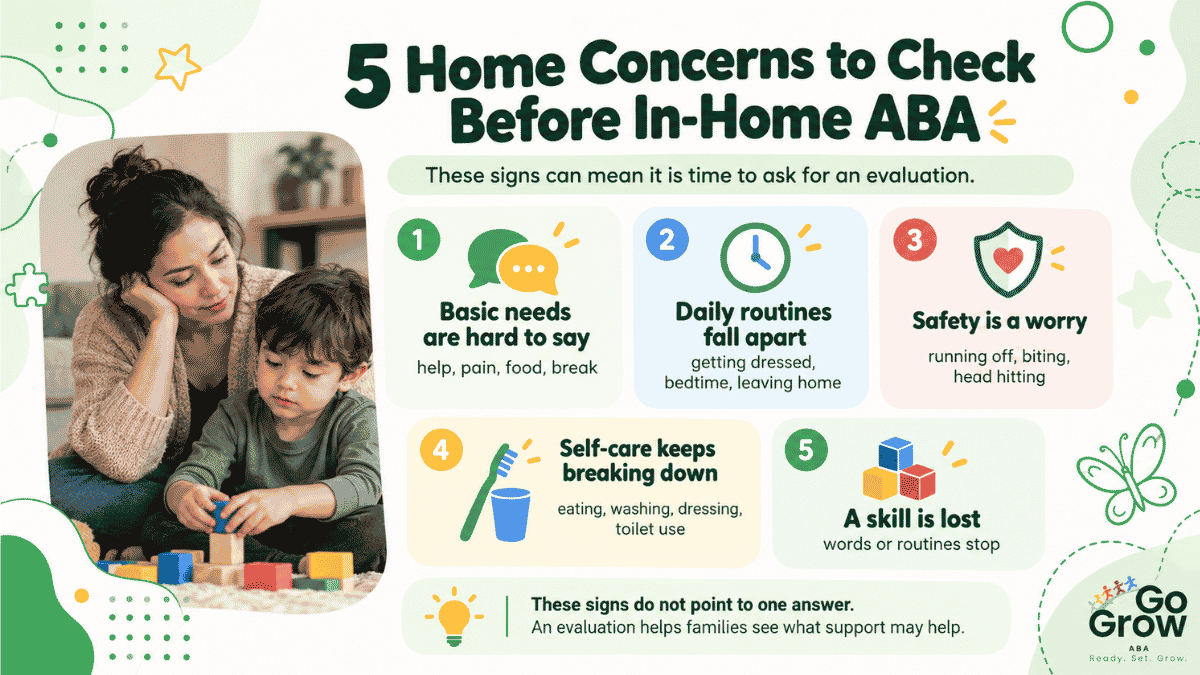 1. Your Child Struggles to Communicate Everyday Needs
Communication deserves attention when your child cannot reliably express needs such as help, discomfort, a choice, or a break.
For example, a child might bring you a closed snack container, then cry when you misunderstand. The concern is whether your child has a dependable way to get a message across.
A speech-language pathologist can assess communication and recommend support. Communication options beyond speech include gestures, pictures, and speech-generating devices. Spoken words are one way to communicate.
2. Distress Repeatedly Interrupts Daily Routines
Distress during dressing, leaving home, or bedtime deserves attention when it regularly prevents participation or leaves your child struggling to recover.
An autistic child may find noise, unexpected changes, or daily demands difficult. Changes to the surroundings and time to rest can be part of support. A clinician can help explore what your child finds difficult before recommending treatment.
A description such as “She covers her ears when the bathroom fan starts” gives more information than “She refuses to get ready.”
3. Unsafe Actions Put Your Child or Others at Risk
Running toward traffic, repeated head hitting, or biting that causes injury calls for prompt professional attention. Families need help understanding the behavior and planning for safety.
Immediate danger requires emergency help. A routine therapy inquiry cannot address an emergency.
For ongoing concerns, your child’s healthcare provider can assess possible medical needs and recommend further support. An autism diagnosis does not explain every change in behavior. Sleep problems, gastrointestinal conditions, and anxiety may also require evaluation and treatment.
4. Self-Care Difficulties Affect Health or Participation
Self-care concerns deserve evaluation when eating, washing, dressing, or toileting regularly causes distress or prevents your child from meeting daily needs.
The amount of adult help alone does not determine whether a child needs ABA. Age, physical skills, comfort, and developmental needs all belong in the discussion.
Occupational therapy can address daily living skills, including dressing and eating. Other concerns may need medical or speech-language evaluation. Autism care can include several types of support, depending on the child’s needs.
 5. Your Child Stops Using Skills They Previously Had
Loss of an established skill deserves prompt contact with your child’s doctor. Examples include a child stopping words they previously used or no longer managing a familiar activity.
The CDC identifies loss of previously learned skills as a reason to act early and speak with a doctor. A medical or developmental evaluation should address that change before anyone assumes a particular therapy will resolve it.
For concerns about early development, our article on early signs of autism in toddlers explains what parents can bring to a screening discussion.
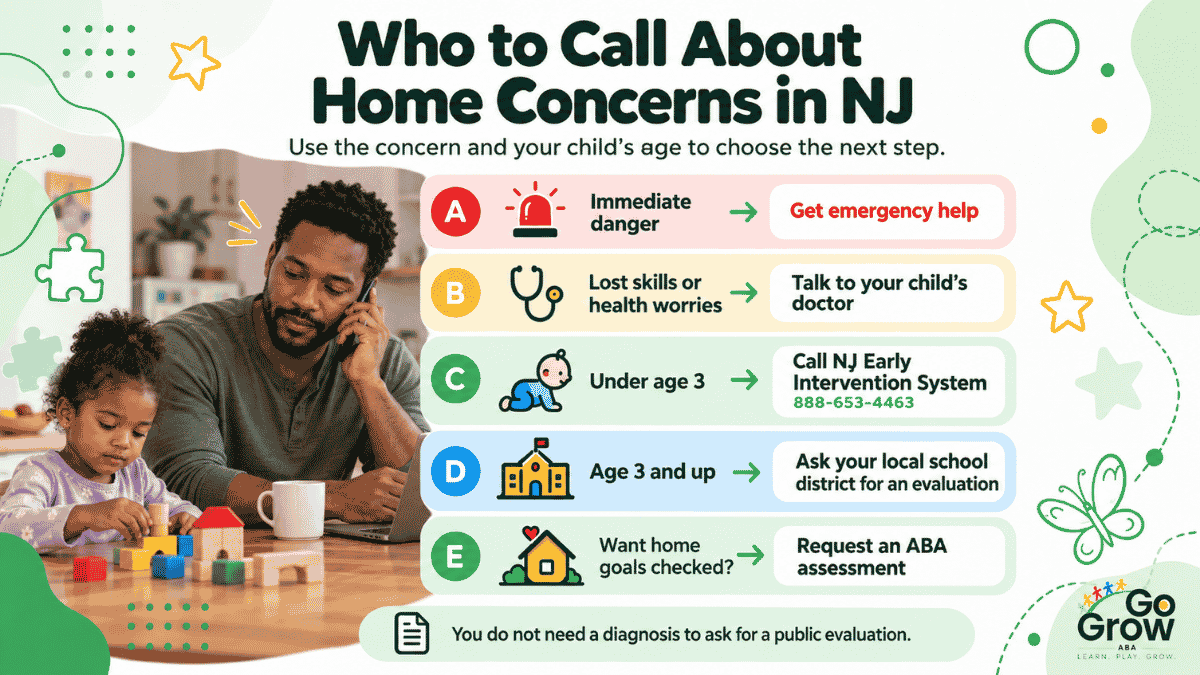
Which Evaluation Should NJ Families Request?
The appropriate evaluation depends on the concern and your child’s age. A pediatrician can assess health concerns, review development, and refer your child for further evaluation.
New Jersey families can also contact public programs:
- Children under 3: The New Jersey Early Intervention System accepts calls about suspected developmental delays at 888-653-4463.
- Children age 3 and older: The local school district can explain how to request an evaluation for educational services.
Families do not need a medical diagnosis or a doctor’s referral to request a public early childhood evaluation. Eligibility for services depends on the evaluation.
A developmental or diagnostic evaluation answers different questions from an ABA assessment. At Go Grow ABA, our BCBA-led ABA assessments use observation, caregiver input, and assessment tools to identify skills and treatment goals. This treatment-planning service does not replace an autism diagnostic evaluation.
When Might In-Home ABA Be Worth Considering?
In-home ABA may be worth considering when an assessment identifies goals that can be addressed during home routines. The decision should account for your child’s needs, comfort, existing services, and family priorities.
Our in-home ABA therapy includes one-on-one sessions and individualized goals for communication, social skills, and daily living. We also provide parent training so caregivers can learn strategies connected to their child’s plan.
Home sessions provide opportunities to work where a concern occurs. The setting alone does not establish that ABA is needed. Families considering services can review how to start ABA therapy in New Jersey for the separate intake and coverage steps.
Notes That Help Explain the Concern
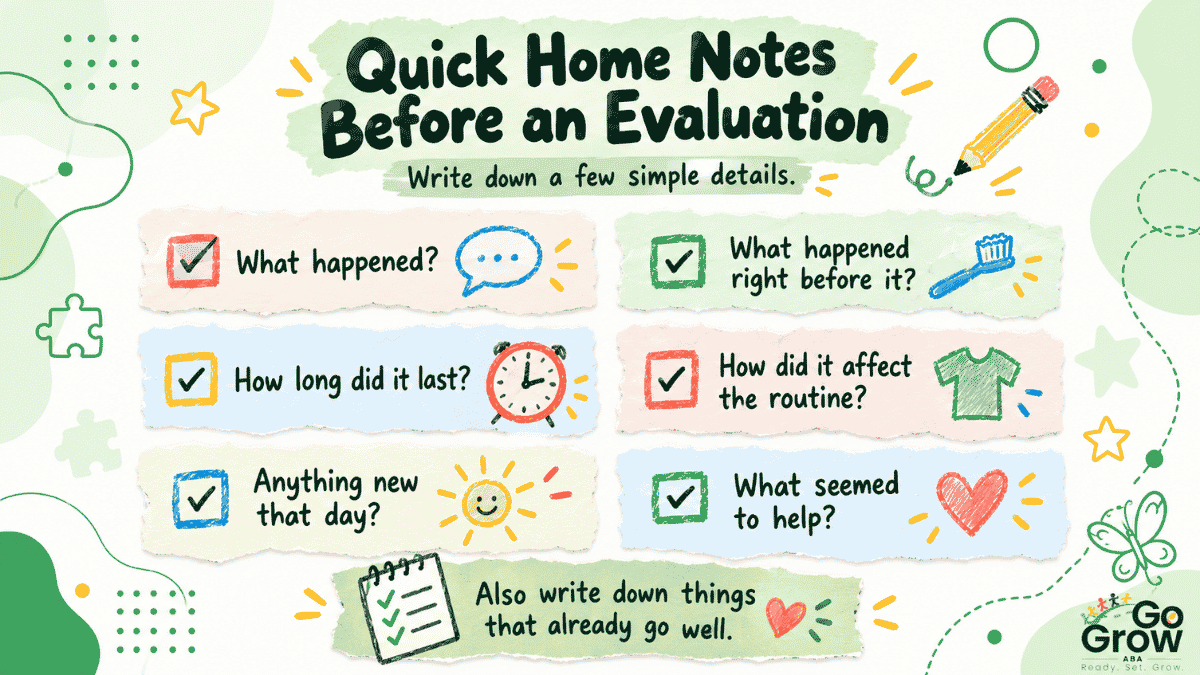
Brief observations can make a professional conversation more specific. A parent’s notes might include:
- What happened: The child cried and pushed the toothbrush away.
- What happened beforehand: Toothpaste touched the child’s lips.
- Duration and impact: Brushing stopped after two minutes.
- Relevant changes: A recent illness, poor sleep, or a different toothpaste.
- What helped: The child accepted holding the brush without toothpaste.
These observations describe an experience without assigning a cause. Notes should also include activities your child enjoys and routines that already go well.
 FAQs About In-Home ABA Therapy in NJ
Does hand flapping alone mean my child needs ABA?
Hand flapping alone does not establish a need for ABA. Repetitive movement, sometimes called stimming, can feel calming or enjoyable. Harmless movement does not need to stop simply because it looks different.
Should I wait until school reports the same concerns?
Parents can seek help for home concerns even when school reports no difficulty. Behavior can differ between home and school. Examples from both settings help professionals understand those differences without assuming why they happen.
Can I describe concerns without recording a video?
Written examples can start the conversation. Dates, activities, your child’s actions, and the help they needed provide context. Our ABA assessments include caregiver input and professional observation, so a home video is not the only way to explain a concern.
Explore Support for Your Child’s Home Routines
Repeated home difficulties deserve attention, and the next step depends on what is causing them. An evaluation can help families understand whether medical care, developmental services, ABA, or a combination of support may help.
At Go Grow ABA, we offer assessments, in-home ABA therapy, and parent training in New Jersey. Our team can listen to your concerns and explain our services during a free consultation.