Key Points:
- NJEIS early intervention ends when a child turns three, closing the IFSP and state-coordinated services.
- Families can pursue district preschool, private ABA therapy, or both through separate evaluations and eligibility rules.
- Early planning, organized records, balanced schedules, and team coordination can reduce service gaps.
Turning three brings cake, candles, and a major milestone for your child. It also brings a big shift in state support. NJEIS early intervention ends on your child’s third birthday, which means state-funded home visits wrap up automatically. What happens next?
Before that date arrives, you can start building a plan so your child keeps making steady progress. This guide breaks down what changes when the NJ Early Intervention Program stops, how local school district evaluations work, and how early intervention ABA therapy can support your household.
 What Ends When NJEIS Early Intervention Stops at Age 3
The New Jersey Early Intervention System operates under Part C of the federal Individuals with Disabilities Education Act for infants and toddlers. Once your child turns three, state-funded services come to an end. Your Individualized Family Service Plan closes out, and your state service coordinator stops managing daily care.
Here is something many parents assume during this transition: meeting NJEIS eligibility standards automatically opens your chances for school district preschool or private therapy.
In reality, each system uses its own evaluation process. Your local New Jersey public school district determines school placement based on educational needs, while private insurance approval relies on clinical criteria.
Here is what changes on your child’s third birthday:
- The Individualized Family Service Plan ends completely.
- The state service coordinator role closes out.
- Local district preschool services do not start automatically.
- Private therapy coverage requires a separate clinical approval process.
- Current therapy reports can still be shared with new support teams.
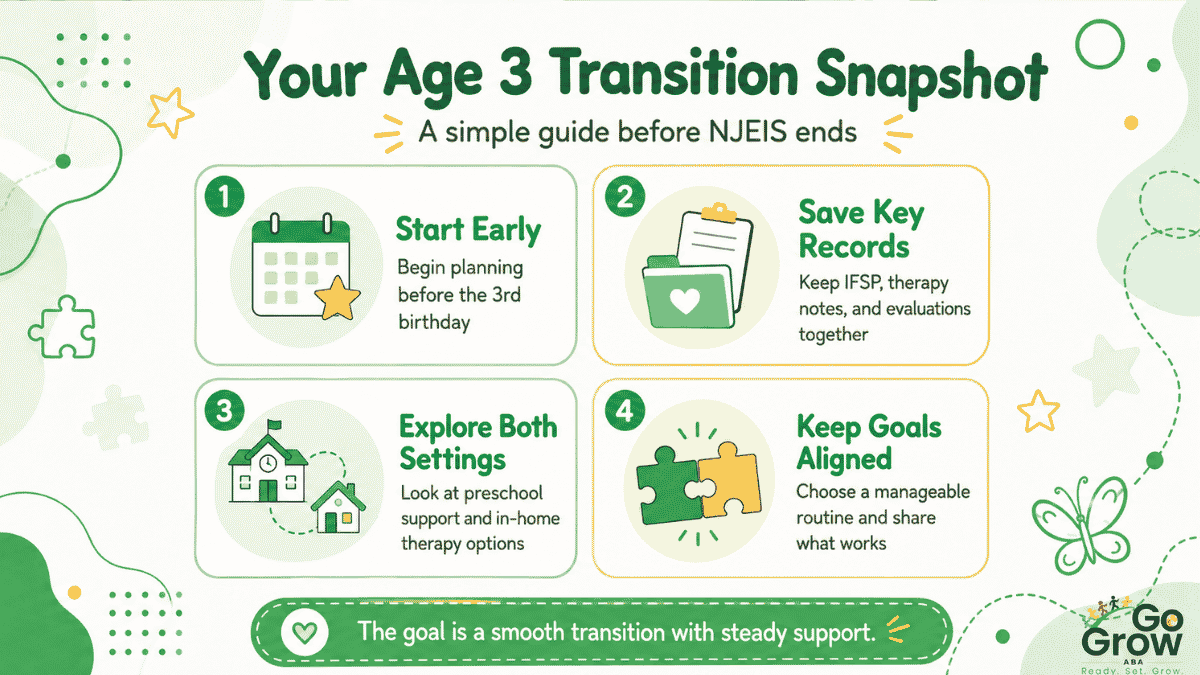
Start the New Jersey Transition Before the Third Birthday
How early should you start planning for age three? You do not have to wait until your child blows out their candles to set up new support.
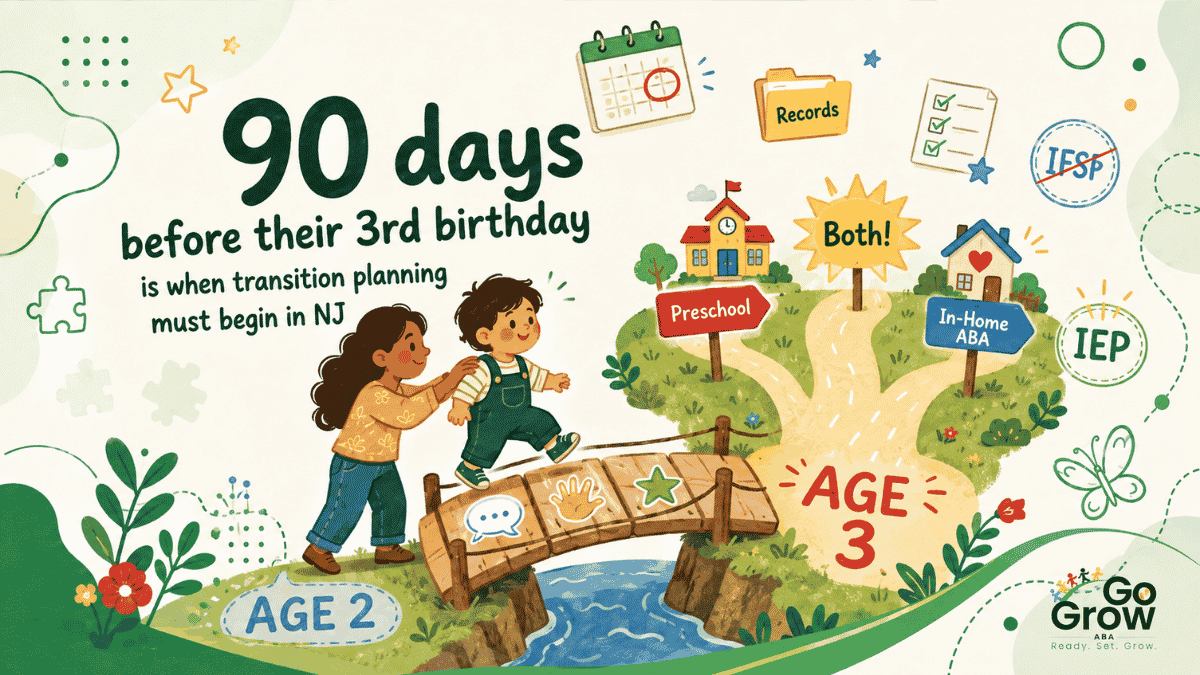
The official transition process starts well before that third birthday, giving your family time to review options without losing momentum. New Jersey policy requires transition planning to begin between nine months and 90 days before your child turns three.
Here is how the transition timeline unfolds in New Jersey:
- Nine months to 90 days before age three: Your service coordinator outlines upcoming choices.
- At least 90 days before age three: A formal transition conference takes place to write your plan.
- Before the third birthday: Your local public school district conducts evaluations if you explore public preschool.
- During the same timeframe: You can reach out to private providers to explore home-based options.
How NJEIS Early Intervention Records Can Support the Next Evaluation
Gathering records from early intervention services in NJ saves you from starting over during new evaluations. Having current progress summaries, therapy reports, and diagnostic records helps your next teams understand what strategies already help your child succeed.
Organizing these files early can prevent unnecessary gaps in care. When pulling your records together, make sure to collect:
- Previous Individualized Family Service Plans and evaluations.
- Speech, physical, or occupational therapy notes.
- Diagnostic reports and doctor recommendations.
- Notes about effective visual schedules and daily routines.
 Compare the Three New Jersey Options After NJEIS
The decision is rarely limited to early intervention vs. ABA therapy. District preschool and private ABA serve different purposes, and some children receive both. The combination depends on school needs, home concerns, energy, and other services.
| Point | NJEIS Before Age 3 | District Preschool After Age 3 | Private In-Home ABA |
|---|---|---|---|
| Eligibility basis | Developmental delay or qualified medical diagnosis | Educational need under New Jersey special education rules | Autism diagnosis, clinical necessity, and insurance approval |
| Written plan | Individualized Family Service Plan | Individualized Education Program | Behavioral treatment plan |
| Main focus | Overall child development and family routines | Classroom access, social learning, and school readiness | Communication, daily living skills, behavior, and safety |
| Common setting | Home and natural community spaces | Public school classroom or district placement | Home and community settings |
| Starting contact | NJEIS service coordinator | Local school district Child Study Team | Private provider and health insurance |
An Individualized Education Program addresses learning barriers in a classroom environment. A private behavioral plan focuses on medically necessary goals like self-care, home safety, and emotional regulation.
In our work supporting New Jersey households, we notice that children make the most progress when their routines reflect their true daily energy rather than a crowded schedule.
At Go Grow ABA, our team can review your child’s current progress notes, home routines, and insurance coverage before state services wrap up. A quick consultation helps you decide if in-home support belongs in your family’s next step. Reach out to us to start the conversation.
Choose a Schedule Your Three-Year-Old Can Manage
Have you considered what your child’s week will actually look like once new services start? Three-year-olds need plenty of time for rest, play, and simple family moments. Adding a packed schedule of ABA therapy sessions, classroom hours, and travel can leave a young child exhausted. Building a schedule around your child’s natural stamina keeps learning positive and effective.
When Preschool and ABA Can Work Together
Looking at your child’s daily energy levels helps you choose an arrangement that creates a comfortable rhythm.
Here are three common options to consider:
- District preschool only: A practical choice when school services address current goals and home routines remain manageable.
- Private in-home therapy only: A practical choice when primary concerns center on home safety, self-care, and communication.
- Preschool plus part-time therapy: A practical choice when school and home goals differ, and your child has enough stamina for both.
Preschool offers valuable peer interaction, while home sessions focus on personal skills like morning preparation, mealtime participation, and toilet training. Keeping sessions balanced prevents burnout while giving your child steady support.
 Carry Current Goals Into Private ABA Therapy in NJ
So how do those early wins translate into a new setup? Transitioning into private ABA therapy in NJ does not mean discarding the hard work your child accomplished during NJEIS early intervention.
This is why our ABA assessment process builds directly on previous progress. We start with a consultation, conduct a clinical assessment, create a personalized plan, and deliver focused in-home sessions backed by parent coaching.
Here is a quick checklist to prepare for intake:
- Your most recent Individualized Family Service Plan.
- Diagnostic evaluation reports and doctor referrals.
- Active health insurance cards and benefit details.
- Proposed preschool schedules or Child Study Team notes.
- Notes on routines that go well and areas that need extra support.
Connecting home goals to real life creates meaningful changes for everyone under your roof. One mother in Lakewood shared with our team how her young son used to experience intense daily meltdowns whenever he felt overwhelmed.
Through clear communication tools taught during in-home sessions, he learned to express when he needed a break, turning stressful afternoons into calm moments for the whole household.
Keep Home and Preschool Teams Working Toward the Same Skills
What happens when your child receives support from both a public preschool teacher and an in-home ABA therapist? Consistency makes all the difference. Using conflicting strategies in different settings can confuse a young child who is learning new communication methods. Clear collaboration keeps everyone on the same page.
Here are simple ways to keep both teams aligned:
- Use the exact same communication system at school and home.
- Share successful visual schedules between classroom teachers and home therapists.
- Keep instruction phrases short and identical across both settings.
- Sign written consent forms so school staff and private therapists can share progress notes.
- Focus school goals on group participation and home goals on personal independence.
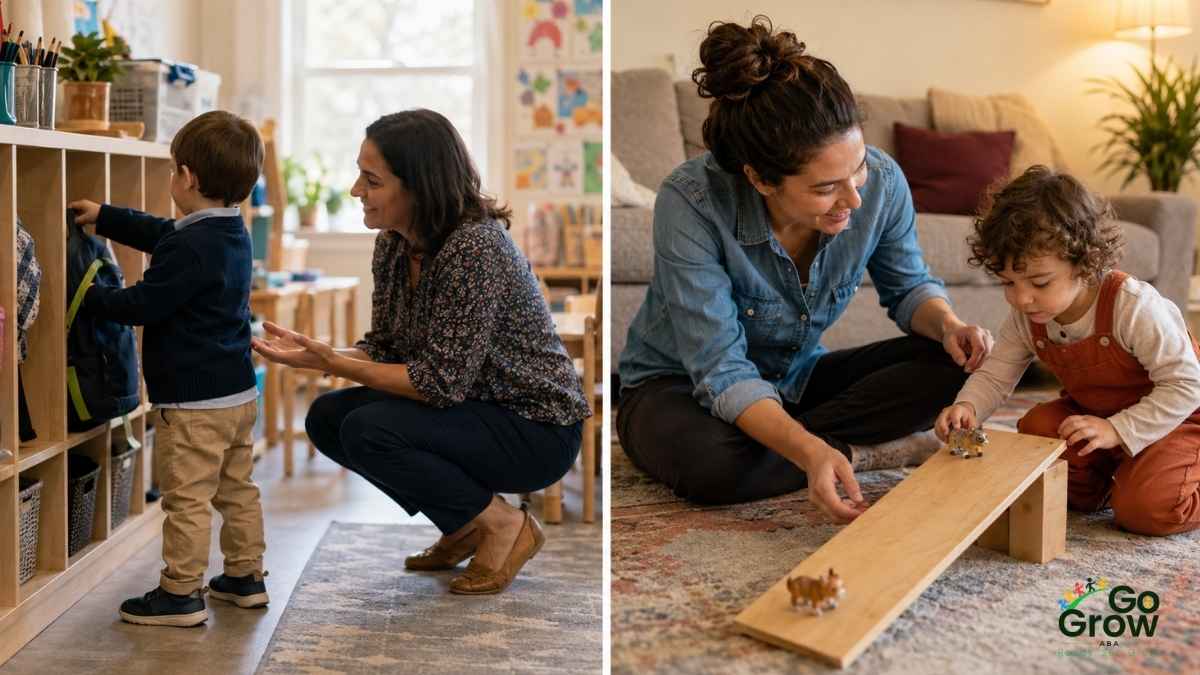
For example, if your child’s preschool team works on hanging up a backpack upon arrival, your home therapist can practice a matching routine before leaving the house in the morning. When daily expectations mirror each other, your child builds confidence much faster.
 FAQs About NJEIS Early Intervention
Can my child start ABA therapy before NJEIS early intervention ends?
Yes. Your child can receive early intervention and private therapy at the same time if they qualify for both. Sharing schedules between both teams prevents overlapping sessions, leaving plenty of time for rest, meals, and unstructured play.
Does my child need an autism diagnosis for preschool special education?
No. New Jersey public school districts evaluate children based on educational needs rather than a specific medical diagnosis. However, private health insurance plans generally require a formal autism diagnosis to approve coverage for in-home therapy services.
Can speech and occupational therapy continue after age three?
Yes. Eligible children can receive speech or occupational therapy through a school Individualized Education Program if it supports learning. Families can also access outpatient therapy using private health insurance once early intervention ends.
Plan Your Child’s Next Support Before Age 3
Beginning your transition planning early gives you time to explore local preschool programs, gather documentation, and start ABA therapy without experiencing gaps in support. Having a clear plan in place helps your child keep building essential communication and daily living skills as they turn three.
At Go Grow ABA, we provide early intervention ABA, clinical assessments, parent coaching, and in-home ABA therapy across New Jersey and Colorado. Families can call us directly at (732) 554-8383 or email office@gogrowaba.com to request an initial consultation. Our team will guide you through insurance requirements, review your child’s current services, and help you take the next steps with confidence.