

Key Points:
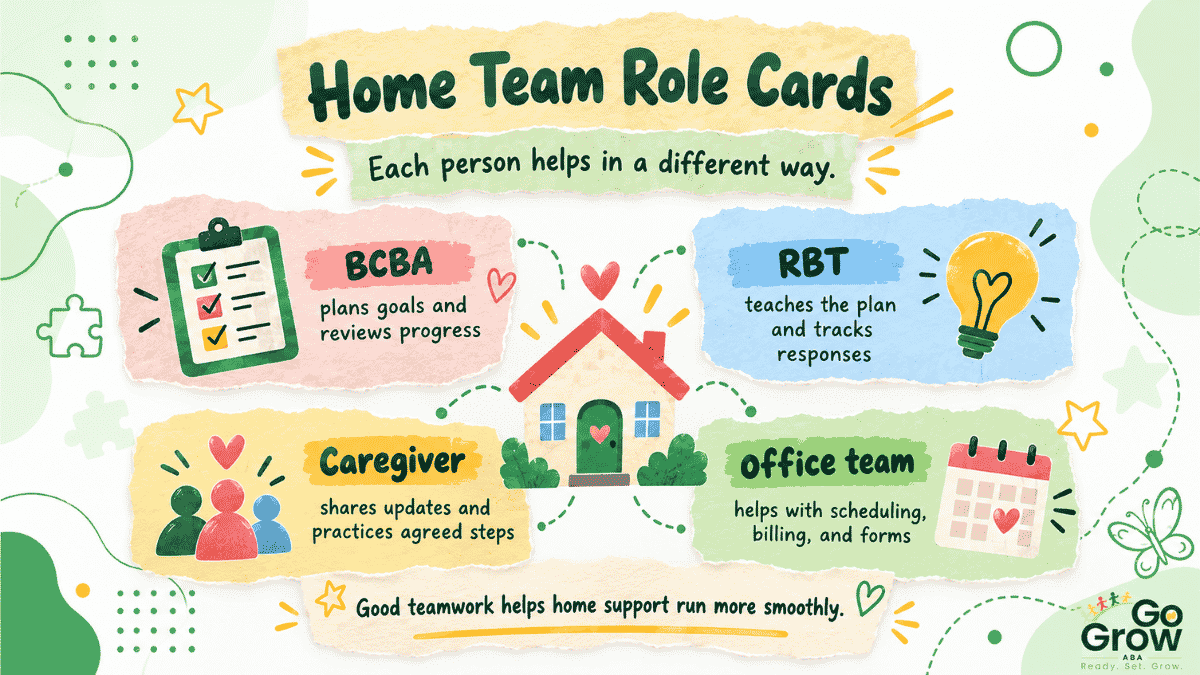
- ABA therapy team roles separate clinical decisions, supervised teaching, family input, and office support.
- RBTs follow a supervisor’s treatment plan and must receive ongoing supervision to maintain their certification.
- Families need to know who oversees care, how to raise concerns, and who handles scheduling or billing.
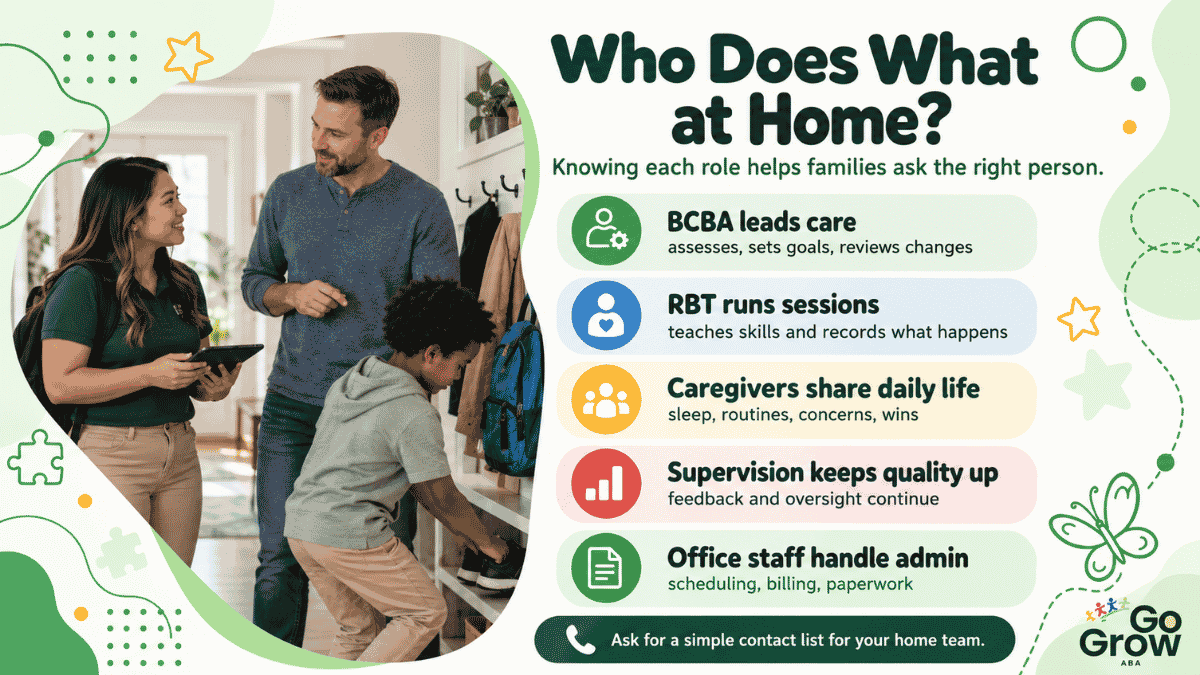
ABA therapy team roles explain who plans treatment, who leads daily sessions, and who helps with questions outside therapy. In a BCBA-led team, the Board Certified Behavior Analyst oversees clinical care, while a Registered Behavior Technician follows the treatment plan during sessions.
The person spending the most time with your child may not be the person who changes treatment goals. Knowing that distinction helps you reach the right person when a concern comes up.
 BCBA vs. RBT: Planning and Daily Sessions
The main difference between a BCBA and an RBT is responsibility: the BCBA directs treatment, while the RBT provides supervised support.
The BCBA Assesses Needs and Oversees Treatment
A Board Certified Behavior Analyst, or BCBA, assesses skills, develops treatment goals, reviews progress, and supervises staff who carry out the plan. The BCBA credential is a graduate-level certification in behavior analysis.
Clinical decisions should draw on assessment findings, treatment records, and input from your child and family. The BCBA explains proposed strategies and reviews whether they are helping. Changes to treatment require clinical review and informed consent when applicable.
At Go Grow ABA, our ABA assessments combine observation, caregiver input, and skill assessment to help identify treatment priorities.
The RBT Carries Out the Treatment Plan
A Registered Behavior Technician, or RBT, provides behavior-analytic services under close supervision. “Behavior technician” describes a job role; “RBT” identifies someone who holds the BACB’s specific certification. The titles do not automatically mean the same thing.
During sessions, an RBT may:
- Help your child practice skills in the treatment plan.
- Provide planned assistance, such as a spoken reminder.
- Record responses and the amount of help your child needs.
- Report concerns and questions to the supervisor.
The RBT Ethics Code requires technicians to follow supervisory direction, document services accurately, and receive training before using unfamiliar interventions. An RBT does not independently rewrite your child’s treatment plan.
Your Child and Caregivers Have a Voice
Your child’s preferences, communication, comfort, and daily needs belong in treatment discussions. Caregivers add information that a therapist may miss during a visit, such as a difficult morning or a skill your child uses with a sibling.
Caregiver participation can include:
- Sharing changes in sleep, health, school, or routines.
- Explaining which goals would help daily life.
- Reporting distress or concerns about a strategy.
- Practicing agreed steps after instruction.
- Saying when a recommendation is hard to manage at home.
BACB’s requirements for involving clients and caregivers include participation in goal selection and ongoing progress monitoring. Caregiver involvement does not transfer the clinician’s responsibility to the family.
Through our ABA parent training, we explain strategies and help caregivers apply them during routines such as play, meals, and transitions. A closer look at parent coaching at home explains how instruction and practice can work together.
 What Does RBT Supervision Include?
RBT supervision includes observation, feedback, and review of the technician’s work. The supervisor does not have to attend every treatment session, but oversight must continue while the RBT provides services.
The BACB’s RBT Handbook requires:
- Supervision covering at least 5% of the RBT’s behavior-analytic service hours each calendar month.
- At least two live, face-to-face supervisory contacts each month.
- Observation of the RBT delivering services during at least one monthly contact.
Live video may meet the contact requirement when applicable rules allow it. Email or telephone contact alone does not satisfy the face-to-face requirement.
These are certification minimums for the technician. The 5% figure does not automatically set how much supervision your child receives. Families should know who supervises their child’s care, how observation will happen, and how to contact that person.
Credential checks and provider comparisons receive more attention in our article on choosing an ABA therapist in New Jersey.
Who Should You Contact About a Concern?
Clinical questions belong with the supervising clinician. Scheduling, billing, and paperwork questions usually go to office staff, although providers may assign those duties differently.
| Question or Concern | Starting Contact |
|---|---|
| What happened during today’s activity? | The technician who led the session |
| Why is this goal or strategy part of treatment? | The supervising BCBA |
| A skill has become harder, or distress has increased | The BCBA, with observations from the technician and caregiver |
| A session needs cancellation or rescheduling | The designated scheduling contact |
| A bill, insurance document, or authorization needs attention | The designated office or billing contact |
A written contact list can save time. The list should name the clinical supervisor, the office contact, the preferred communication method, and the process for following up when a question remains unanswered.
How Team Members Handle a New Concern
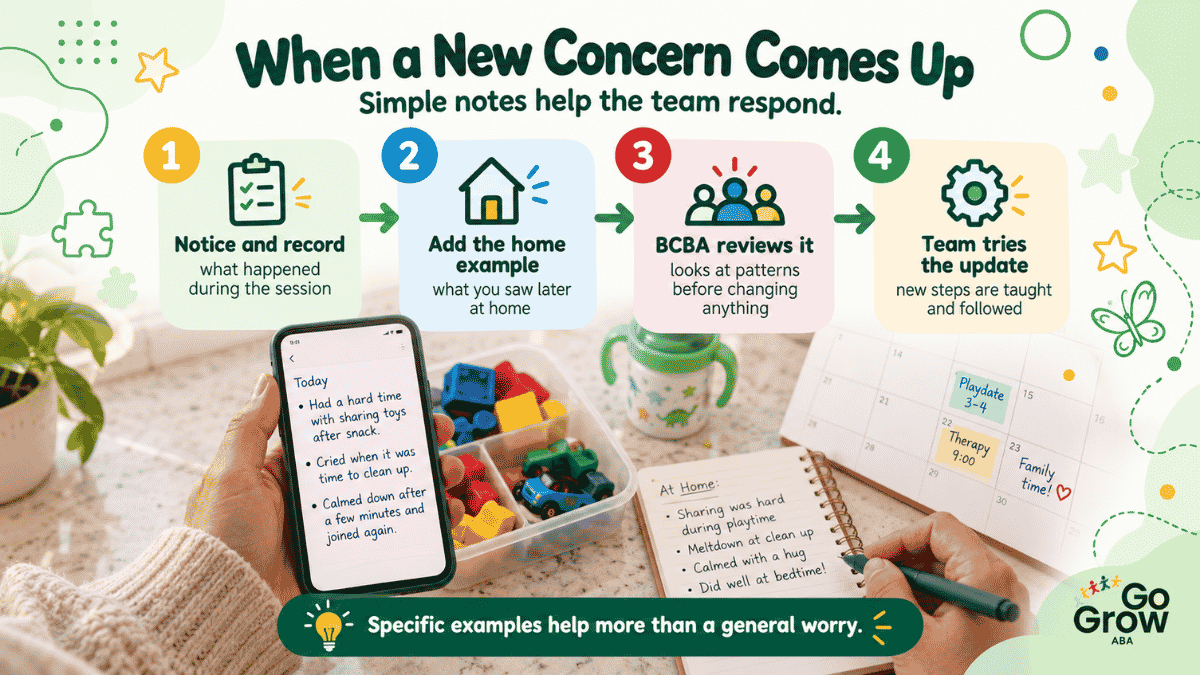
A new concern needs observations and clinical review before anyone changes the plan.
For example, suppose a child starts becoming upset when opening toy containers. During a session, the RBT records what happens and how much assistance the child needs. A caregiver explains that the same difficulty occurs with a lunchbox.
The BCBA reviews both accounts to decide whether the goal, materials, or teaching steps need adjustment. The technician then follows the updated instructions after any needed training. This hypothetical example shows how information moves between team members; it does not predict a treatment result.
Our in-home ABA therapy includes one-on-one sessions, caregiver coaching, and progress tracking. Those services give families opportunities to share what happens during everyday routines.
 FAQs About ABA Therapy Team Roles
What happens if my child gets a new RBT?
A staffing change should include preparation to support continuity of care. Families can request an explanation of how the incoming technician will learn the treatment plan, receive supervision, and become familiar with the child’s communication and preferences. The RBT must demonstrate competence to the supervisor before providing the assigned services.
Can my child work with more than one RBT?
Yes, a team may assign more than one RBT. Each technician needs appropriate supervision and training for the assigned work. Families can request an explanation of how the technicians share records and follow the same treatment instructions.
Can an RBT share my child’s information with other people?
RBTs must protect confidential information and follow their supervisor’s direction and applicable privacy requirements. A relative’s interest in treatment does not automatically permit access to records. The supervisor can explain permissions for sharing information with relatives, teachers, or other providers.
Connect With the People Supporting Your Child
An ABA team works through different responsibilities: clinical oversight, supervised sessions, family participation, and office support. A named contact for each area helps your family raise concerns and understand decisions about care.
At Go Grow ABA, we provide BCBA-led planning, supervised RBT sessions, and caregiver support. Our team can talk with you about your child’s needs and explain the next steps for exploring services.