

Key Points:
- Health First Colorado ABA therapy can cover medically necessary services for eligible members age 20 and younger.
- Providers submit clinical records and obtain required approval before delivering care.
- Families need to know which services received approval, when the authorization ends, and whether the provider has appointments available.
Health First Colorado ABA therapy is available through the state’s Pediatric Behavioral Therapies benefit for eligible members who need medically necessary care. A Medicaid card alone does not establish which services your child can receive. Clinical records and approval requirements also affect treatment.
At Go Grow ABA, we provide in-home ABA services in Colorado and help families verify benefits. A coverage check can help you understand which records and approvals your child needs before care begins.
 Who Qualifies for Health First Colorado ABA Therapy?
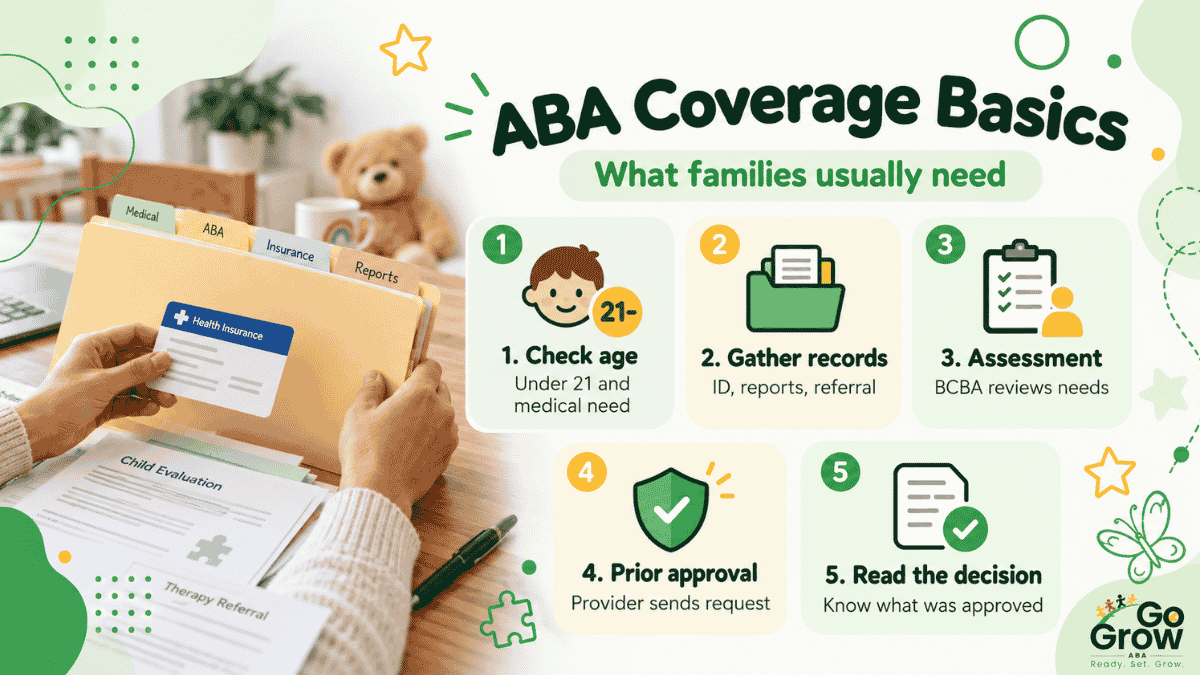
The Pediatric Behavioral Therapies benefit serves Health First Colorado members age 20 and younger who meet its medical-necessity requirements. A provider’s service age range may differ from the benefit’s age limit.
Medical necessity means the requested care must address the child’s health needs. Colorado uses the federal Early and Periodic Screening, Diagnostic, and Treatment rules, often shortened to EPSDT, when reviewing care for members under 21. Those rules consider whether treatment can improve a condition, maintain health, or prevent problems from getting worse.
The state’s pediatric medical-necessity policy requires an individual review. A diagnosis alone does not explain every child’s treatment needs; the records must support the specific care requested.
What Records Should Families Prepare?
Your provider needs membership information and clinical records to prepare a Colorado Medicaid ABA therapy request. The intake team can explain which documents apply and how to share them securely.
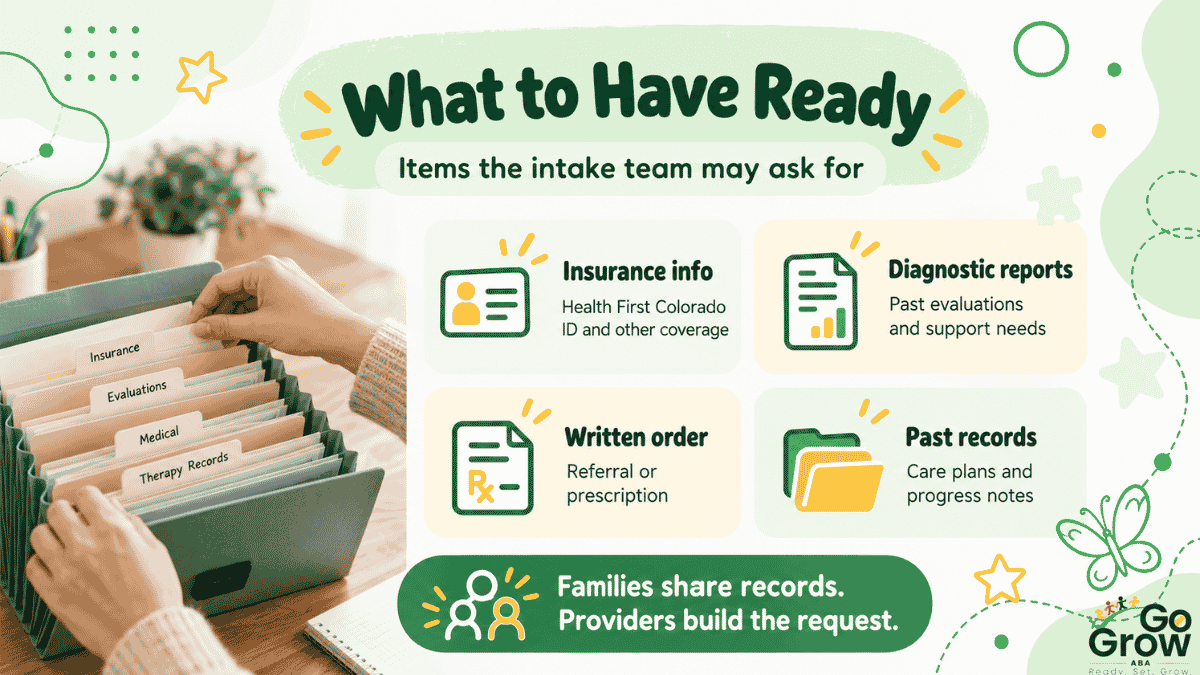
Records to have available include:
- Insurance details: Your child’s Health First Colorado ID and any other insurance information.
- Diagnostic reports: Existing evaluations that describe your child’s condition and support needs.
- Written order or referral: A recommendation for the requested therapy from an eligible practitioner.
- Previous treatment records: Relevant assessments, care plans, and progress reports.
Colorado permits written orders, prescriptions, or referrals from physicians, physician assistants, nurse practitioners, and licensed psychologists. The Pediatric Behavioral Therapies billing manual identifies these eligible practitioners.
Your child’s provider prepares the clinical assessment and treatment plan. Families do not need to write the medical explanation for coverage. Your contribution is sharing existing records and describing daily concerns, such as difficulty asking for help or communicating discomfort.
How Does an ABA Assessment Support the Request?
An ABA assessment documents your child’s skills and treatment needs so the clinician can recommend care. The findings help explain the proposed goals and services in the coverage request.
Our BCBA-led ABA assessments combine observation, caregiver input, and assessment tools. A Board Certified Behavior Analyst, or BCBA, leads the evaluation and develops written treatment recommendations. We also provide insurance documentation support.
A treatment assessment serves a different purpose from an autism diagnostic evaluation. Families who still need diagnostic testing can read about who to contact for an autism diagnosis in Colorado. The intake team can identify which diagnostic records the coverage request needs.
 How Does ABA Prior Authorization Work in Colorado?
Prior authorization means approval before a service takes place. When Health First Colorado is the primary payer, providers must obtain prior approval for Pediatric Behavioral Therapies, including assessment services.
The process generally follows these steps:
- Record review: The provider checks the referral and supporting clinical information.
- Assessment approval: The team obtains any required approval before conducting the assessment.
- Treatment request: The clinician uses the findings to prepare the care plan and request treatment.
- Coverage decision: The reviewer approves services, denies services, or requests more information.
Colorado’s authorization requirements identify the assessment, referral, and plan of care as supporting documents. Providers submit the request; families can ask which stage it has reached and whether the team needs anything from them.
For example, approval for an assessment does not establish approval for ongoing sessions. A question such as “Does this approval cover the evaluation or treatment?” helps explain what can happen next.
Other insurance can change the authorization requirements when Medicaid pays second. Both insurance cards belong with the billing team. Our explanation of ABA insurance coverage in Colorado covers the differences between coverage types.
What Happens After an Authorization Decision?
The written decision identifies what received approval and the dates that apply. Your provider should explain any difference between the requested care and the approved services before treatment begins.
| Detail to Review | What Families Need to Know |
|---|---|
| Approved services | Which assessment or treatment services received approval. |
| Approved amount | How much care the decision allows for each service. |
| Start and end dates | When the provider can deliver the approved care. |
| Appointment availability | Whether staffing, your address, and available times allow sessions to begin. |
| Next review | When the team needs updated records for ongoing care. |
Approval does not reserve an appointment. Our Colorado home sessions follow a BCBA-led plan, and we provide progress updates. Scheduling still requires a conversation about availability at your address.
If the Request Is Denied or Partly Approved
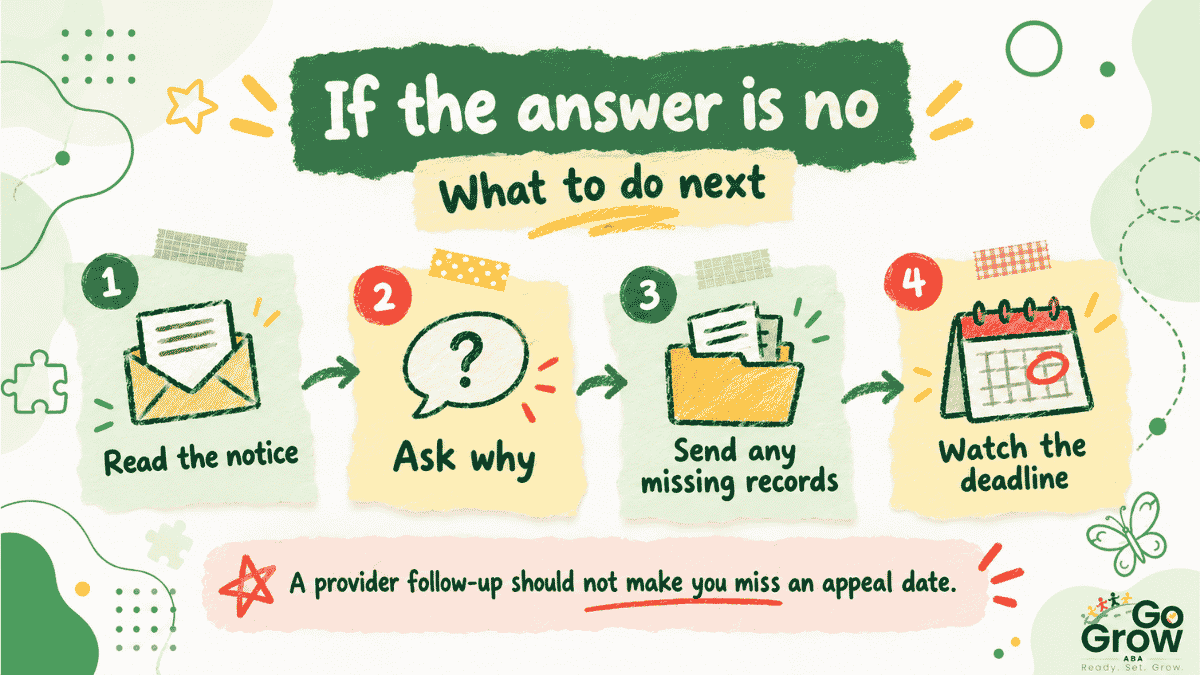
A denial or partial approval deserves a review with the provider. The reason may involve missing records or a disagreement about medical necessity. Possible next steps include additional documentation, provider reconsideration, or a member appeal.
The instructions for appealing a coverage decision explain why families should follow the directions and deadlines in their notice. A provider’s follow-up request should not become a reason to miss an appeal deadline.
 FAQs About Health First Colorado ABA Therapy
Can I contact your team before I have every document?
Families can contact us before gathering every document. We offer a free consultation to discuss your child’s needs and the next intake step. Available insurance information and clinical reports can help that conversation. A consultation does not replace the clinical assessment or the authorization request.
Can Medicaid cover ABA sessions at home?
Home sessions can qualify for coverage under the Pediatric Behavioral Therapies benefit. Coverage still depends on the child’s eligibility, medical necessity, provider requirements, and applicable authorization. The approved plan should identify the care your child will receive.
How can I find another provider if your team cannot serve my address?
Colorado maintains a Pediatric Behavioral Therapies provider list. Each provider can confirm current Medicaid participation, service areas, and openings. A directory listing does not confirm an available appointment.
Check Your Child’s Coverage With Our Team
Medicaid ABA coverage in Colorado brings together membership, clinical records, and approval for the requested care. Knowing what the decision allows helps your family prepare for treatment and understand the next review.
At Go Grow ABA, we can verify benefits, discuss our Colorado in-home services, and explain the assessment or intake step that applies to your child. Our free consultation gives your family a place to begin that conversation.