Key Points:
- An autism diagnosis in Colorado comes from a qualified clinician’s evaluation of a child’s development and behavior.
- Screening identifies concerns but does not establish a diagnosis.
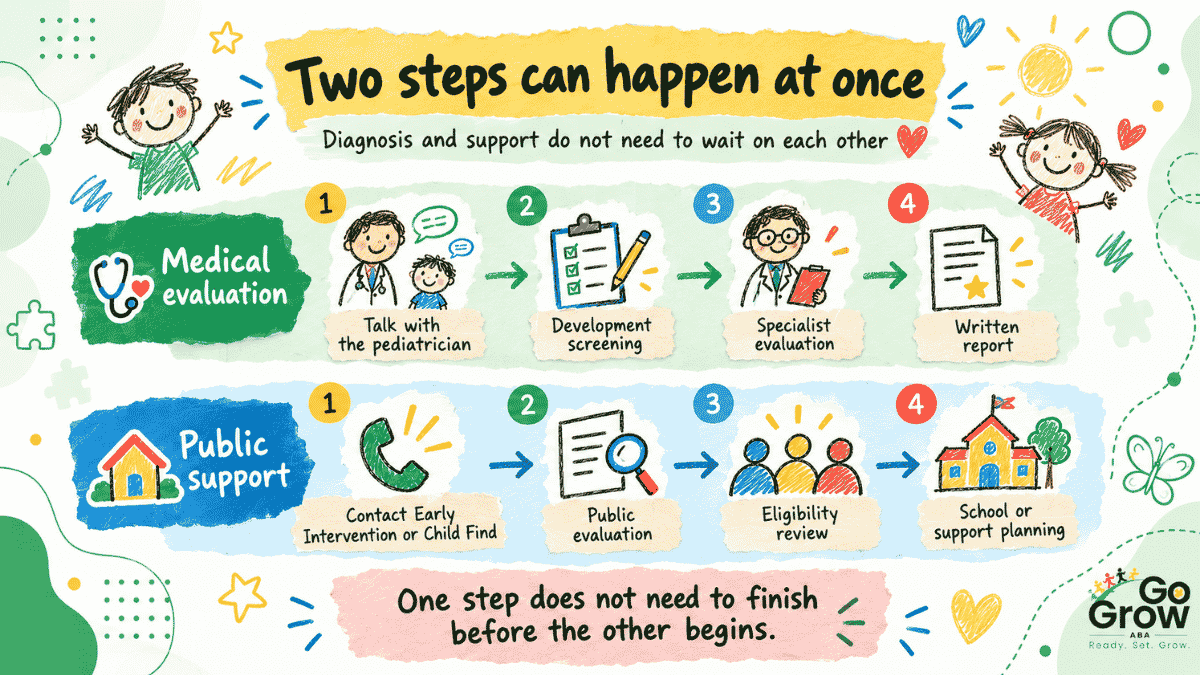
- Early Intervention Colorado and preschool Child Find accept referrals based on developmental concerns, so families can request public evaluations while waiting for clinical testing.
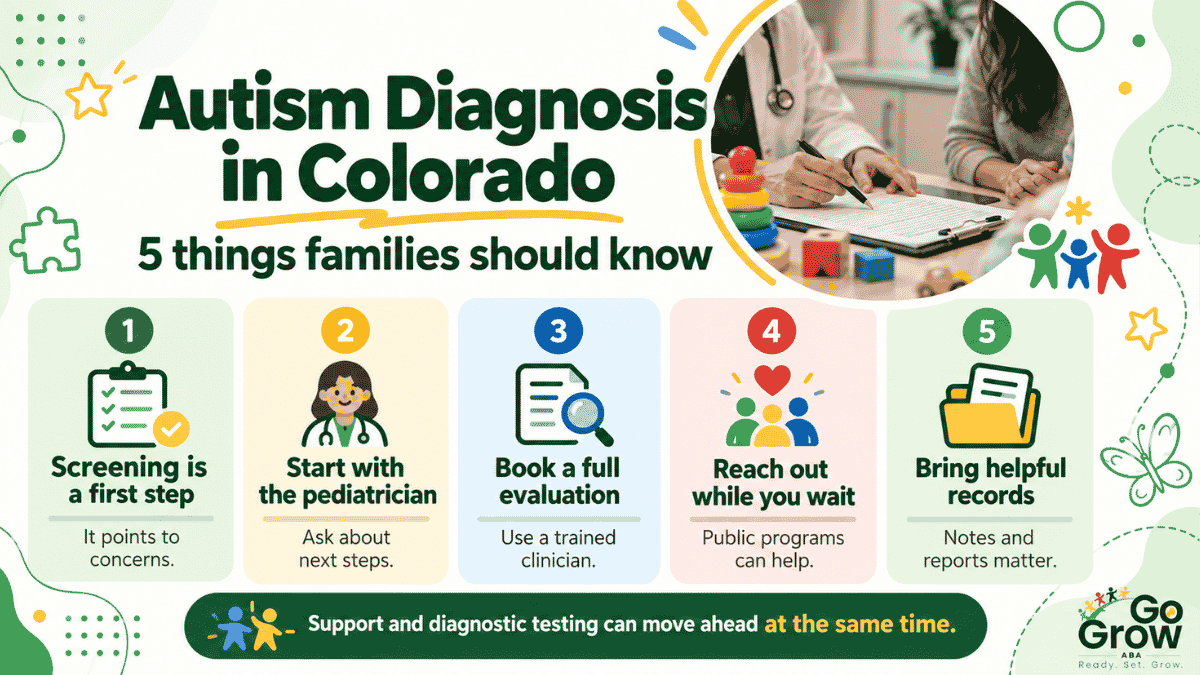
Your child’s pediatrician or primary care provider is a good first contact about an autism diagnosis in Colorado. The doctor can review developmental concerns, arrange screening, and refer your child for a specialist evaluation when needed.
A diagnostic appointment and public developmental support can move forward at the same time. Knowing which office handles each service helps you get started without waiting for one process to finish before beginning another.
 Screening Starts the Conversation
Autism screening checks whether a child needs a closer look at their development. A screening questionnaire does not provide a diagnosis.
The American Academy of Pediatrics recommends different schedules for general developmental screening and autism screening:
- General developmental screening: 9, 18, and 30 months.
- Autism screening: 18 and 24 months.
- Additional screening: Whenever a caregiver or healthcare provider has a concern.
The recommended screening schedule does not mean families should wait for those visits to raise concerns.
During the appointment, your questions might include:
- “What could explain the changes we’re noticing?”
- “Which screening tool is appropriate for my child’s age?”
- “What further evaluation does my child need?”
- “Which supports can begin while we wait?”
Our explanation of early signs of autism in toddlers can help you organize observations before the visit. A symptom list cannot determine whether your child is autistic.
Who Can Evaluate a Child for Autism?
A qualified clinician with training in childhood autism diagnosis can evaluate your child. Your doctor may recommend a developmental-behavioral pediatrician, child psychologist, or another specialist based on your child’s needs.
The evaluation brings together caregiver descriptions, developmental history, and professional observation. Clinicians use diagnostic criteria and may include structured assessment tools; no single tool should decide the diagnosis alone.
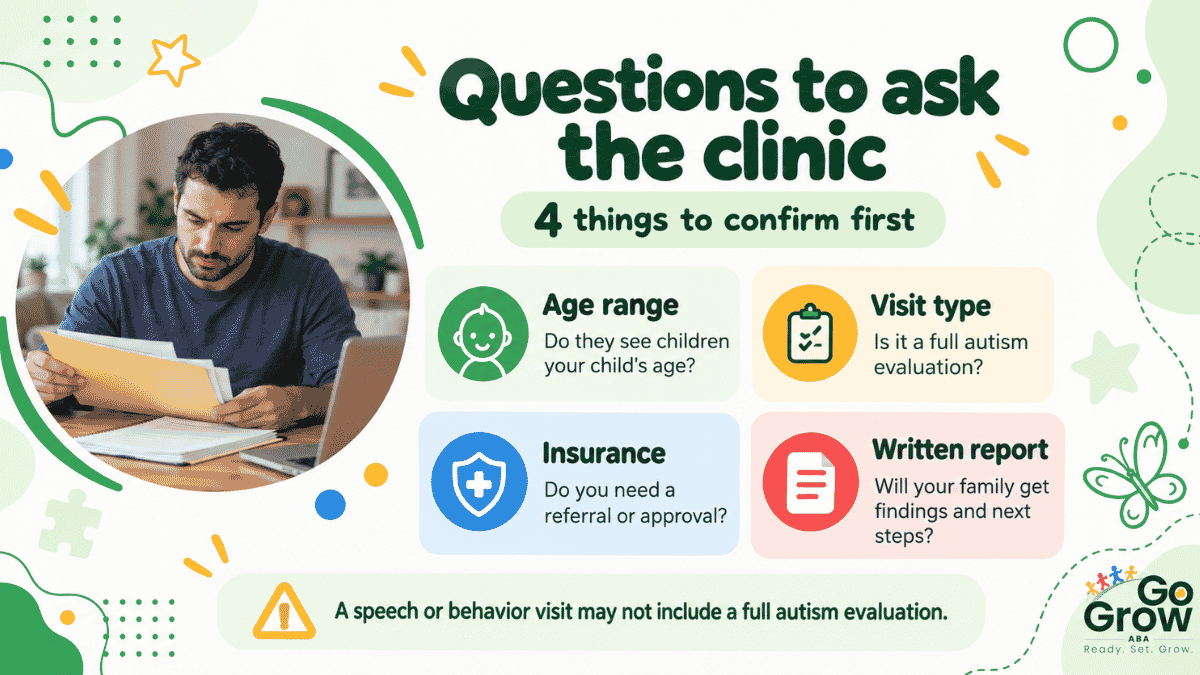
Before booking, the clinic and your health plan can answer these questions:
- Age range: Does the clinician evaluate children your child’s age?
- Appointment purpose: Does the visit include a full autism diagnostic evaluation?
- Coverage: Is the evaluator in network, and does the visit require a referral or prior authorization?
- Report: Will your family receive a written report with findings and recommendations?
- Scheduling: What appointments are available, and is there a cancellation list?
A visit for speech, learning, or behavior concerns does not necessarily include an autism diagnostic evaluation. Confirming the appointment’s purpose helps prevent an unexpected extra referral.
Colorado Programs to Contact While You Wait
Colorado families can request public developmental evaluations before receiving a medical autism diagnosis. The starting office depends on the child’s age and school stage.
| Child’s Age or School Stage | First Contact | Purpose |
|---|---|---|
| Birth through age two | Early Intervention Colorado | Evaluation for early intervention eligibility and developmental support |
| Ages three through five, before kindergarten | Local preschool Child Find team | Screening or evaluation for preschool special education |
| Kindergarten and older | Public school’s special education team | Evaluation of educational needs and possible special education eligibility |
Early Intervention Colorado
Early Intervention Colorado supports eligible children from birth to their third birthday who have developmental delays or disabilities. Evaluations and program services come at no cost to families.
A parent or caregiver can refer a child directly or call 833-733-3734. A concern about development is enough to start the referral; the evaluation determines eligibility.
Preschool Child Find
Colorado’s preschool Child Find process evaluates whether a child needs special education and related services. Families can use the Colorado Child Find contact directory to reach their local team. Child Find provides this process at no cost to families.
Public program evaluations and eligibility decisions follow their own processes. A referral does not guarantee a particular therapy or start date.
 Preparing for the Diagnostic Appointment
The evaluator needs information about your child across daily life, including situations that may not happen during an office visit. Your observations can add context to the clinical assessment.
The clinic’s intake instructions should determine what you send. Records worth asking about include:
- Pediatrician notes and screening results.
- Previous speech, occupational therapy, hearing, or vision reports.
- Early intervention or school evaluations.
- Teacher observations and developmental history.
- Referral and insurance documents.
Specific examples help explain a concern. A hypothetical note might read: “During meals, my child brings me a closed container but has trouble asking for help.” Details about what happened and where it happened give the evaluator more information than “communication is difficult.”
While waiting, your doctor can discuss whether your child needs other evaluations or support. The diagnostic appointment does not need to be the first opportunity to address a developmental concern.
The Diagnostic Report and ABA Planning Serve Different Purposes
The diagnostic report explains the clinician’s findings and recommendations. An ABA assessment examines skills, behavior, and treatment priorities to develop an ABA care plan.
At Go Grow ABA, our ABA assessments use observation, caregiver input, and assessment tools to understand your child’s strengths and support needs. A Board Certified Behavior Analyst, or BCBA, leads the assessment and develops treatment recommendations.
If ABA is among the recommended services, we provide in-home ABA therapy in Colorado and caregiver training. Therapy goals can address communication and daily routines, based on the assessment and your family’s priorities.
The report alone does not establish insurance approval. Our explanation of ABA insurance coverage in Colorado covers the separate questions about plan rules, required records, and authorization.
 FAQs About an Autism Diagnosis in Colorado
What blood test can diagnose autism?
No blood test can diagnose autism. Clinicians assess developmental history and behavior. A specialist may recommend genetic testing for a separate clinical reason, but that testing does not replace an autism diagnostic evaluation.
How early can a child receive a reliable autism diagnosis?
By age two, an autism diagnosis from an experienced professional can be considered reliable. Some children receive a diagnosis later; concerns at any age deserve a conversation with a healthcare provider.
What does a school autism identification mean for a medical diagnosis?
A school autism identification establishes educational eligibility. It does not establish a medical diagnosis. Colorado also allows educational identification without a medical diagnosis, so the school evaluation does not need to wait for clinical testing.
Plan Your Child’s Next Step After Diagnosis
An autism evaluation helps explain your child’s needs and possible supports. Public developmental programs, school services, and clinical care each have a role, and your child’s recommendations can help you decide which services to pursue.
At Go Grow ABA, we offer a free consultation to talk about your child’s needs and our Colorado ABA services. Our team can explain insurance verification and the ABA assessment process before you arrange care.