

Key Points:
- Choosing ABA therapy in Denver means comparing clinical qualifications, treatment goals, caregiver support, and access to care.
- A provider should explain who supervises sessions and how the team responds to your child’s needs.
- Insurance approval, assessment openings, and available treatment hours each need a separate check.
The question of how to choose ABA therapy in Denver comes down to understanding what a provider would do for your child. Specific answers help you picture a session and understand the commitments before agreeing to services.
At Go Grow ABA, we provide BCBA-led, in-home ABA therapy in Denver, along with assessments and caregiver support. These seven questions can help you compare our services with other providers.
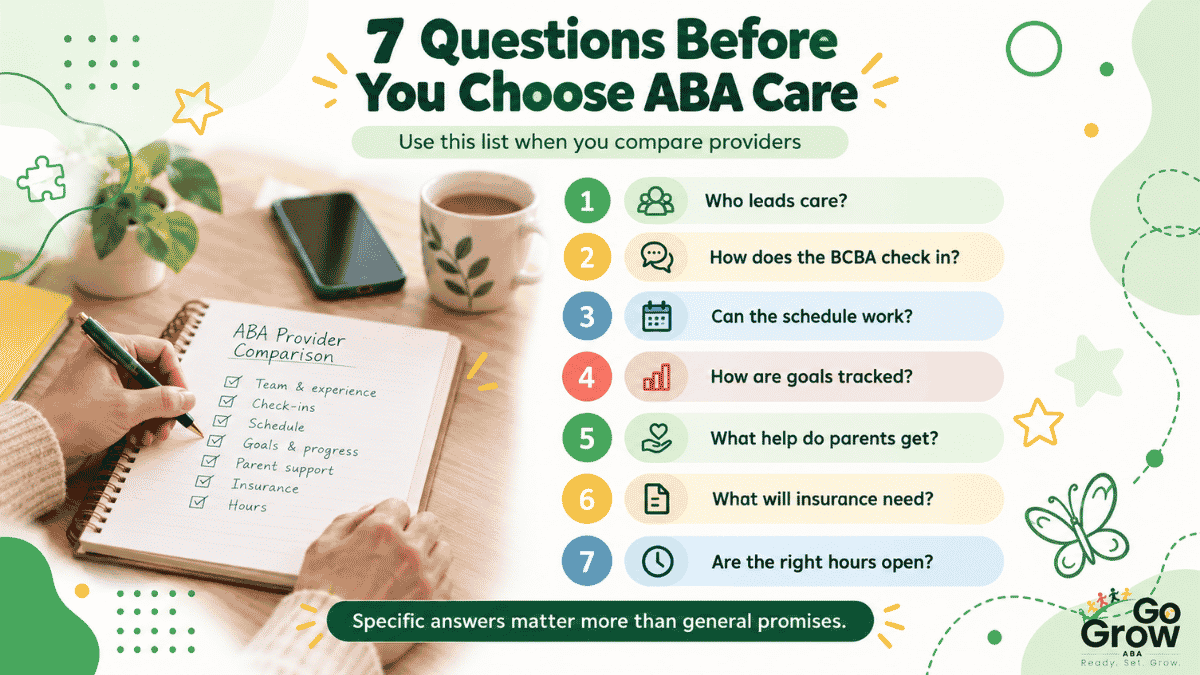 1. Who Will Be Responsible for My Child’s Treatment?
The provider should identify the clinician who will assess your child, develop the plan, and oversee treatment.
A Board Certified Behavior Analyst, or BCBA, can provide behavior-analytic services and supervise professionals who carry out treatment. A Registered Behavior Technician, or RBT, works under supervision. These titles describe different responsibilities.
Your first conversation should establish:
- The supervising clinician’s full name and credential.
- The qualifications of the person delivering regular sessions.
- The clinician’s experience with your child’s age and support needs.
- The process for introducing a replacement if someone leaves.
The BACB Certificant Registry lets families check certification status and published disciplinary information. Our explanation of ABA therapy team roles provides more detail about each person’s work.
2. How Will the BCBA Stay Involved After Sessions Begin?
The answer should describe planned observations, progress reviews, and a way to contact the supervisor.
RBT certification requires ongoing supervision. Those requirements alone do not tell you how much time a BCBA will spend observing your child or speaking with your family.
Follow-up questions can make the answer more specific:
- How often will the BCBA observe my child during a session?
- Who reviews concerns that arise between visits?
- What happens when my child becomes distressed or wants to stop?
- How does the supervisor decide whether a teaching method needs to change?
Your child may communicate discomfort through words, gestures, movement, or a device. The team should explain how those signals affect its decisions during treatment.
3. Where Will Sessions Happen, and Can the Schedule Work for Us?
The provider should confirm the treatment setting, service address, and available hours before your family makes plans around therapy.
For in-home ABA therapy in Denver, that conversation should cover more than whether the agency serves your ZIP code. Your work hours, school schedule, other appointments, and child’s need for rest all belong in the discussion.
Questions to cover include:
- Which days and times can a therapist serve our address?
- What caregiver presence do home sessions require?
- What space or materials would we need?
- How would weather-related cancellations or school closures affect visits?
Our in-home services include practice during routines such as play, meals, and dressing. A conversation about your household helps connect the proposed setting to the situations where your child needs support.
 4. How Will You Choose Goals and Explain Progress?
Goals should come from an assessment and connect to your child’s needs, interests, and family priorities. The provider should also explain how it will measure each goal.
A statement such as “improve communication” leaves many questions unanswered. A more specific example might be: “Your child will request help using words, a gesture, or a communication device during play.” The team can then record whether the request happens and how much help your child needs.
A provider should be able to answer:
- What can my child do before teaching begins?
- How will my family help choose priorities?
- What information will progress updates include?
- What would lead you to revise or stop a goal?
During our ABA assessments, we gather information through observation, parent input, and assessment tools. That information supports treatment recommendations and a written plan.
5. How Will You Help Me Support My Child Between Sessions?
Caregiver support should include explanations and practice that your family can use during daily life.
A hypothetical example can help you evaluate the answer. If your child needs help requesting a turn with a toy, the clinician might demonstrate a response, watch you practice, and offer feedback. The conversation should also cover what to do when practice feels difficult at home.
Your questions might include:
- Will someone demonstrate the strategy before I try it?
- How will you adapt practice to our time and responsibilities?
- What happens if the instructions are hard for us to follow?
Through our ABA parent training, we provide one-on-one coaching and explain strategies for home routines. Coaching should give you room to raise concerns and understand each step.
6. What Will You Verify About Insurance Before We Begin?
The provider should check your exact plan and explain any required approvals and expected family expenses. An insurer’s name alone does not establish coverage for a particular provider or service.
The office should address:
- Whether the provider participates in your specific plan.
- Whether the assessment and treatment need separate approvals.
- Which records your family must supply.
- Who submits authorization requests and follows up.
- What your family may owe for approved services.
Families using Health First Colorado should also confirm the provider’s participation in the program and ability to bill for the requested services.
At Go Grow ABA, we help families check benefits and understand intake requirements. Our article on ABA therapy insurance in Colorado explains plan differences, approval steps, and costs in more detail.
7. Are You Accepting New Patients for the Hours My Child Needs?
The answer should distinguish an opening for an assessment from an available treatment schedule.
A directory listing cannot confirm a start date. The Health First Colorado provider search uses information providers report themselves and advises members to contact offices about new-patient availability.
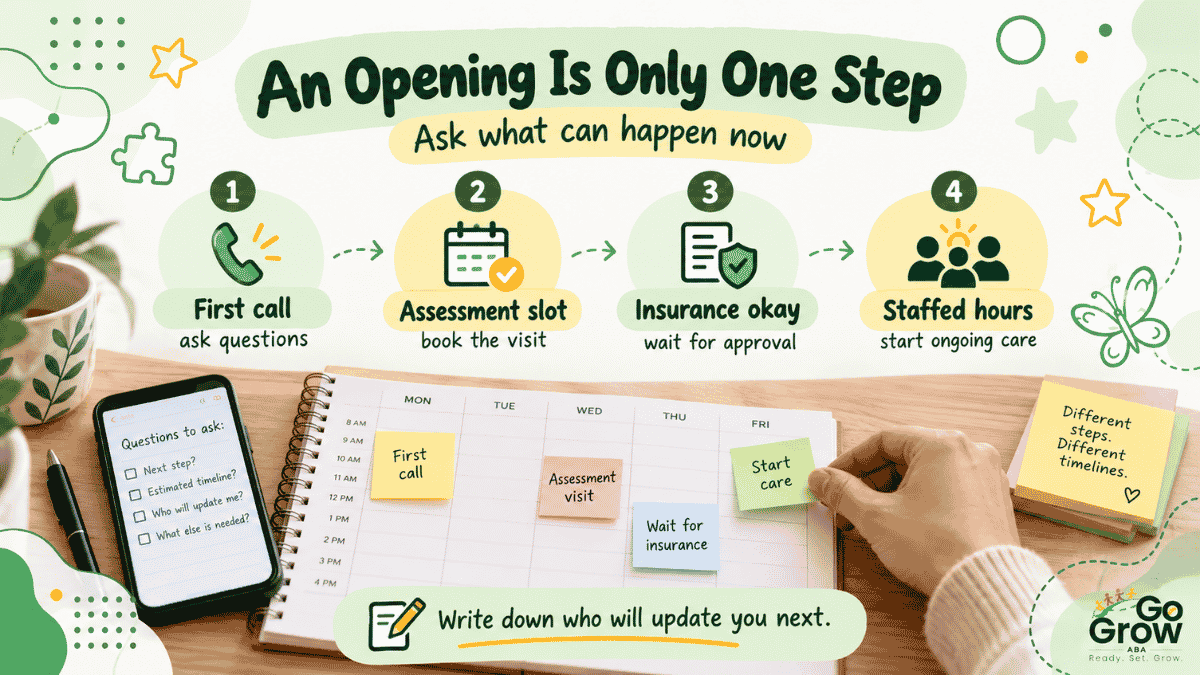
A request about ABA therapy in Denver accepting new patients should cover these separate stages:
- The first consultation.
- The assessment appointment.
- Any required insurance approval.
- A staffed schedule for ongoing sessions.
The office should explain which stages it can schedule now and which still depend on approval or staffing. Your notes should also include who will provide updates and when to follow up if no opening is available.
 FAQs About Choosing ABA Therapy in Denver
Should online reviews decide which ABA provider I choose?
Online reviews can offer perspectives on communication and scheduling. They cannot establish the care your child will receive or predict treatment results. Specific answers from the provider should carry more weight than a star rating alone.
Which written policies should I read before signing?
The service agreement should explain attendance expectations, cancellation charges, billing, privacy, complaints, and how services end. Your family should understand any responsibilities or fees before agreeing to care.
Can I compare providers before scheduling an assessment?
Families can contact several providers and request information before choosing one. Each office should explain which conversations are free and which appointments involve charges or insurance billing. A consultation can help you decide whether to proceed with an assessment.
Compare Your Denver ABA Options With Our Team
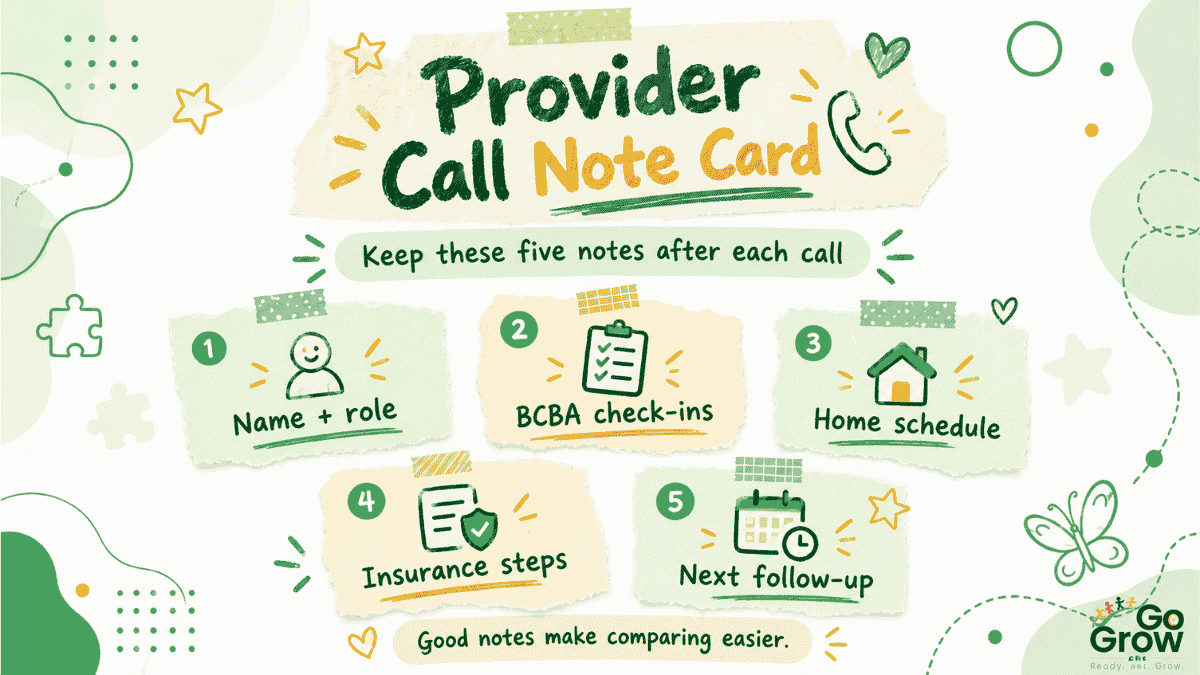
A provider’s answers should explain who oversees treatment, how goals connect to daily life, and what must happen before sessions begin. Written details give your family something to review after each call.
At Go Grow ABA, we offer in-home ABA, assessments, and parent training for Denver families. Our free consultation gives you time to talk about your child’s needs and request information about insurance and current openings.