
Key Points:
- ABA therapy for older children can target individual communication, safety, and daily living needs.
- Older-child programs should include the young person’s priorities and respect their privacy and interests.
- Research that combines age groups cannot establish expected outcomes for children who start ABA later.
ABA therapy for older children can address challenges that become more noticeable as school and daily responsibilities grow. A student might need help explaining a problem, managing a morning routine, or participating in an activity they enjoy.
Families exploring a later start need care that reflects their child’s present life. At Go Grow ABA, we provide in-home ABA services in Colorado, including assessments and caregiver support.
 Can Older Children Start ABA Without Early Intervention?
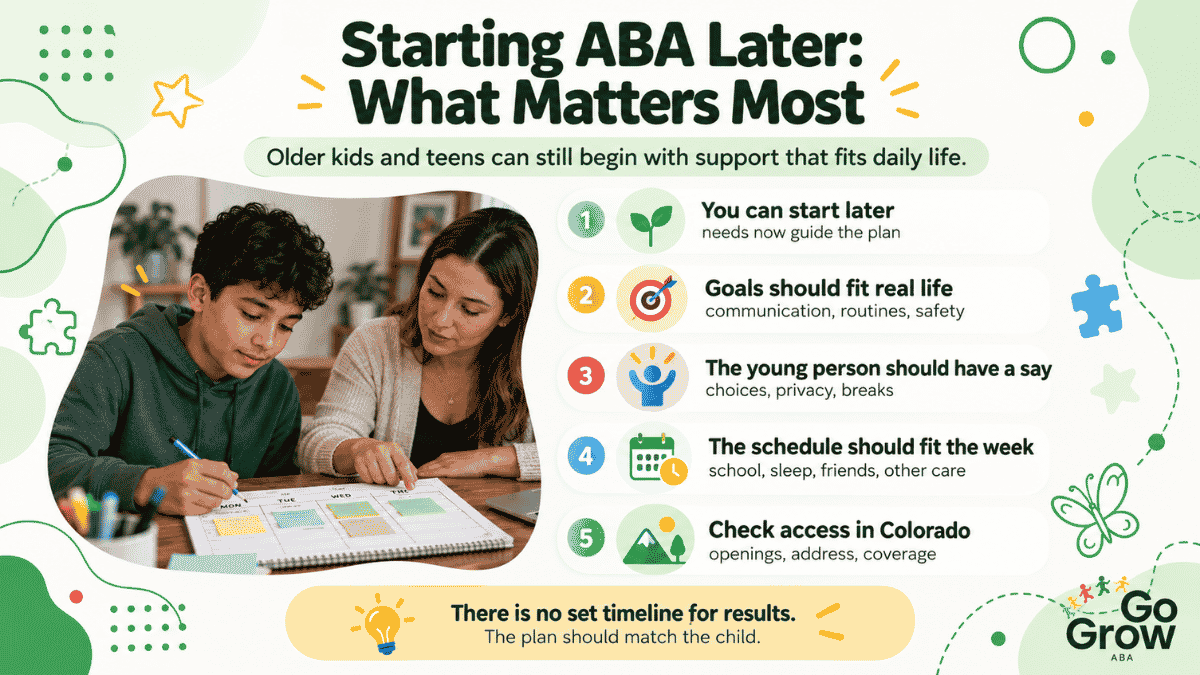
Older children can receive an ABA assessment even if they never attended an early intervention program. Their current needs, treatment recommendations, and coverage requirements determine the next steps.
The CDC recognizes that intervention can help beyond early childhood. The appropriate service still depends on the individual; an older child’s support could involve behavioral treatment, speech therapy, occupational therapy, mental health care, or a combination.
A Board Certified Behavior Analyst, or BCBA, assesses skills and behavioral needs before recommending ABA goals. During our ABA assessments, we gather information through observation, caregiver input, and assessment tools to develop treatment recommendations.
What Does Research Say About Starting ABA Later?
Mixed-age research cannot tell a family what results to expect when a child first starts ABA during adolescence.
One observational study involving children ages 3–17 examined services and outcomes over 24 months. Participants with the lowest starting scores in everyday skills who remained in treatment showed clinically meaningful gains.
The researchers did not report separate outcomes for older children beginning ABA for the first time. Those findings cannot establish a success rate or expected timeline for late starters. Families need recommendations tied to their child’s circumstances and the evidence supporting each proposed treatment goal.
Goals That Reflect an Older Child’s Life
Older-child ABA goals should connect with responsibilities, interests, and choices that the young person encounters now. A birthday alone does not determine which skills someone needs to learn.
These hypothetical examples show how a young person’s priorities could inform treatment:
| Young Person’s Priority | Possible Treatment Focus |
|---|---|
| “I want more say in my day.” | Expressing a preference, declining an activity, or requesting a change |
| “I want to get ready with less help.” | Completing selected morning tasks with fewer reminders |
| “I want to join an activity I enjoy.” | Asking about an activity, requesting assistance, or communicating when something feels uncomfortable |
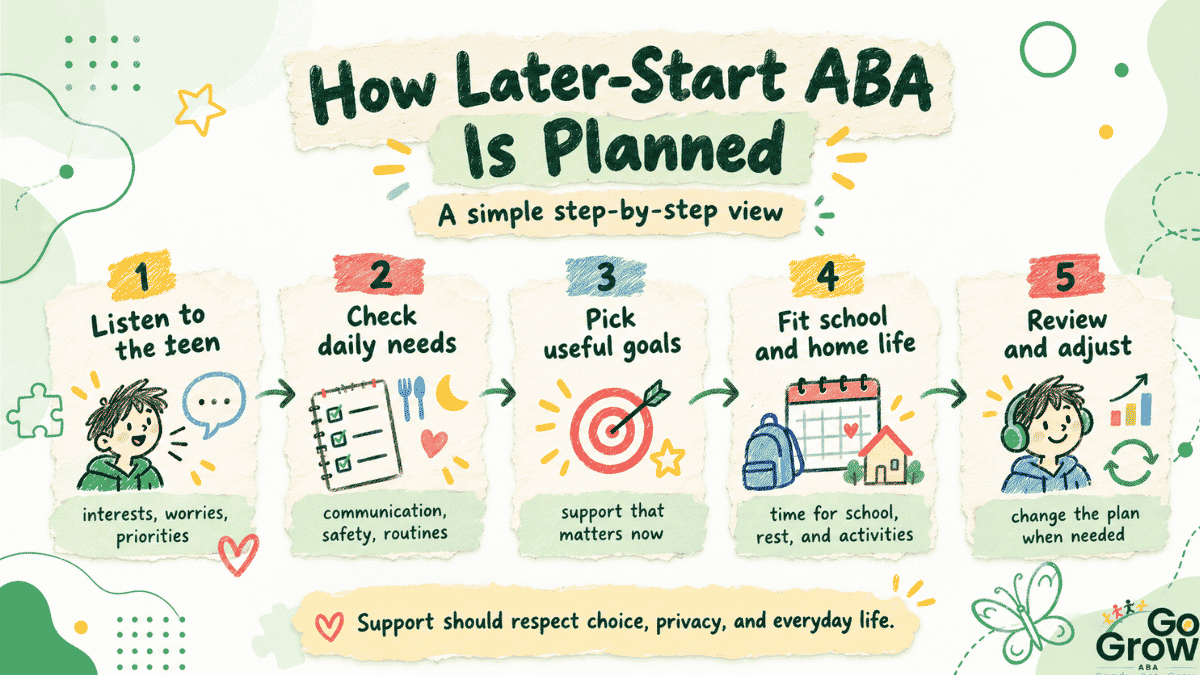
Each example needs an individual assessment before becoming a treatment goal. Some teens need foundational communication support, while others need help with a few specific responsibilities.
Through our Independence Pathway, we address areas such as decision-making, self-advocacy, community participation, and preparation for future work. The goals should reflect the young person’s abilities and priorities.
 Choice, Privacy, and Participation Belong in Treatment
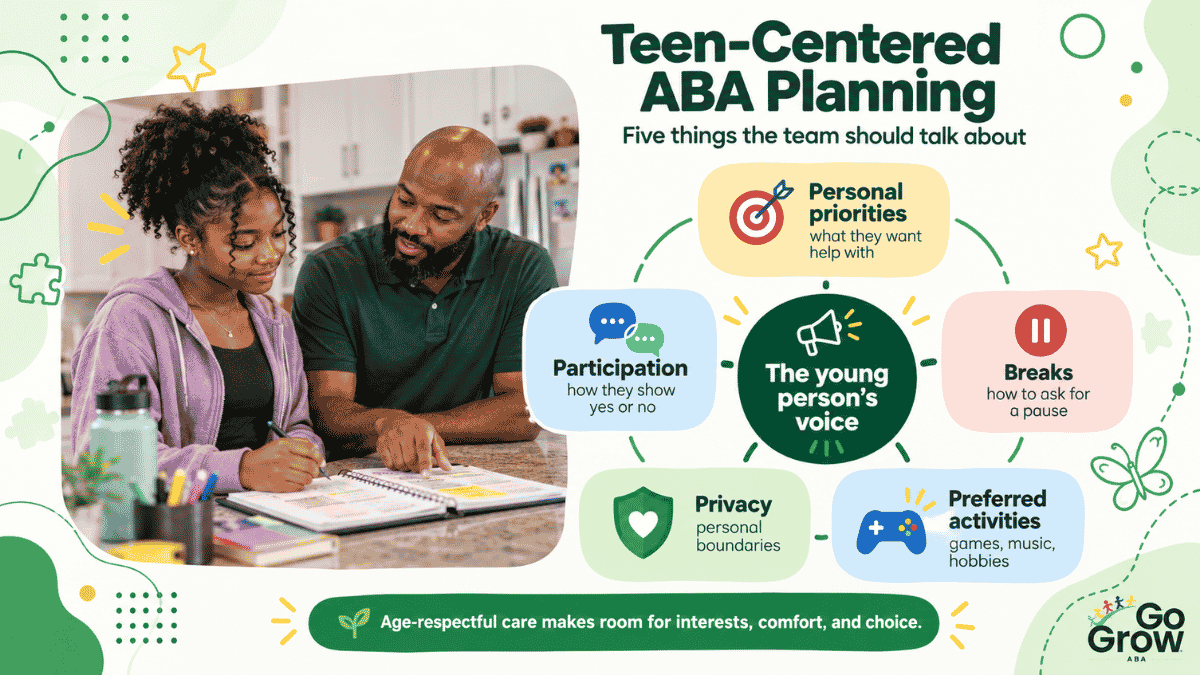
Older children and teens should have opportunities to understand and influence their care. The BACB Ethics Code requires behavior analysts to make appropriate efforts to involve clients in selecting goals, planning treatment, and reviewing progress.
Families can bring these topics into planning:
- Personal priorities: Activities or responsibilities the child wants support with.
- Willingness to participate: How the team recognizes agreement, hesitation, or discomfort.
- Breaks and concerns: Ways the child can request a pause or express disagreement.
- Privacy: Boundaries around personal care, conversations, and who observes practice.
- Preferred activities: Games, music, hobbies, and materials the child enjoys.
Age-respectful care leaves room for individual interests. An older child may enjoy activities associated with younger children, and those preferences deserve respect.
Treatment goals should serve communication, safety, participation, or independence. Harmless differences do not automatically require treatment.
Therapy Alongside School and Teen Life
ABA therapy for teenagers needs a schedule that considers school, sleep, meals, friendships, and other services. Older age does not automatically mean fewer treatment hours.
A proposed schedule should explain which assessed needs the hours address. Families can also ask how the BCBA will review tiredness, participation, and competing responsibilities. Our explanation of weekly ABA therapy hours covers the factors behind scheduling recommendations.
Caregiver involvement also changes as children grow. Through ABA parent training, we teach strategies for daily routines and provide feedback. Families can discuss when caregiver assistance helps and which tasks the young person wants to manage more privately.
Colorado Service Availability and Coverage
Colorado families should confirm service at their home address, the provider’s admission requirements, and current openings for an older child or teen. Available appointment times need to work with the young person’s school day and other commitments.
Insurance benefits and any required approvals need separate review. Our Colorado ABA insurance guide explains coverage questions for different plan types. A consultation provides an opportunity to discuss services; assessment appointments and treatment start dates require separate arrangements.
 FAQs About ABA Therapy for Older Children
Can my teen keep using a communication device during ABA?
A teen who uses a communication device should continue to have access to it. ASHA’s AAC recommendations support ongoing access to communication tools. The speech-language pathologist and ABA team can coordinate how they support communication during activities.
Can ABA take place alongside speech or occupational therapy?
ABA can take place alongside other services when each addresses an assessed need. With the required permissions, providers can coordinate goals and strategies. The BCBA’s ethics standards support collaboration with other professionals in the child’s interests.
Does private ABA replace my child’s IEP services?
Private ABA and an Individualized Education Program, or IEP, serve separate purposes. The school team addresses educational needs, while the private provider oversees its treatment plan. Our article on ABA and IEP coordination explains how families can support communication between teams.
Explore Support for Your Older Child
Older children and teens deserve care that respects their choices and supports daily life. A later start calls for individual goals, realistic expectations, and attention to the young person’s experience.
At Go Grow ABA, we offer a free consultation to talk about your child’s needs and our services. Families can contact our team about Colorado availability, coverage questions, and the steps involved in arranging an ABA assessment.